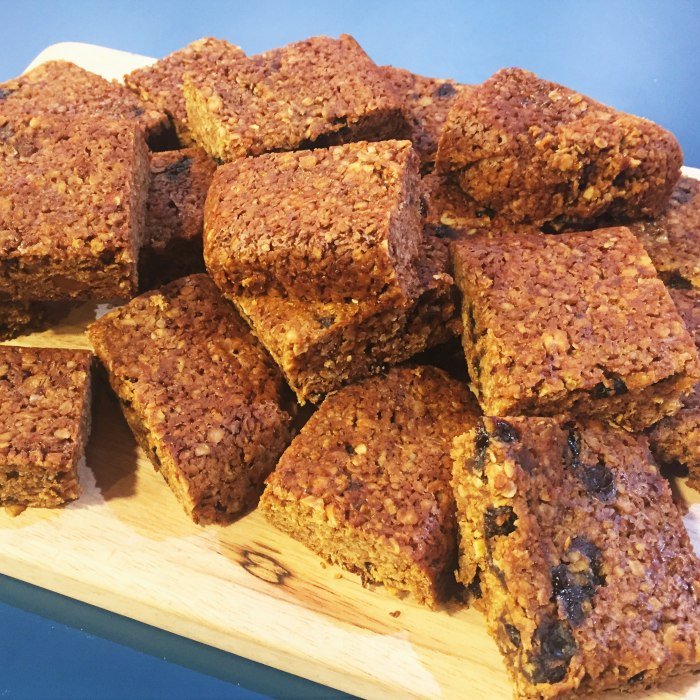
Every December, British kitchens fill with the smell of spice and steam as Christmas puddings are stirred, steamed, and ceremonially set alight. But the day after, a quieter tradition begins: the leftover pudding, dense with raisins, suet, and boozy depth, gets folded into a tray of flapjacks. It is a thrifty move born of practicality, yet the result tastes anything but modest. The oats turn golden and chewy in salted butter and golden syrup, while the pudding melts into moist, spiced pockets that taste like the holiday itself. What surprises many cooks is how much nutrition rides along with all that nostalgia. Rolled oats deliver beta-glucan fibre that has been shown to lower LDL cholesterol; dark brown sugar and molasses bring trace minerals like iron and potassium; orange zest adds vitamin C and aromatic oils; and the pudding contributes dried fruit polyphenols. This is not a health food, and nobody is pretending it is. But understanding what is genuinely inside these squares changes how you bake them. Over the next few sections, we will unpack the macros, the fibre science, the role of each ingredient, and the small techniques that make the difference between a crumbly tray and a caramelized triumph.
Breaking Down the Macros of a Festive Flapjack
A typical Christmas pudding flapjack square weighing around 70 grams lands roughly at 300 to 330 kilocalories, with about 4 grams of protein, 16 to 18 grams of fat, and 36 to 40 grams of carbohydrate. Those figures shift depending on your butter-to-oat ratio and how generous you are with pudding. The fat is largely saturated, courtesy of salted butter and the suet or butter inside the pudding, which is why portion awareness matters. Yet the carbohydrate story is more nuanced than it first appears. Rolled oats carry a low glycemic index of around 55, meaning their starch releases slowly into the bloodstream rather than spiking it. The golden syrup and brown sugar push the overall glycemic load higher, but the oat matrix and fat content slow gastric emptying, softening the sugar hit. Food scientists call this the matrix effect: identical grams of sugar behave differently inside a fibrous, fatty structure than they do in a glass of juice. It is a useful reminder that a flapjack is not a biscuit, and that the oats are doing quiet, structural work beyond holding everything together.
Beta-Glucan, the Quiet Hero of Rolled Oats
The most researched component of this bake is the fibre in rolled oats, specifically beta-glucan, a soluble fibre found at roughly 4 to 5 percent of oat weight. The European Food Safety Authority recognises a health claim that consuming 3 grams of oat beta-glucan daily helps maintain normal blood cholesterol levels, and a single flapjack can contribute a meaningful fraction of that if it contains 40 grams or more of oats. Beta-glucan works by forming a viscous gel in the gut that binds bile acids, forcing the liver to pull cholesterol from the bloodstream to replace them. Research published on oat fibre has also linked it to improved postprandial blood glucose responses and greater satiety, partly through slower digestion. Christmas pudding flapjacks are not a cholesterol remedy, and no dietitian would prescribe them. But if you are choosing between a festive treat and another, the oat base gives this one a genuine edge. Keep the oats whole rather than blitzing them into flour, since the larger flake size retains more of that gel-forming fibre and gives the flapjack its characteristic chew.
How Christmas Pudding Travelled to the Flapjack Tray
Christmas pudding descends from medieval frumenty, a soupy porridge of boiled wheat, currants, and spices that English households ate before the holiday feast. By the Victorian era, it had solidified into the suet-rich, steamed dome we recognise today, with Prince Albert's German-influenced Christmas traditions helping popularise the ritual. The flapjack itself is a much younger invention, emerging in twentieth-century British home baking as an economical tray bake of oats, syrup, and fat. The marriage of the two is a distinctly modern, post-war act of kitchen thrift, born when households found themselves with pudding leftovers and a tin of oats. It sits comfortably within Britain's long tradition of turning leftovers into celebration, alongside bubble and squeak and bread pudding. Regional flourishes exist: northern bakers sometimes add black treacle for a darker, more bitter edge, while Scottish cooks might reach for porridge oats and a pinch of salt. In Yorkshire, some families fold in a spoonful of marmalade for extra citrus bitterness. Every version tells the same story: waste nothing, and let the festive spirit stretch one more day.
Pro Tip: Toast Your Oats and Salt Your Butter First
Most flapjack recipes tell you to melt butter and syrup together and stir in raw oats. That works, but you lose a layer of flavour that costs nothing to gain. Spread your rolled oats on a baking tray and toast them at 170 degrees Celsius for 8 to 10 minutes, stirring once, until they smell nutty and turn a shade darker. This drives off surface moisture and triggers Maillard browning on the oat bran, creating toasted, almost popcorn-like notes that survive the bake. Next, use salted butter and do not reduce the salt, even if your recipe calls for unsalted. Salt suppresses bitterness and amplifies the caramel notes from golden syrup and dark brown sugar; pastry chefs call this taste contrast, and it is why a pinch of flake salt on a sweet square tastes so complete. Finally, when you fold in the Christmas pudding, crumble it cold and keep the chunks no smaller than a centimetre, so they stay moist and boozy rather than dissolving into the oat mix. Press the tray firmly with the back of a spoon before baking; loose packing is the single biggest cause of crumbly flapjacks.
Dried Fruit Polyphenols and the Citrus Connection
Christmas pudding is loaded with raisins, currants, sultanas, and often candied peel, and dried fruit is a more interesting ingredient than its sugar content suggests. Gram for gram, raisins contain roughly three times the polyphenols of fresh grapes, because removing water concentrates the phenolic compounds found in the skin. These include quercetin and caffeic acid, antioxidants studied for their role in reducing oxidative stress. Dried fruit also supplies potassium, iron, and small amounts of fibre, particularly in the skins. The orange zest in this recipe is not merely aromatic. Citrus peel contains limonene and hesperidin, flavonoids concentrated in the outer rind, and it contributes vitamin C that survives better than you might expect in a baked good because the zest's cell structure protects it. There is a pleasing symmetry here: the same compounds that make the kitchen smell festive are the ones nutrition researchers study. None of this turns a flapjack into medicine, but it does mean the dried fruit and zest are earning their place beyond sweetness and scent, adding micronutrients and plant compounds to an otherwise simple oat bake.
Frequently Asked Questions
Q: Are Christmas pudding flapjacks healthy? A: They are a treat, not a health food, but they carry real benefits: oat beta-glucan fibre, dried fruit polyphenols, and orange zest vitamin C. Portion size matters, as each square delivers roughly 300 calories and significant saturated fat from butter and suet. Q: Can I make them lower in sugar? A: Yes, but cautiously. Reducing golden syrup below about 100 grams per tray risks crumbly flapjacks, because syrup is the binding agent. You can swap some brown sugar for mashed banana or applesauce, though the texture becomes softer and more cake-like. Q: How should I store them and how long do they keep? A: Cool completely, then store in an airtight tin for up to five days, or freeze individual squares for up to three months. The pudding chunks keep them moist, so they often taste better on day two once the flavours settle.
Key Takeaways
Christmas pudding flapjacks are a festive bake with more nutritional substance than their sweetness suggests. The rolled oats supply beta-glucan, a soluble fibre with a recognised cholesterol-lowering health claim at 3 grams daily, so choose a recipe with a generous oat base and keep the flakes whole. Toast the oats before mixing to build nutty flavour, and trust salted butter and a firm press into the tray for the chewiest result. Treat the Christmas pudding as a flavour carrier rather than a filler: crumble it cold, keep the chunks visible, and let the dried fruit bring polyphenols and minerals alongside its boozy depth. Finally, enjoy them as they are meant to be enjoyed, one square with a cup of tea, because the pleasure of a seasonal bake is part of its value. Bake a tray this week, share most of it, and taste how far a little leftover pudding can travel.
Try these recipes on DishIndex
Explore Christmas pudding flapjack recipes and more