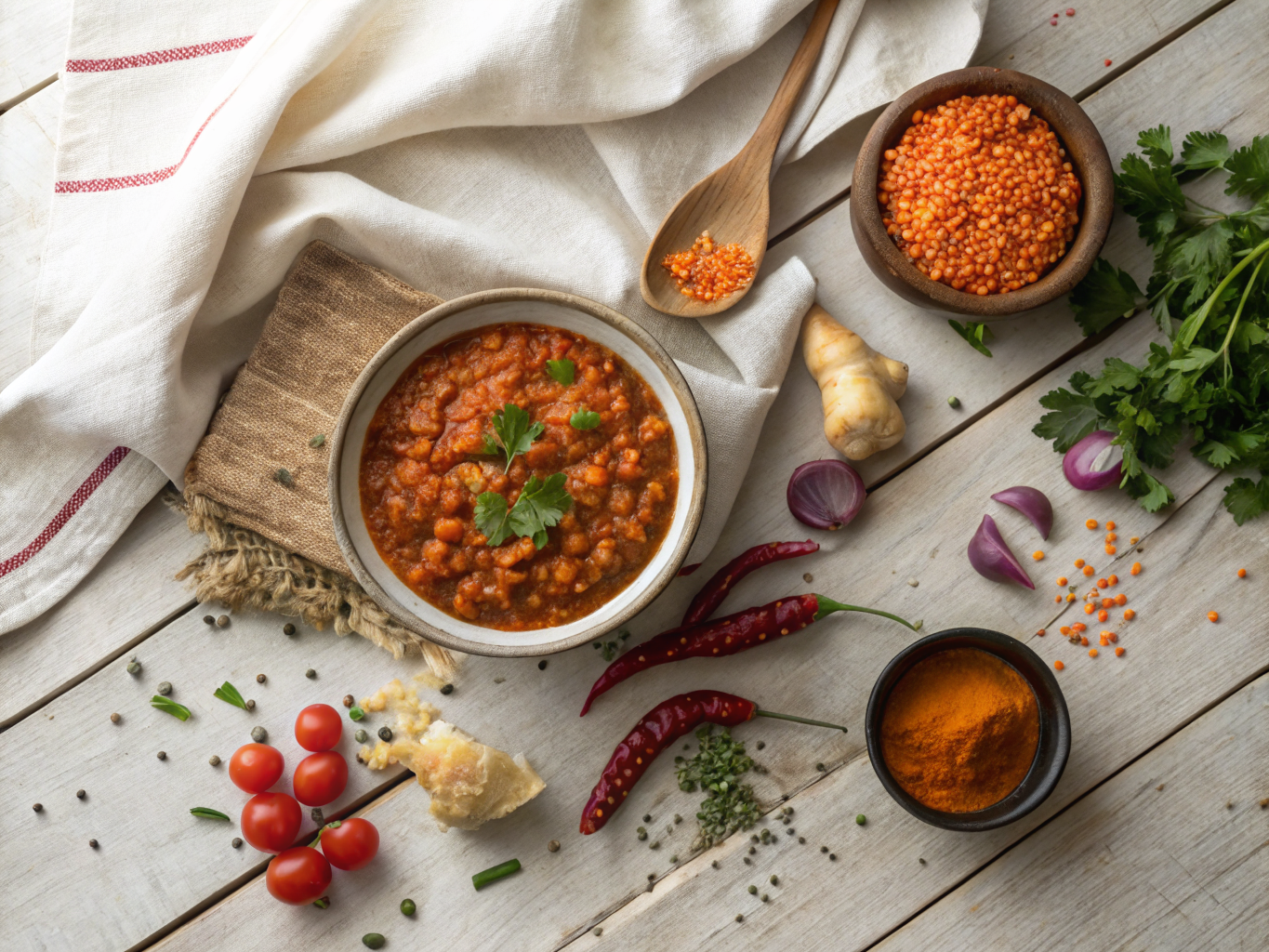
The first time you crush a teaspoon of berbere between your fingers, the aroma tells a story—smoky chili, warm fenugreek, a whisper of ginger—before you even taste it. That scent signals the start of Mesir Wot, Ethiopia's beloved red lentil stew. But beyond its intoxicating fragrance, this dish is a quiet nutritional titan. Red lentils, the star ingredient, are a global powerhouse: one cup of cooked lentils delivers about 18 grams of protein and 16 grams of fiber, according to the USDA. When simmered with caramelized onions, garlic, and ginger, the stew becomes a synergistic blend of macronutrients and micronutrients that supports heart health, blood sugar control, and long-lasting satiety. Ethiopia's traditional cuisine, which pairs Mesir Wot with injera, has long been plant-based by default, and modern research is only now catching up to what generations have known. In this article, we'll unpack the science behind each key ingredient—from the anti-inflammatory properties of berbere's capsaicin to the resistant starch in lentils—and show you why this humble stew deserves a permanent spot in your weekly rotation. You'll discover specific numbers, evidence-backed insights, and practical tips to maximize its benefits without sacrificing an ounce of flavor.
Red Lentils: The Protein and Fiber Engine
Red lentils (Lens culinaris) are unique among legumes because they cook quickly and break down into a creamy texture, but their nutritional profile is anything but soft. A half-cup serving of dry red lentils provides roughly 24 grams of protein and 20 grams of fiber—more than most whole grains. Unlike animal protein, lentils are virtually fat-free and deliver a steady stream of complex carbohydrates, which the body digests slowly thanks to their high fiber content. This slow release helps maintain stable blood sugar levels, a boon for anyone managing diabetes or insulin sensitivity. A 2017 meta-analysis in the journal Clinical Nutrition found that regular legume consumption, including lentils, was associated with a 5% reduction in LDL cholesterol. Moreover, red lentils are rich in folate (about 45% of the daily value per cooked cup) and iron (around 6.6 mg per cup), critical for red blood cell formation. For a vegan diet, pairing lentils with vitamin C-rich foods—like the tomatoes often added to Mesir Wot—enhances iron absorption by up to threefold. The stew's slow simmer also breaks down phytic acid, a compound that can inhibit mineral absorption, making the nutrients more bioavailable.
Berbere: The Spice Blend That Fights Inflammation
Berbere is not just a flavor bomb; it's a complex blend of up to 16 spices, typically including chili peppers, fenugreek, ginger, garlic, coriander, cardamom, and ajwain. The chili peppers contribute capsaicin, a compound studied for its anti-inflammatory and metabolism-boosting effects. A 2019 review in the journal Nutrients noted that capsaicinoids may help reduce markers of inflammation such as C-reactive protein. Fenugreek, another key component, contains soluble fiber and saponins that have been shown to improve glucose tolerance in clinical trials. But the real magic lies in synergy: the combination of spices creates a polyphenol cocktail that, when simmered with onions and garlic, may enhance the bioavailability of each other's antioxidants. A study in the Journal of Nutrition found that the bioavailability of curcumin (from turmeric, a common addition) increased by 2000% when combined with piperine from black pepper—a principle that likely extends to berbere's complex matrix. Additionally, berbere's deep red hue comes from paprika and chili, which are rich in beta-carotene and vitamin C. The spice blend is also a source of iron and calcium. When you smell that warm, smoky aroma, you're inhaling volatile oils that have been linked to improved digestion and reduced oxidative stress.
The Cultural Roots of Ethiopia's National Dish
Mesir Wot is more than a recipe; it's a culinary cornerstone of Ethiopian Orthodox Christian fasting traditions. For nearly 200 days a year, devout Ethiopians abstain from animal products, and Mesir Wot—along with other vegan stews like shiro and atkilt—becomes the centerpiece of the plate. The dish's origins trace back centuries to the highlands of Ethiopia, where lentils were first domesticated around 2500 BCE. The name 'mesir' comes from the Amharic word for lentil, and 'wot' refers to a thick stew. Historically, the stew was cooked in a clay pot over a wood fire, allowing the lentils to slowly absorb the spices. The berbere spice blend itself is a regional treasure, with each family guarding its own version. In the capital, Addis Ababa, you'll find variations that include more chili for heat, while northern regions might emphasize fenugreek for a slightly bitter, earthy note. Traditionally, the stew is served with injera, a sourdough flatbread made from teff, a gluten-free grain native to Ethiopia. The communal eating style—using your right hand to scoop the stew with injera—fosters a sense of togetherness. Today, Mesir Wot has become a global symbol of Ethiopian cuisine, celebrated for its bold flavors and plant-based completeness.
Pro Tip: Caramelize Onions Properly for Maximum Flavor and Nutrition
Most home cooks rush the onions, but in Mesir Wot, they are the flavor foundation—and a nutritional one, too. Proper caramelization takes time: at least 20 to 25 minutes over medium-low heat, stirring occasionally. When onions brown, they undergo the Maillard reaction, creating hundreds of new flavor compounds and reducing their raw pungency. But there's a health bonus: caramelized onions have been shown to retain more of their quercetin, a flavonoid with anti-inflammatory properties, than raw onions because the cooking process breaks down cell walls, making the quercetin more bioavailable. The key is to use a heavy-bottomed pot and enough oil (or vegan niter kibbeh) to prevent sticking. Start with sliced onions and a pinch of salt to draw out moisture. Once they're deeply golden, add the garlic and ginger—but only for the last minute, as garlic burns quickly and loses its allicin, a compound with antimicrobial properties. Then, stir in the berbere and tomato paste, cooking for just 30 seconds to bloom the spices. This step, often skipped, activates fat-soluble flavor compounds and increases the absorption of fat-soluble vitamins like vitamin E from the spices. Finally, add the lentils and water, and simmer until creamy. This method yields a stew with deeper flavor and better nutrient retention.
Why Mesir Wot Fits the Plant-Forward Future
As the world grapples with climate change and the need for sustainable diets, Mesir Wot offers a delicious solution. Lentils are among the most eco-friendly protein sources: they require minimal water (about 50 gallons per pound, compared to 1,800 gallons for beef) and fix nitrogen in the soil, reducing the need for synthetic fertilizers. The dish's reliance on whole foods—vegetables, legumes, and spices—aligns with the Mediterranean and flexitarian diets, both of which are linked to lower rates of chronic disease. In 2023, the EAT-Lancet Commission recommended a dramatic increase in legume consumption for both human health and environmental sustainability, and Mesir Wot is a flavorful way to meet that goal. Moreover, the dish is naturally gluten-free (when served without injera) and can be easily adapted for soy-free and nut-free diets. Its popularity in Western countries has grown alongside the rise of Ethiopian restaurants in cities like Washington, D.C., and London. Nutritionally, a one-cup serving of Mesir Wot provides roughly 250 calories, 12 grams of protein, 10 grams of fiber, and 20% of the daily value for iron—all while delivering a satisfying, rich mouthfeel that makes it a comfort food with a clear conscience.
Frequently Asked Questions
Q: Is Mesir Wot high in protein? A: Yes, one cup of cooked Mesir Wot provides about 12 grams of protein, primarily from red lentils. When paired with injera or rice, it becomes a complete protein with all essential amino acids. Q: Can I make Mesir Wot oil-free? A: Absolutely. You can water-saute the onions and use a splash of vegetable broth instead of oil. The stew will be slightly less rich but still flavorful. Q: Does berbere contain gluten? A: Traditional berbere is gluten-free, but some commercial blends may include additives. Always check the label, especially if you have celiac disease.
Key Takeaways
Mesir Wot is a nutritional powerhouse that deserves a place in your kitchen. First, embrace red lentils as a cheap, sustainable source of protein and fiber—they cook quickly and absorb flavors beautifully. Second, treat berbere as a functional ingredient: its capsaicin and polyphenols offer anti-inflammatory benefits, and blooming it in oil unlocks its full potential. Third, take the time to caramelize onions properly; the flavor and nutrient payoff is worth every minute. Fourth, remember that this dish is a complete meal when served with a whole grain like teff or brown rice, and it's naturally vegan and gluten-free. Finally, don't be afraid to make a big batch—leftovers taste even better the next day as the spices meld. Whether you're cooking for health, sustainability, or pure comfort, Mesir Wot delivers on every front. So grab your pot, toast your spices, and let the warm, smoky aroma fill your kitchen—you're about to create something truly special.
Try these recipes on DishIndex
Explore Mesir Wot recipes and more