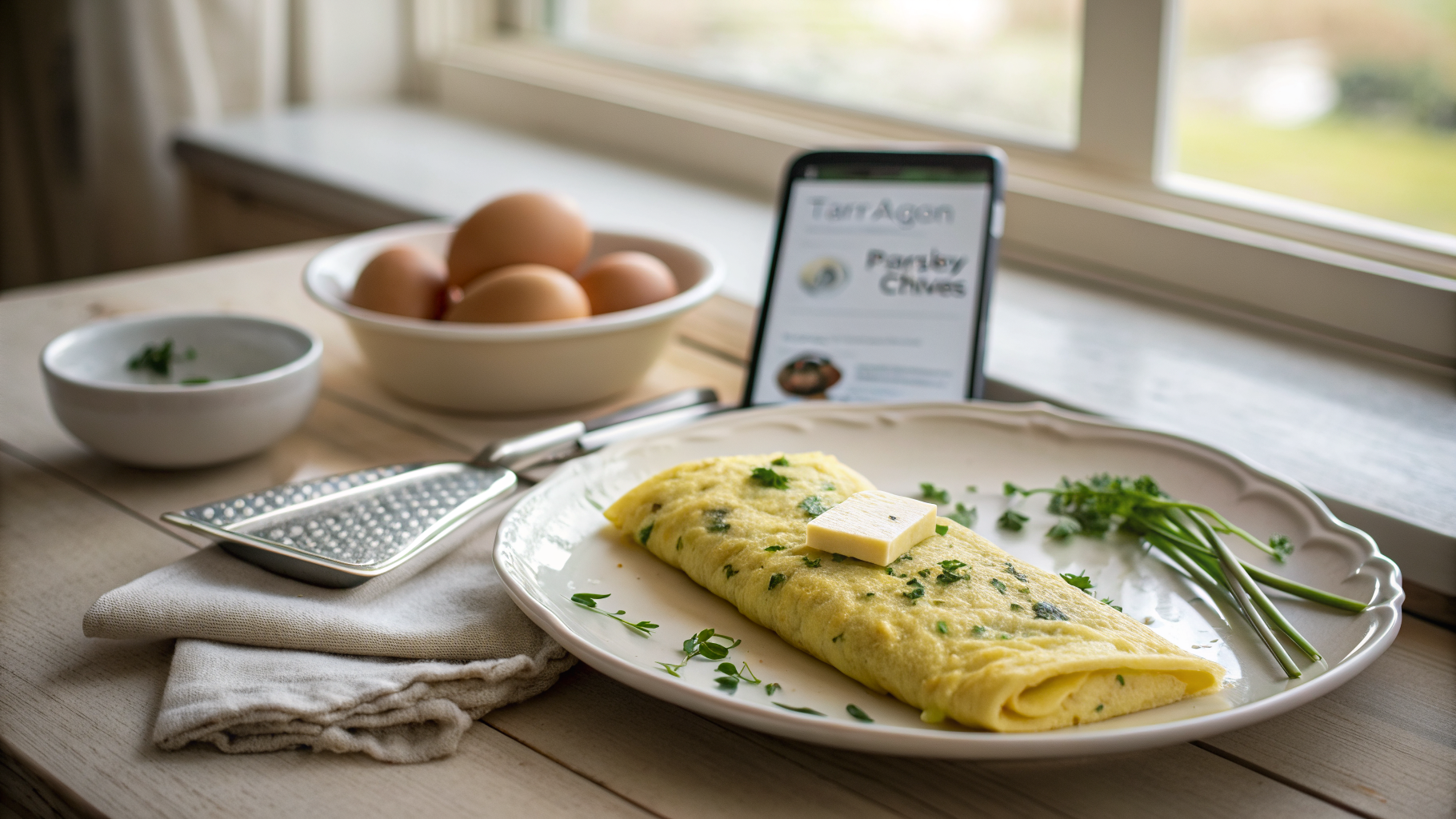
Picture the moment: a non-stick pan warming over medium heat, three eggs beaten just until streaky, a knob of butter foaming and then quieting. The eggs hit the pan and bubble for a few seconds before the first stir, and in under ninety seconds you have a pale, custardy roll that looks like it came from a bistro kitchen. The French omelette is one of the great tests of technique in Western cooking, precisely because it has almost nowhere to hide. There are only eggs, butter, salt, and a handful of herbs, plus a little Parmesan or Gruyère folded through. Jacques Pépin famously spent years refining his method, and culinary schools still use the dish to judge a cook's control of heat and timing. But something has changed around this classic. Where home cooks once learned by watching a parent or muddling through a battered cookbook, they now arrive at the pan with slow-motion video, comment threads full of troubleshooting, and AI assistants that answer follow-up questions at midnight. This article explores how technology is reshaping the way we discover, adapt, and actually cook dishes like the French omelette, and what that means for the future of home cooking.
From Cookbook Page to Algorithm
For most of the twentieth century, learning a French omelette meant a single static page: a list of ingredients and four or five sentences of instruction. That page could not tell you what foaming butter looks like or how fast to stir. Digital recipe platforms changed the economics of instruction. A modern recipe page can carry a looping clip of the eggs setting, a temperature note for induction versus gas, and a comment section where hundreds of cooks report what went wrong. Discovery itself has shifted too. Recommendation engines now surface a French omelette to someone who searched for a high-protein breakfast, a use for leftover tarragon, or a five-minute lunch, connecting the dish to contexts no printed index could anticipate. The practical effect is measurable in behavior: cooks increasingly watch a technique once, then cook from a stripped-down ingredient list, treating video as the teacher and text as the reference. The omelette, with its ninety-second window between raw and rubbery, is exactly the kind of dish that rewards this hybrid approach.
The Herb Question, Answered in Real Time
The herbs in this omelette, tarragon, parsley, and chives, are where technique and technology intersect most interestingly. Tarragon is assertive and anise-scented, and a heavy hand can overwhelm the eggs; chives are delicate and lose their punch under sustained heat. A generation ago, a cook confronting this balance had two options: follow the recipe exactly or guess. Today, a cook can ask a conversational assistant why a recipe calls for fines herbes, learn that the classic blend traditionally combines parsley, chives, tarragon, and chervil, and then ask what to substitute when chervil is missing. That back-and-forth is genuinely new. It also carries risk. AI tools can sound confident while being wrong, and herb substitutions are exactly where vague answers creep in. The reliable move is to treat any assistant as a starting point and verify against a trusted technique source. Used that way, the technology does something a cookbook never could: it lets a home cook interrogate a recipe in real time, ingredient by ingredient, before the butter ever hits the pan.
A Dish With a Pedigree
The omelette's place in French cooking is older and more formal than its simplicity suggests. Eggs were folded into the repertoire of French haute cuisine well before the nineteenth century, and by the era of Auguste Escoffier the omelette had been codified into dozens of named variations, from fines herbes to aux pointes d'asperges. The dish carried a practical logic too: it was fast, cheap, and forgiving of whatever the kitchen had on hand, which made it a staple of both peasant tables and grand dining rooms. In the mid-twentieth century, French cooks like Pépin and later Julia Child brought the technique to American audiences, emphasizing the pale, creamy interior that distinguishes a French omelette from a browned diner-style fold. That interior is the whole point. The eggs should be just set, barely holding together, with a texture closer to custard than to scrambled egg. Understanding that history matters for the modern cook, because it explains why the dish is judged so strictly. The omelette is not merely breakfast; it is a compact demonstration of a cuisine's values around precision, restraint, and respect for ingredients.
Pro Tip: Control Heat With Your Wrist, Not Your Timer
Most home cooks fail a French omelette not through bad ingredients but through impatience with heat. The classic mistake is cranking the burner to speed things up, which browns the outside before the inside sets. Here is the expert move: hold your palm an inch above the pan for a count of two. If you can hold it comfortably, the pan is roughly right for eggs. If you flinch, pull it off the heat for thirty seconds. The second insight is about stirring. Use a fork or spatula to stir the eggs in small, rapid circles for about twenty seconds, then stop and let the base set for a few seconds before folding. That brief pause is where the signature folds form. Finally, address the butter question. A teaspoon is enough for a small pan; the goal is a thin, foaming film, not a pool. If the butter browns, start over. And that odd trick of pressing the finished omelette gently under kitchen paper genuinely works: it smooths the surface and gives the roll a clean, professional shape.
What the Data Says About Eggs and Butter
Nutrition science has complicated the omelette's reputation in ways worth knowing. For decades, dietary guidance warned against eggs because of cholesterol, a caution that shaped a generation of home cooks. More recent research has largely softened that advice, with major health bodies now emphasizing that dietary cholesterol affects blood levels far less than once assumed for most people, and that saturated fat intake matters more. The practical upshot is that the omelette's core ingredients, eggs and a modest amount of butter, sit comfortably within most balanced diets, with eggs providing high-quality protein and choline. That research has traveled to home cooks largely through digital channels: health apps, nutrition databases, and short explainer videos that summarize studies in seconds. The omelette is a useful case study in how quickly nutritional consensus can shift and how technology accelerates that shift, for better and occasionally for worse. The dish itself has not changed. What has changed is the speed at which cooks can access, question, and act on the evidence around it.
Frequently Asked Questions
Q: Why does my French omelette turn brown on the outside? A: The pan is too hot. Browned spots mean the eggs set before the interior could finish, so the result is tough rather than creamy. Lower the heat, let the pan cool briefly, and stir the eggs more actively in the first twenty seconds. Q: Can I make a French omelette without a non-stick pan? A: Yes, but it demands more butter and better timing. A well-seasoned carbon steel pan works beautifully once it is properly heated and the butter foams evenly. Expect a slightly steeper learning curve. Q: Do I have to use fresh herbs, or can I substitute dried? A: Fresh is strongly preferred for chives and parsley, which lose aroma when dried. If you must substitute, use dried tarragon sparingly, about a third of the fresh amount, and add it to the beaten eggs a few minutes before cooking so it rehydrates.
Key Takeaways
The French omelette remains one of the best measures of a cook's control, and technology has made that control easier to learn. Use video to understand technique and text to cook from, rather than trying to do both at once. When a conversational tool answers a question about herbs or substitutions, verify the answer against a trusted source before trusting it with your eggs. Keep the heat moderate and the butter modest; a teaspoon in a small pan is enough, and a browned pan means starting over. Remember the quiet trick of pressing the finished omelette under kitchen paper for a clean, bistro-ready surface. And if you want to explore variations, search for French omelette recipes and see how different cooks handle the fold. The dish rewards attention, and attention is the one ingredient no platform can supply.
Try these recipes on DishIndex
Explore French omelette recipes and more