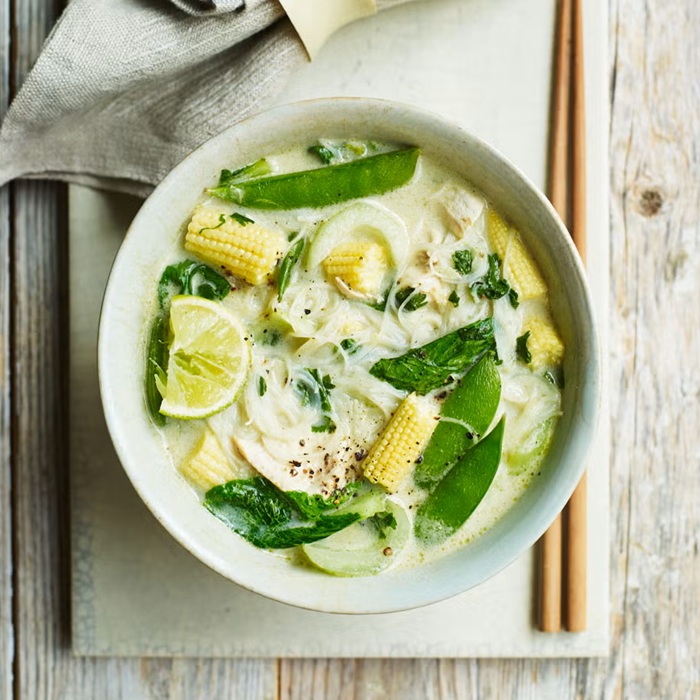
Imagine a bowl of soup that smells like a Bangkok street market at dusk—lemongrass, galangal, and kaffir lime piercing through a veil of coconut steam. Thai green chicken soup is that bowl, and it happens to be one of the most nutritionally complete comfort foods you can make at home. While most creamy soups rely on heavy cream and starch, this one gets its richness from coconut milk, its heat from green curry paste, and its protein from chicken thighs. The result is a dish that feels indulgent but delivers a surprisingly balanced macronutrient profile: roughly 25 grams of protein, 15 grams of carbohydrate, and 18 grams of fat per serving, depending on your coconut milk. Over the next few minutes, you'll discover how each key ingredient contributes not just flavor but measurable health benefits—from the capsaicinoids in green chilies to the medium-chain triglycerides in coconut milk. You'll also learn the science behind why this soup satisfies so deeply and how to tweak it for your own nutritional goals without sacrificing authenticity.
The Macronutrient Breakdown: A Balanced Bowl
A typical serving of Thai green chicken soup (about 350 ml) provides a macronutrient split that would make a dietitian nod. Chicken thighs contribute 22–26 grams of high-quality protein, including all nine essential amino acids, and are particularly rich in glycine and proline—amino acids that support joint and skin health. The coconut milk adds 14–18 grams of fat per cup, about half of which are medium-chain triglycerides (MCTs) like lauric acid, which the body metabolizes more rapidly than long-chain fats. Carbohydrates come mainly from the onion and curry paste, totaling 10–15 grams, with 2–3 grams of fiber. Notably, this soup is low in added sugars and contains no refined grains, making it a suitable option for low-carb and gluten-free eating patterns. A 2021 study in the journal Nutrients found that meals combining protein with MCT-rich fats increased satiety hormones (GLP-1 and PYY) more than iso-caloric high-carb meals, which may explain why a single bowl keeps hunger at bay for hours.
Coconut Milk: More Than Just Creaminess
The creamy backbone of this soup is coconut milk, and its nutritional profile is far more interesting than its rich mouthfeel suggests. A half-cup of full-fat coconut milk contains about 5 grams of MCTs, particularly lauric acid (C12), which has demonstrated antimicrobial properties in vitro. While human studies are mixed, a 2020 review in the Journal of the American College of Nutrition noted that MCTs may modestly increase energy expenditure and fat oxidation compared to longer-chain fats. More importantly, coconut milk is a source of selenium and manganese—two trace minerals that support thyroid function and antioxidant defense. The key is choosing the right product: full-fat canned coconut milk (not the carton beverage) provides the intended richness and nutrients. If you're watching calories, you can use light coconut milk, but be aware that it often contains added gums and stabilizers. For the best flavor and nutrition, look for cans with only coconut and water listed on the label.
Thai Green Curry Paste: A Concentrated Source of Bioactives
Green curry paste is not just a flavor bomb—it's a concentrated blend of aromatics with documented health properties. Traditional pastes contain green bird's eye chilies, lemongrass, galangal, kaffir lime zest, coriander root, garlic, shallots, and shrimp paste. The green color comes from fresh chilies, which are rich in capsaicin—a compound that has been studied for its role in pain relief, metabolism, and appetite regulation. A 2019 meta-analysis in Bioscience Reports found that capsaicinoid supplementation modestly increased energy expenditure and fat oxidation in adults. Lemongrass and galangal contribute antioxidant compounds like quercetin and kaempferol. One caveat: curry paste is high in sodium (about 300–400 mg per tablespoon), so if you're watching salt intake, reduce the fish sauce and use low-sodium chicken stock. Also, store-bought pastes vary widely in heat and ingredient quality. For the best nutrition and flavor, choose a paste with no added sugar or preservatives, or make your own—it takes 15 minutes in a food processor and freezes well.
The Cultural Roots of a Thai Classic
Green curry, known in Thai as kaeng khiao wan, originated in central Thailand, likely in the late 19th or early 20th century, when chilies—introduced by Portuguese traders in the 1500s—became integrated into Thai cooking. Unlike red curry, which uses dried chilies, green curry relies on fresh green chilies, giving it a brighter, more herbaceous heat. The addition of coconut milk is a central Thai adaptation; in the south, curries often use less coconut and more fresh turmeric. This soup version is a modern evolution, likely influenced by the global popularity of Thai cuisine in the 1980s and 1990s. Traditionally, kaeng khiao wan is served as a curry with rice, not as a soup. But the soup format has become popular in Western home kitchens because it's a one-pot meal that stretches expensive ingredients like chicken and coconut milk. In Thailand, the dish is often garnished with Thai basil and sliced green chilies, and served with jasmine rice to soak up the sauce. Understanding this context helps you appreciate the balance of sweet, sour, salty, and spicy that defines authentic Thai cooking.
Pro Tip: Bloom Your Curry Paste for Maximum Flavor and Nutrition
Most home cooks add curry paste directly to the liquid, but that's a missed opportunity. To unlock the full aromatic potential and fat-soluble nutrients in the paste, bloom it first. After sautéing the onion and chicken, push them to the side of the pan, add a teaspoon of oil if needed, and fry the curry paste for 30–60 seconds over medium heat until it smells intensely fragrant. This step does two things: it cooks off the raw taste of the paste and it allows the fat-soluble compounds—like capsaicin and the antioxidants in lemongrass—to dissolve into the oil, making them more bioavailable. You'll notice a deeper green color and a more complex aroma. Then add the coconut milk and stock. This technique is standard in Thai kitchens, where curry paste is always fried in the thick part of coconut milk before the liquid is added. It takes one extra minute but transforms the soup from good to restaurant-quality. Just be careful not to burn the paste; if it starts to stick, add a splash of coconut milk immediately.
How This Soup Fits Modern Nutritional Wisdom
Thai green chicken soup aligns remarkably well with several current nutritional trends. First, it's a whole-food, minimally processed meal—a 2023 study in Cell Metabolism found that ultra-processed foods led to higher calorie intake and weight gain compared to whole foods, even when matched for macros. Second, it's naturally gluten-free and dairy-free, making it accessible to people with common food sensitivities. Third, the combination of protein, fat, and fiber supports stable blood sugar; a 2018 study in the American Journal of Clinical Nutrition showed that meals with adequate protein and fat reduced postprandial glucose spikes by 30–40% compared to high-carb meals. Finally, the soup is a vehicle for vegetables—you can add spinach, mushrooms, or bell peppers without changing the character. In a world of restrictive dieting, this soup represents a more sustainable approach: a satisfying, nutrient-dense meal that doesn't feel like a compromise. It's comfort food that happens to be good for you, which is perhaps the most powerful nutritional strategy of all.
Frequently Asked Questions
Q: Is Thai green chicken soup healthy? A: Yes, it's rich in protein, healthy fats, and antioxidants from aromatics. However, it can be high in sodium and saturated fat, so enjoy it in moderation and balance with other meals. Q: Can I make this soup lower in fat? A: You can use light coconut milk or replace half the coconut milk with evaporated milk or additional chicken stock. The flavor will be less rich, but it still works. Q: What's the best way to store and reheat leftovers? A: Store in an airtight container in the fridge for up to 3 days. Reheat gently on the stove—avoid boiling, as coconut milk can separate. Add fresh herbs after reheating.
Key Takeaways
This Thai green chicken soup is more than a recipe—it's a lesson in how traditional dishes can deliver modern nutritional benefits. First, remember that chicken thighs provide more iron and zinc than breasts, so don't swap them out if you want the full mineral profile. Second, bloom your curry paste in oil before adding liquid; it's a one-minute step that boosts flavor and nutrient absorption. Third, choose full-fat coconut milk without additives for the best balance of taste and nutrition. Fourth, control sodium by using low-sodium stock and reducing fish sauce, then adjusting at the table. Fifth, use this soup as a template: add leafy greens for vitamin K, mushrooms for vitamin D, or a squeeze of lime for extra vitamin C. With these insights, you're ready to cook a bowl that nourishes both body and soul.
Try these recipes on DishIndex
Explore Thai green chicken soup recipes and more