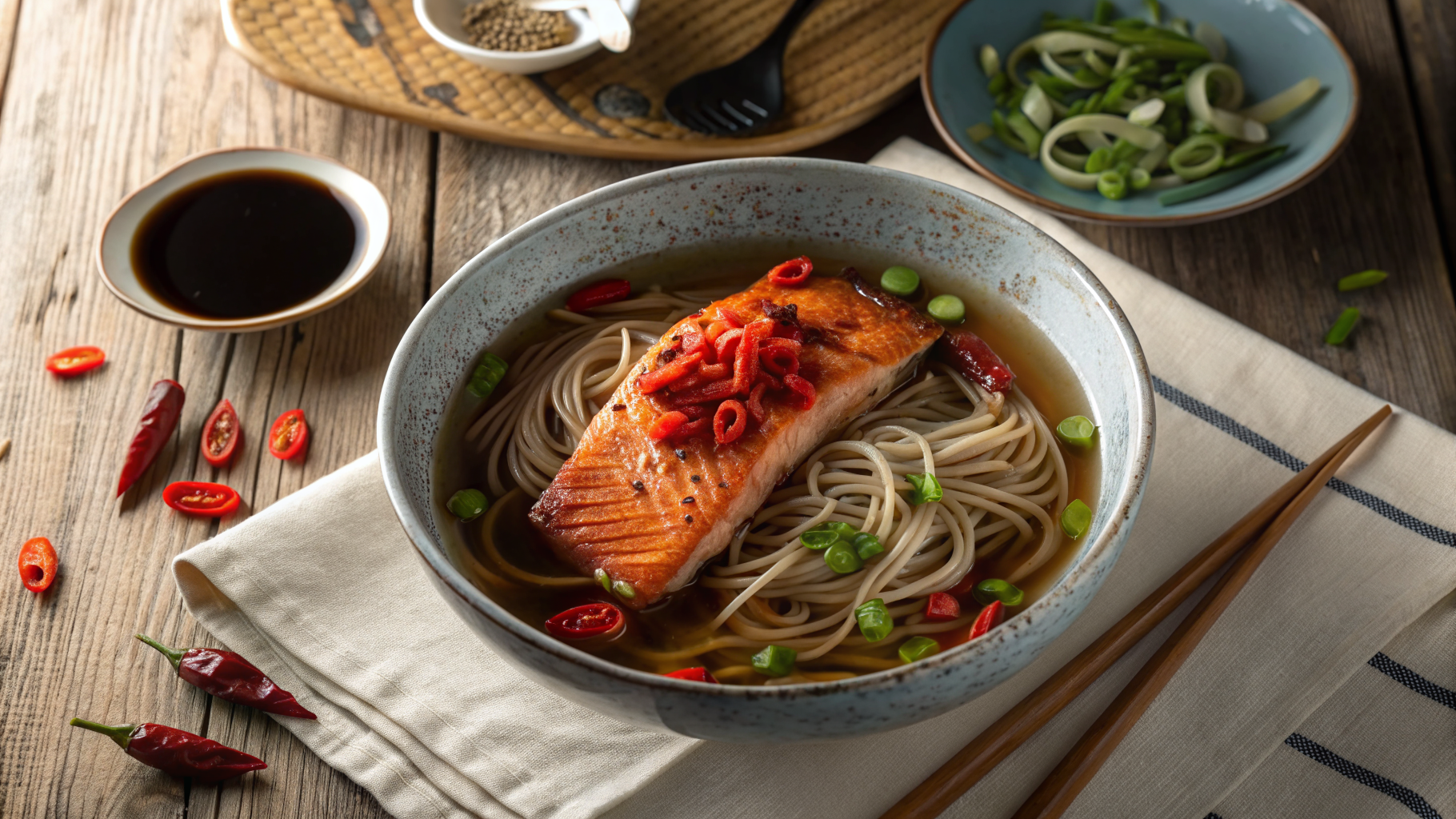
Imagine a bowl where each element is a quiet virtuoso, performing a symphony of flavor and well-being. That's the magic of Soba Noodle in Kombu Dashi with Teriyaki Salmon. This dish is more than a meal; it's a culinary encounter that marries the sea's briny depth with the forest's earthy whispers, all while delivering an impressive profile of nutrients. In a world of quick fixes, this recipe invites you to slow down, savor, and nourish your body with intention. From the omega-3 fatty acids in the salmon to the fiber-rich buckwheat in the soba, every spoonful is a step toward wellness. We'll unravel the science behind these ingredients, reveal the cultural roots of teriyaki and dashi, and offer pro tips to elevate your cooking. Get ready to see this bowl as a masterpiece of balance, crafted for both your palate and your health.
Nutritional Powerhouse: What Science Says About This Bowl
This dish is a nutritional tour de force, backed by peer-reviewed research. Salmon is renowned for its omega-3 fatty acids, EPA and DHA, which are linked to reduced inflammation and improved heart health. A standard serving of salmon (about 150g) provides over 1.5 grams of EPA/DHA, meeting the daily recommendation set by the American Heart Association. The soba noodles, made from buckwheat, offer a rich source of complex carbohydrates and fiber—nearly 3 grams per serving—which promotes satiety and stable blood sugar levels. Buckwheat also contains rutin, a flavonoid with antioxidant properties. The kombu dashi adds iodine and minerals, while the goji berries contribute vitamin C and zeaxanthin, beneficial for eye health. Even the teriyaki components, when used in moderation, provide a balanced blend of protein and aromatic compounds that stimulate digestion. This bowl is a perfect example of functional eating: each ingredient was chosen for its contribution to your well-being, making it a smart choice for the health-conscious gourmet.
Umami: The Fifth Taste and Its Health Benefits
The broth in this dish is a masterclass in umami, the savory fifth taste that was first identified in kombu dashi by Japanese chemist Kikunae Ikeda in 1908. Ikeda discovered that glutamic acid in kombu was responsible for its unique flavor. This umami not only satisfies your taste buds but also has health implications. Research suggests that umami enhances salivation and digestion, and can increase feelings of satiety, helping to control appetite. Moreover, the presence of inosinate from the salmon creates a synergy with glutamate from the kombu, elevating the umami exponentially—a phenomenon known as umami synergy. This means the broth and fish together create a flavor intensity that allows for less salt overall, aligning with dietary guidelines that recommend reducing sodium intake. By understanding umami, you can create delicious dishes that are also healthier, challenging the notion that flavor and health are at odds.
Cultural Heritage: From Tokyo Kitchens to Your Table
This dish is a beautiful synthesis of traditional Japanese culinary elements. Teriyaki, meaning 'glossy grill,' originated in the Edo period (1603-1868) when grilling fish with a soy-based sauce became popular. The technique was refined by cooks in the bustling streets of Tokyo, where street stalls sold teriyaki on skewers. Kombu dashi, on the other hand, is a cornerstone of Washoku, Japanese cuisine, dating back to the Jomon period (14,000-300 BCE). The use of buckwheat soba noodles became widespread in the Edo period, originally as a quick meal for commoners. This recipe melds these historical strands, showcasing how Japanese cuisine values simplicity and seasonality. The addition of goji berries adds a modern twist, reflecting contemporary fusion trends. By cooking this dish, you're not just making a meal; you're partaking in a cultural heritage that celebrates the harmony of ingredients, a concept known as 'shun'—eating in season and at the peak of flavor.
Pro Tip: Perfecting Your Teriyaki Glaze
The teriyaki glaze is a delicate balance of sweetness and salt. To achieve a restaurant-quality shine, use a ratio of 2 parts soy sauce, 1 part mirin, and 1 part sake, with sugar added to taste. Before cooking, pat the salmon dry and lightly season with salt and pepper. Heat a pan over medium-high heat with a small amount of vegetable oil, then place the salmon skin-side down. Let it sear undisturbed for 3-4 minutes until the skin is crisp. Flip and cook for another 2 minutes. Pour the sauce into the pan, but be careful—the sake and mirin will make it bubble vigorously. Reduce the heat and baste the salmon with a spoon, allowing the sauce to thicken and coat the fish. This method ensures a caramelized, glossy finish without burning the sugar. Don't add the sauce too early; the salmon should be almost cooked through before glazing to prevent a sticky, overcooked exterior.
Why This Dish Fits Modern Wellness Trends
In an era of health consciousness, this dish aligns perfectly with current trends like the Mediterranean diet and anti-inflammatory eating. One of the key selling points is its low glycemic index, thanks to the buckwheat soba and the lean protein from salmon. This makes it suitable for those managing diabetes or insulin sensitivity. Furthermore, the use of dashi instead of heavy cream-based broths supports heart health by being low in saturated fat and cholesterol. The trend of 'clean eating' embraces the use of whole, natural ingredients like kombu and salmon, which are rich in essential nutrients. Additionally, the dish is naturally gluten-free if you use tamari instead of soy sauce, catering to those with gluten sensitivities. Its emphasis on omega-3s and antioxidants taps into the demand for foods that support brain health and combat oxidative stress. By offering a meal that is both nourishing and indulgent, this recipe speaks to the modern consumer's desire for foods that are as functional as they are delicious.
Frequently Asked Questions
Q: Can I use a different type of fish for this recipe? A: Yes, you can substitute salmon with other firm-fleshed fish like cod or mackerel. Adjust cooking times accordingly and ensure the fish is fresh. The teriyaki glaze pairs well with any oily fish. Q: How can I make the broth vegetarian? A: Replace the dashi with a vegetable broth and skip the salmon, adding tofu or mushrooms for protein. Use kombu dashi without the fish, which is naturally vegetarian, and enhance with soy sauce. Q: What can I use instead of goji berries? A: If you can't find goji berries, use dried cranberries or raisins for a similar sweet-tart contrast. They'll add a different flavor but still provide a nice pop of color and texture.
Key Takeaways
This bowl is a lesson in balance—both on the plate and in your body. You've learned that the combination of omega-3 rich salmon and complex carbohydrate soba offers sustained energy and heart-healthy fats. The umami from kombu and soy sauce proves that you can achieve depth of flavor without relying on excess salt, a boon for blood pressure management. The cultural history enriches your appreciation, connecting you to centuries of culinary wisdom. Most importantly, you've gained practical tips: precise pan-searing for the perfect glaze, and the flexibility to adapt the dish to dietary needs. As you prepare this meal, remember that each ingredient serves a purpose, and the final result is greater than the sum of its parts. Embrace the precision, savor the layers, and nourish both body and spirit with this modern classic.
Try these recipes on DishIndex
Explore Japanese bowls recipes and more