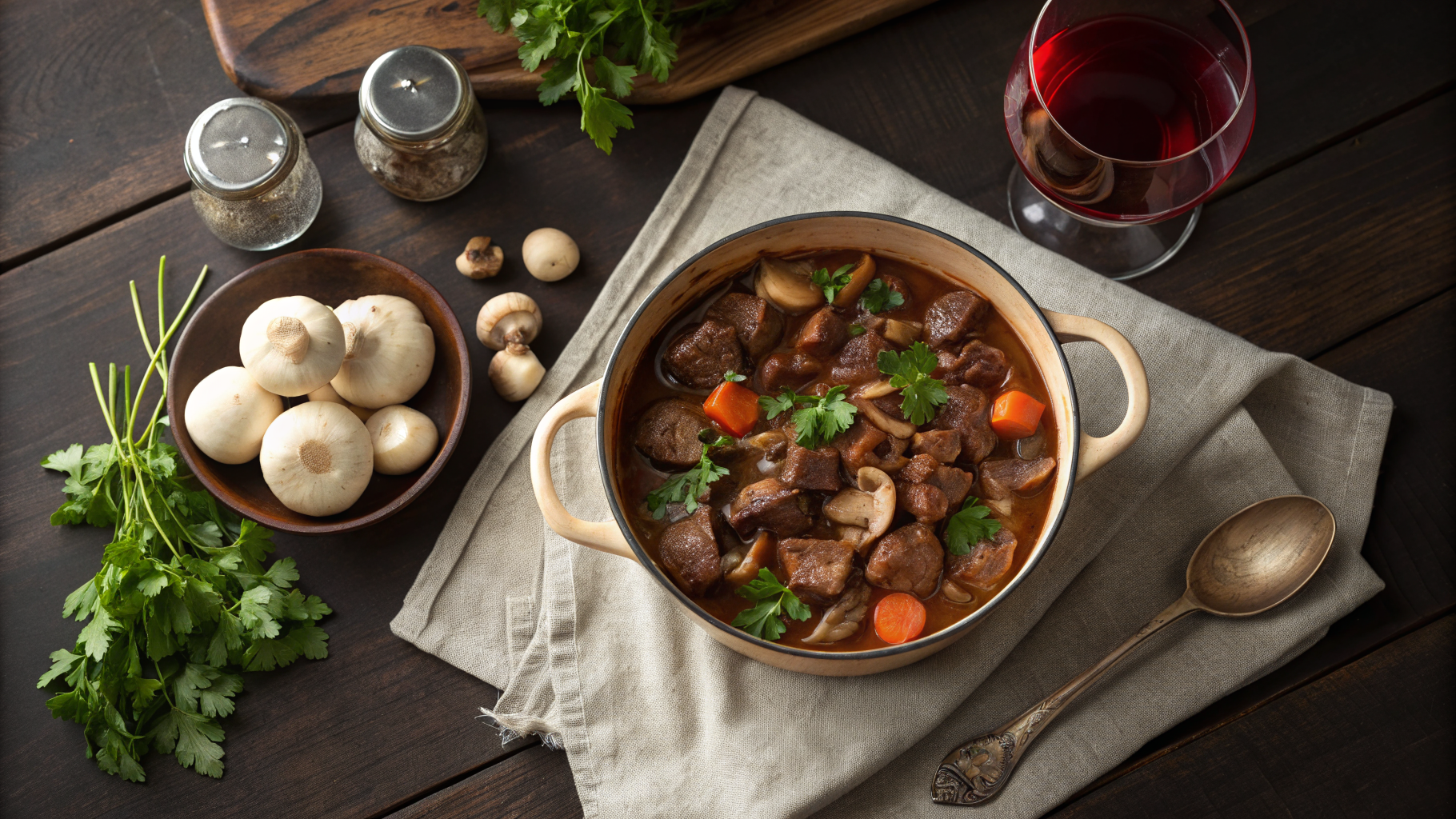
The aroma of red wine, garlic, and herbs simmering for hours on a cold Sunday afternoon is enough to make anyone’s mouth water. Beef Bourguignon, a classic French stew from the Burgundy region, is more than just a meal; it’s a comforting ritual. But in our busy lives, spending hours at the stove can seem impossible. That’s where meal prep comes in. By mastering this iconic dish, you can create a batch of luxurious, tender beef that serves you all week. Imagine coming home to a reheated portion of velvety stew after a long day, accompanied by creamy mashed celeriac. This article will guide you through the art of making Beef Bourguignon with a focus on practical strategies: how to prep ingredients in advance, double the recipe for the freezer, and store leftovers safely. We’ll also explore how this dish can fit into a balanced diet, offering nutrition tips and portion control. Get ready to transform your meal planning with the timeless elegance of French cuisine.
The Perfect Cut: Beef Shin and Why It Matters
At the heart of a true Beef Bourguignon lies the choice of meat. Traditional recipes often use beef shin or chuck, cuts that are rich in connective tissue. This collagen breaks down during the long, slow braise, resulting in fork-tender meat and a sauce with a natural, silky body. Beef shin, specifically, comes from the leg area and is well-exercised, making it tough but incredibly flavorful. Its high gelatin content is a secret weapon: as the stew cooks, the gelatin melts, enriching the sauce and giving it that luscious cling. When purchasing, look for pieces with a good amount of marbling and connective tissue. If shin isn't available, a chuck roast works beautifully. For meal prep, this cut is ideal because it only gets better the next day as the flavors meld. You can also ask your butcher to cut the meat into large chunks; they will hold their shape during cooking and reheating, ensuring every portion is satisfying.
The Bold Trio: Bacon, Shallots, and Chestnut Mushrooms
The supporting cast in Beef Bourguignon adds layers of complexity that elevate the dish. Smoky bacon (or lardons) provides a savory depth and a slight saltiness that permeates the broth. Choose thick-cut, high-quality bacon for the best texture. Shallots, with their milder, sweeter taste compared to onions, are classic. They soften and almost melt into the sauce, releasing a subtle allium sweetness. In a pinch, you can substitute pearl onions, but the gentle flavor of shallots is preferred. Chestnut mushrooms, known for their firm texture and earthy flavor, are the fungus of choice. They hold up well during long cooking, absorbing the wine and meat juices without becoming mushy. For a more rustic version, button mushrooms work, but chestnuts offer a deeper flavor. For efficient meal prep, clean and quarter the mushrooms ahead, peel the shallots, and slice the bacon into small strips. Store these in separate containers in the refrigerator for up to two days before you plan to cook.
A Journey Through Burgundy: The History of a Classic
Beef Bourguignon has its roots in the Burgundy region of France, a land renowned for its rich red wines, particularly Pinot Noir. Originally, it was a peasant dish, a way to tenderize tough cuts of beef by slowly braising them in local wine. The dish as we know it today began to appear in French cookbooks in the early 20th century, but it gained international fame in 1961 when Julia Child featured it in her landmark cookbook, Mastering the Art of French Cooking. Child's version, which included bacon, mushrooms, and a step-by-step method, introduced this rustic stew to American home cooks. For decades, it was seen as a complicated, time-consuming dish, but modern cooks have embraced it for its make-ahead capabilities. Today, chefs and home cooks alike celebrate it for its ability to showcase the terroir of Burgundy, where the same wine used in the stew is served alongside it. This historical journey from humble peasant meal to global icon underscores its timeless appeal.
Pro Tip: Make a Double Batch and Freeze for Later
One of the best-kept secrets of Beef Bourguignon is that it freezes remarkably well. In fact, many chefs argue it tastes even better after a couple of weeks in the freezer, as the flavors continue to meld. Pro tip: make a double batch whenever you can. Use one portion for dinner, then cool the rest quickly and freeze in individual or family-sized containers. To freeze, let the stew cool completely, then portion it into airtight containers or resealable freezer bags, removing as much air as possible. Label with the date and use within three months. When you're ready to enjoy, thaw overnight in the refrigerator and reheat gently on the stove over low heat, adding a splash of beef broth or water to loosen the sauce if needed. This means you have a gourmet meal ready in minutes on your busiest nights, making it an excellent investment for your weekly meal prep.
Balance and Nutrition: Fitting Beef Bourguignon into a Healthy Diet
While Beef Bourguignon is certainly rich and indulgent, it can be part of a balanced diet when portioned thoughtfully. A typical serving provides high-quality protein from the beef, vitamin B12 and iron, and the mushrooms contribute selenium and B vitamins. The dish is naturally low in carbohydrates and high in fat, which can be satiating and help with portion control. To make it more balanced, consider serving it with a generous portion of non-starchy vegetables, like steamed green beans or a fresh salad. The creamy mashed celeriac, a traditional accompaniment, is a lower-carb alternative to potato mash, adding fiber and vitamin C. For a healthier twist, you can use turkey bacon instead of pork bacon, or reduce the amount of butter used in the sauce. Remember, portion size is key: a serving of stew is about the size of your palm. By pairing it with vegetables and watching your serving sizes, you can savor this dish without derailing your health goals.
Frequently Asked Questions
Q: Can I make Beef Bourguignon in a slow cooker or pressure cooker? A: Yes, both work well. For a slow cooker, brown the meat and sauté vegetables first, then cook on low for 6-8 hours. For an Instant Pot, use the sauté function and cook on high pressure for 35 minutes with a natural release. Q: What is the best wine to use? A: Choose a dry, full-bodied red wine like Pinot Noir from Burgundy, Côtes du Rhône, or a red Burgundy blend. The wine should be good enough to drink, as its flavor concentrates during cooking. Avoid cooking wines, which contain salt and additives. Q: How can I thicken the sauce if it's too thin? A: If your stew is too thin, you can mix a slurry of 1 tablespoon of cornstarch or flour with 2 tablespoons of cold water, then stir it into the simmering stew. Cook for a few minutes until it thickens. Alternatively, remove the meat and vegetables, reduce the sauce on the stovetop over medium-high heat until it reaches your desired consistency.
Key Takeaways
As you embark on making Beef Bourguignon, remember these essential lessons. First, choose the right cut: beef shin or chuck, which become tender and flavorful with slow cooking. Second, embrace the make-ahead nature of the dish; it tastes even better the next day, making it perfect for batch cooking and freezing. Third, use quality ingredients: good red wine, smoky bacon, and fresh mushrooms will elevate the final sauce. Fourth, practice portion control: while rich and satisfying, a palm-sized serving of stew with plenty of vegetables is a balanced meal. Finally, don't be afraid to adapt: use turkey bacon for a lighter version, or add more mushrooms for vegetable bulk. By following these tips, you'll master this French classic and enjoy its elegant comfort any night of the week without the fuss.
Try these recipes on DishIndex
Explore Beef Bourguignon recipes and more