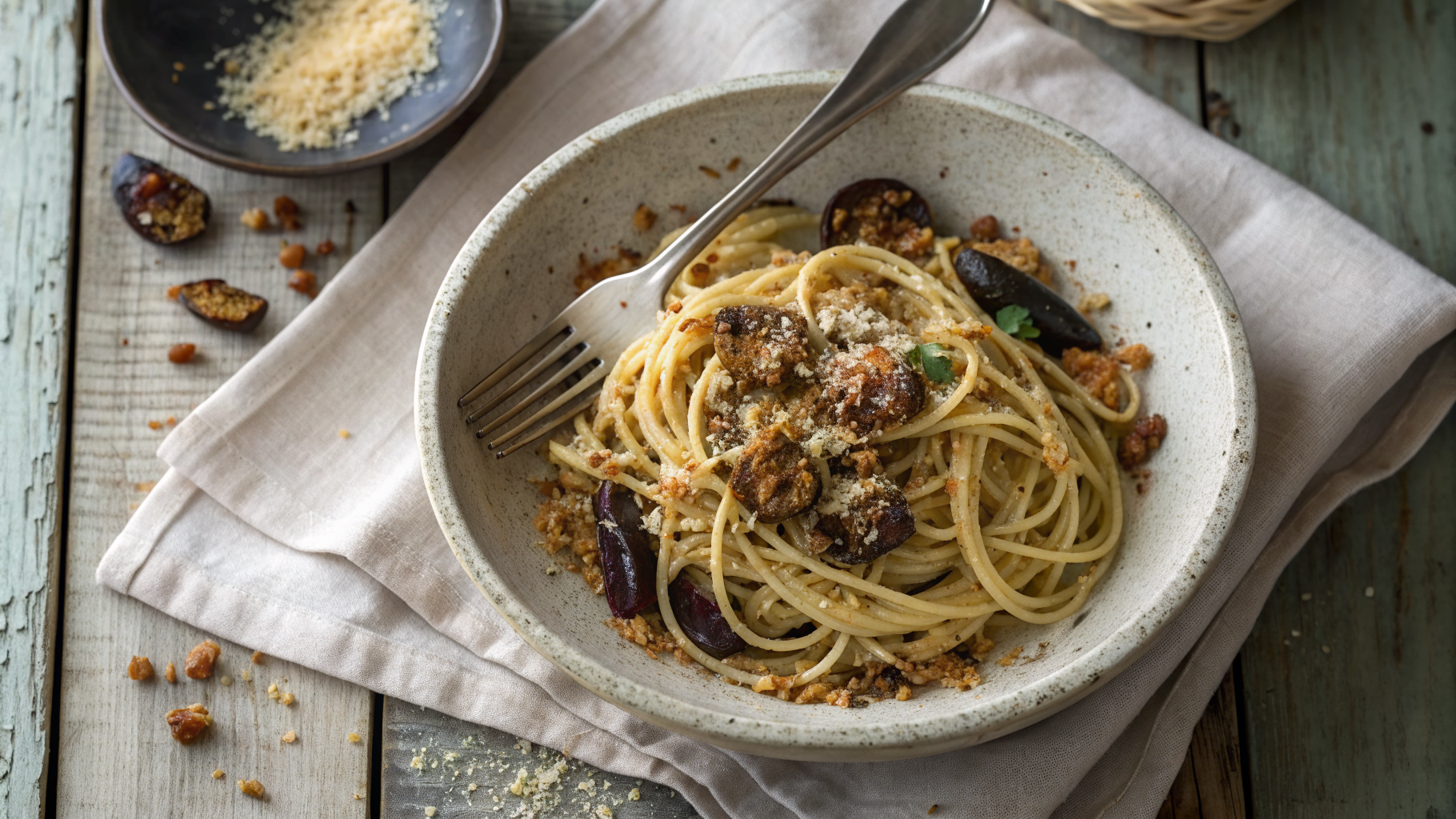
Imagine a plate of pasta that tastes like a slow summer evening in Sicily: smoky, silky eggplant folded through al dente spaghetti, each strand coated in a luscious sauce of pecorino and starchy pasta water, finished with a crackle of golden breadcrumbs. This is smoky eggplant carbonara, a dish that borrows the soul of Rome's classic carbonara but trades guanciale for a vegetable that's in peak season exactly when tomatoes fade. It's a recipe that feels indulgent yet honest, and it happens to be a small act of environmental stewardship. Eggplant is one of the least resource-intensive crops in the Mediterranean, requiring minimal water and no synthetic fertilizers when grown organically. By building a main course around it, you're reducing demand for intensively farmed meat while celebrating a vegetable that thrives in local soil. The breadcrumbs, made from stale bread, are a zero-waste flourish that adds texture without a single new purchase. And the egg-free sauce, thickened with pecorino and pasta water, lowers the dish's carbon footprint further while delivering the same creamy richness. Over the next few minutes, you'll discover how this dish connects to centuries of Italian cucina povera, why its ingredients are a model for sustainable eating, and the precise techniques that make it unforgettable. You'll also learn how to source, cook, and store it with the planet in mind—without sacrificing an ounce of flavor.
The Sustainability of a Sicilian Classic
Eggplant has been cultivated in the Mediterranean for over a thousand years, and its environmental profile is impressive. Compared to meat production, which accounts for roughly 14.5 percent of global greenhouse gas emissions according to the FAO, eggplant requires significantly less land and water per calorie. A single kilogram of eggplant needs about 240 liters of water, while the same weight of beef can require over 15,000 liters. In Sicily, where this dish's inspiration originates, eggplant is often grown in small family plots without synthetic inputs, supporting biodiversity and soil health. The recipe's other ingredients tell a similar story. Pecorino Romano, a sheep's milk cheese produced in Lazio and Sardinia, comes from animals that graze on marginal land unsuitable for crops, turning grass into protein efficiently. Garlic and extra virgin olive oil are low-impact staples that store well and require minimal packaging. Even the smoked paprika, though not traditional, can be sourced from European producers who use solar drying. By choosing this dish, you're supporting agricultural systems that work with the land rather than against it. The recipe also encourages using stale bread for breadcrumbs, a practice that diverts food waste from landfills, where it would otherwise produce methane. Every element is designed to tread lightly.
Why Roasting Eggplant Is a Climate-Smart Move
The most important step in this recipe is roasting the eggplant until it collapses into smoky richness. But did you know that your oven choice can affect the dish's carbon footprint? A conventional electric oven preheated to 220°C (425°F) for 25 minutes uses about 1.5 kilowatt-hours of electricity, which translates to roughly 0.6 kilograms of CO2 emissions depending on your grid's energy mix. To reduce that, consider using a countertop convection oven or an air fryer, which heat up faster and use less energy. Alternatively, roast the eggplant on a gas grill or over a charcoal fire, which imparts even more smoke and uses no electricity. Another sustainable trick: don't peel the eggplant. The skin contains nasunin, a powerful antioxidant, and roasting it whole retains moisture and reduces the need for added oil. Prick the eggplant all over with a fork and roast it directly on the oven rack or grill until the skin chars and the flesh is completely soft. This method uses the vegetable's own moisture to steam it from the inside, resulting in a silky texture without extra fat. Once cooled, scoop out the flesh and discard the stem and skin—or compost them. The smoky flavor you get from charring is a free byproduct of the cooking process, no artificial smoke required.
From Cucina Povera to Modern Tables
Carbonara itself is a relatively modern invention, born in Rome after World War II, when American soldiers brought bacon and eggs and Italians improvised with local cheese and pasta. But the spirit of this eggplant version reaches back centuries to cucina povera, the peasant cooking of southern Italy that transformed humble ingredients into nourishing meals. In Sicily, eggplant is revered as 'melanzana' (from the Arabic 'badinjan'), a legacy of the island's Moorish rule from the 9th to the 11th centuries. Dishes like caponata and pasta alla Norma showcase its versatility. This recipe bridges that history with contemporary concerns. By replacing guanciale with eggplant, it aligns with the Mediterranean diet's emphasis on plant-based proteins, which research links to lower rates of heart disease and type 2 diabetes. It also fits the 'flexitarian' trend, where cooks reduce meat consumption without eliminating it entirely. The crispy breadcrumbs, a nod to Sicilian 'muddica atturrata', add a textural contrast that echoes the island's love of toasted bread in everything from pasta to salads. This is not a compromise dish; it's a celebration of what Italian cooking does best: turning scarcity into abundance. Every bite connects you to a lineage of cooks who made do with what the land provided, and in doing so, created a cuisine that the world now cherishes.
Pro Tip: Emulsify Like a Roman, Not a Robot
The biggest mistake home cooks make with carbonara is scrambling the eggs or, in this egg-free version, ending up with a clumpy, greasy sauce. The secret lies in emulsification, and it's all about temperature control. In a traditional carbonara, you whisk eggs and cheese with a splash of pasta water to create a stable emulsion. Here, pecorino and pasta water do the work, but you must add the water gradually while whisking constantly. Start with a quarter cup of starchy pasta water, whisked into the grated pecorino in a bowl until it forms a smooth paste. Then, add more water a tablespoon at a time until the mixture is the consistency of heavy cream. The starch in the water acts as an emulsifier, binding the fat from the cheese and oil to the liquid. When you toss the hot pasta with the sauce, do it off the heat—if the pan is too hot, the cheese will seize and turn stringy. Another trick: reserve at least two cups of pasta water before draining, even if you think you won't need it. That liquid is liquid gold for adjusting consistency. Finally, add the roasted eggplant at the very end, folding it in gently so it doesn't break down further. The result is a sauce that clings to every strand, glossy and smooth, with no trace of graininess.
The Nutritional and Ecological Case for Eggplant
Eggplant is more than a vessel for smoky flavor; it's a nutritional powerhouse. A 100-gram serving provides about 2.5 grams of fiber, 10 percent of your daily manganese, and a range of antioxidants including anthocyanins, which give the skin its deep purple hue. These compounds have been studied for their potential to reduce inflammation and protect against chronic diseases. But the ecological benefits are equally compelling. Eggplant is a low-input crop that thrives in warm climates and can be grown in urban gardens, reducing food miles. When you buy seasonal eggplant from a local farmer, you're supporting a shorter supply chain and often avoiding the plastic packaging and refrigeration required for imported produce. The dish's reliance on pantry staples—spaghetti, olive oil, garlic, pecorino—means fewer trips to the store and less packaging waste. Even the breadcrumbs can be made from the heels of bread that would otherwise be tossed. This recipe is a blueprint for a more resilient kitchen: one that adapts to what's available, wastes little, and celebrates the flavors of the moment. It's a small but delicious way to align your plate with your values.
Frequently Asked Questions
Q: Can I make this dish vegan? A: Yes, substitute the pecorino with a high-quality vegan Parmesan alternative and use nutritional yeast for umami. The smoky eggplant and crispy breadcrumbs will still deliver plenty of flavor. Q: How do I store leftovers? A: Keep the pasta and sauce separate if possible, as the eggplant can become mushy. Store in an airtight container in the refrigerator for up to three days. Reheat gently with a splash of water to revive the sauce. Q: Is it necessary to salt the eggplant? A: Modern eggplants are less bitter, so salting is optional. However, salting can help draw out excess moisture and improve texture. If you do salt, rinse and pat dry before roasting to avoid a salty sauce.
Key Takeaways
Embrace the smoky depth of roasted eggplant as a sustainable stand-in for guanciale, reducing your carbon footprint without sacrificing flavor. Use stale bread to make crispy breadcrumbs, turning potential waste into a crunchy garnish. Choose locally grown, seasonal eggplant and source pecorino from small-scale producers to support eco-friendly agriculture. Master the art of emulsifying pecorino with starchy pasta water for a creamy sauce that rivals the classic. And remember: the most sustainable meal is one you savor, so cook with intention, share with others, and let the humble eggplant remind you that good food can be both delicious and responsible. With these lessons, you're ready to bring a taste of Sicily to your table and make a small but meaningful difference with every bite.
Try these recipes on DishIndex
Explore eggplant carbonara recipes and more