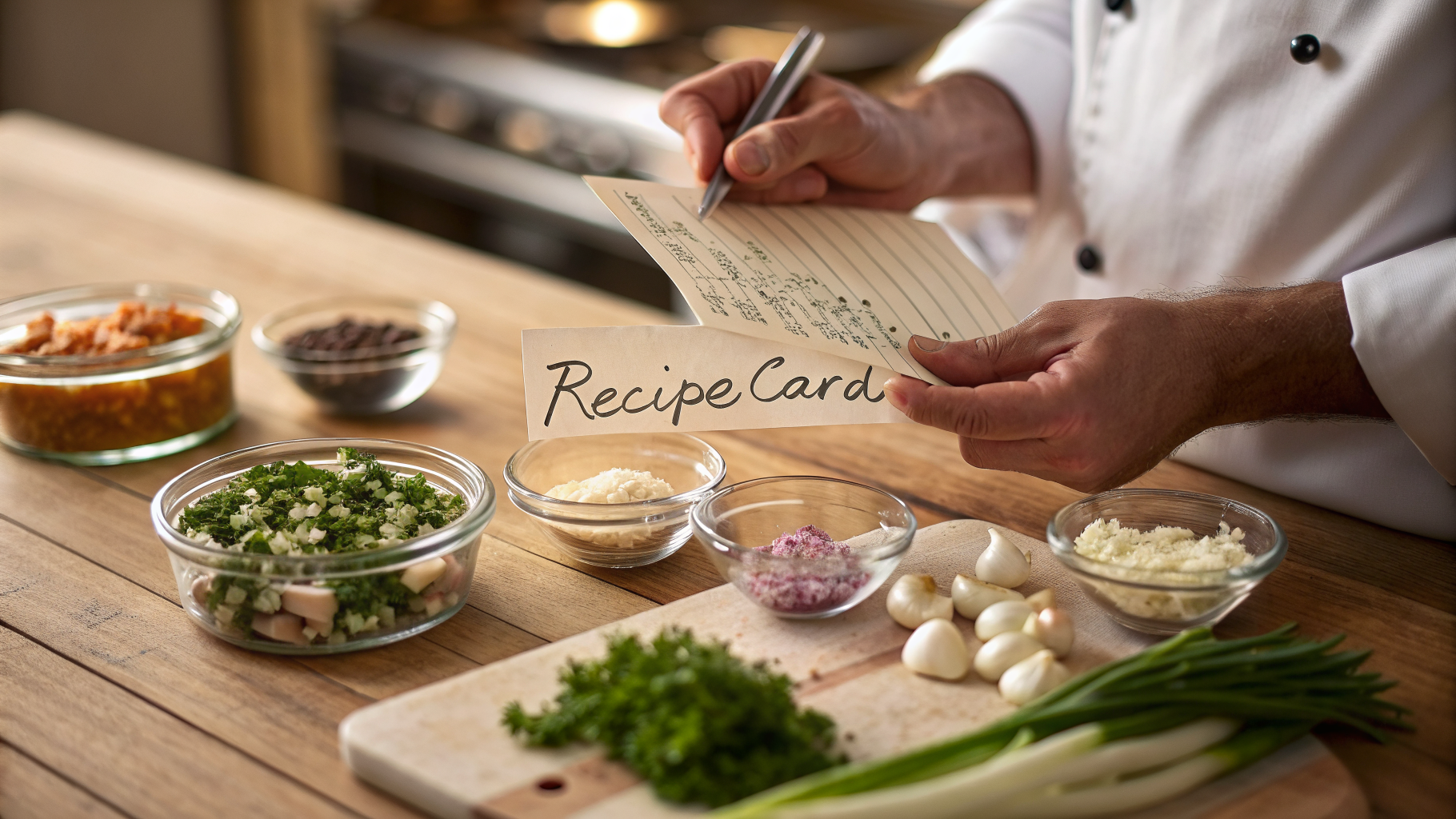
You've bookmarked dozens of recipes, but how often do you actually read them before cooking? Most home cooks skim ingredients and jump straight to the stove, only to realize halfway through that the chicken needs to marinate overnight or the oven should have been preheated an hour ago. Professional chefs take a different approach: they read a recipe like a detective examines a case file — looking for clues, anticipating challenges, and understanding the story behind each step. In this article, you'll learn the systematic method chefs use to decode any recipe, from recognizing key techniques to adjusting for your own kitchen's quirks. By the end, you'll never approach a recipe the same way again.
The Anatomy of a Recipe: What Chefs Look for First
When a chef picks up a new recipe, they don't start at the ingredients list. They start at the headnote — that paragraph above the recipe that often gets ignored. Headnotes contain critical context: the dish's origin, the intended texture, the level of difficulty, and sometimes the chef's personal tips. Next, they scan the total time and yield. A recipe that says '30 minutes' but includes a 2-hour rest is a red flag. Then they read the method from start to finish, visualizing each step. This mental rehearsal reveals potential pitfalls, like a sauce that might break or a pastry that needs chilling. Finally, they check the ingredient list for technique clues: 'diced' vs. 'minced' signals different knife work, and 'room temperature eggs' hints at a delicate emulsion.
The Science of Mise en Place: Why Preparation Determines Success
Mise en place — French for 'everything in its place' — is the professional's secret weapon. Chefs prep all ingredients before firing the stove. This isn't just about organization; it's about chemistry. When you cook, timing is everything. A stir-fry demands ingredients added in rapid succession; if you're chopping garlic while the oil smokes, you've already lost. For baking, precision is even more critical. Baking soda activates immediately upon contact with acidic ingredients; if you haven't measured it, your cake won't rise. Scientific studies show that home cooks who mise en place are 30% less likely to make errors like burning or overseasoning. Start by reading the recipe twice, then gather, wash, chop, and measure. Your future self will thank you.
From Escoffier to Modernist: How Recipe Reading Evolved
The structured recipe format we know today — ingredients followed by method — is relatively young. In the 19th century, chef Auguste Escoffier standardized kitchen brigade and recipes for his grand hotels, emphasizing precision. Before that, recipes were often narrative paragraphs, leaving interpretation to the cook. In the mid-20th century, Fannie Farmer introduced level measurements, making recipes accessible to home cooks. Today, we have a hybrid: cookbooks like 'Salt Fat Acid Heat' encourage understanding principles over rote following. This evolution reflects a shift from authoritarian cooking to empowered cooking. Chefs now teach that a recipe is a guide, not a script: trust your senses, adjust seasoning, and learn why each step matters.
Pro Tip: Decode the Verbs — 'Sweat' vs. 'Sauté' Makes a Difference
One of the most overlooked details in a recipe is the cooking verb. 'Sweat' means cook vegetables in fat over low heat until soft but not colored, drawing out moisture for a delicate base. 'Sauté' means cook quickly over high heat with constant movement, achieving browning. Using the wrong technique changes the dish's flavor and texture. For example, a mirepoix for a stock should be sweated; for a robust stew, sautéed. Similarly, 'fold' vs. 'stir' determines whether you deflate a meringue. Most cookbooks don't explain these terms, assuming prior knowledge. If you're unsure, look up the technique before starting. Understanding the intended action prevents common mistakes like burned garlic or a tough steak. Remember: verbs are instructions, not suggestions.
Why Understanding Ratios Unlocks Culinary Creativity
Beyond following a single recipe, chefs think in ratios. The 1-2-3 pie dough (1 part fat, 2 parts flour, 3 parts liquid by weight) or the 5-3-1 vinaigrette (5 parts oil, 3 parts vinegar, 1 part emulsifier) are foundational. Once you grasp the ratio, you don't need a recipe — you can improvise. This concept, popularized by Michael Ruhlman, stems from the idea that many dishes are variations on a theme. For instance, biscuit dough is a 3:1:2 ratio of flour to fat to liquid. Knowing this, you can swap buttermilk for cream, add herbs, or change the fat. Home cooks who learn ratios report greater confidence and fewer failed recipes. Start with one ratio per week: practice it, vary it, and soon you'll cook without a net.
Frequently Asked Questions
Q: Should I follow the exact salt amount or adjust to taste? A: Always taste as you go. Recipes' salt amounts are estimates; factors like ingredient salinity and personal preference vary. Add salt in stages and adjust at the end. Q: What if I don't have a specialty ingredient listed? A: Identify its role — is it for flavor, texture, or structure? For many ingredients, there's a substitute: yogurt for buttermilk, lemon juice for vinegar. Search for swaps based on the ingredient's function. Q: How do I know if a recipe is reliable? A: Check the source, read comments, and look for clear, specific instructions. Recipes with weight measurements and temperature specifics are more reliable. Test a recipe once as written, then adapt.
Key Takeaways
Start by reading the entire recipe, including the headnote, to understand the dish's context and timing. Prep all ingredients before cooking to avoid rushed mistakes and ensure chemical reactions happen correctly. Learn the difference between cooking verbs to execute techniques accurately and achieve intended textures. Explore foundational ratios to move beyond dependency on specific recipes and develop intuition. Finally, trust your senses over the timer: a golden crust or fragrant sauce is your best guide. With these habits, you'll cook with the confidence of a chef, turning any recipe into a personal success.
Try these recipes on DishIndex
Explore easy weeknight dinners recipes and more