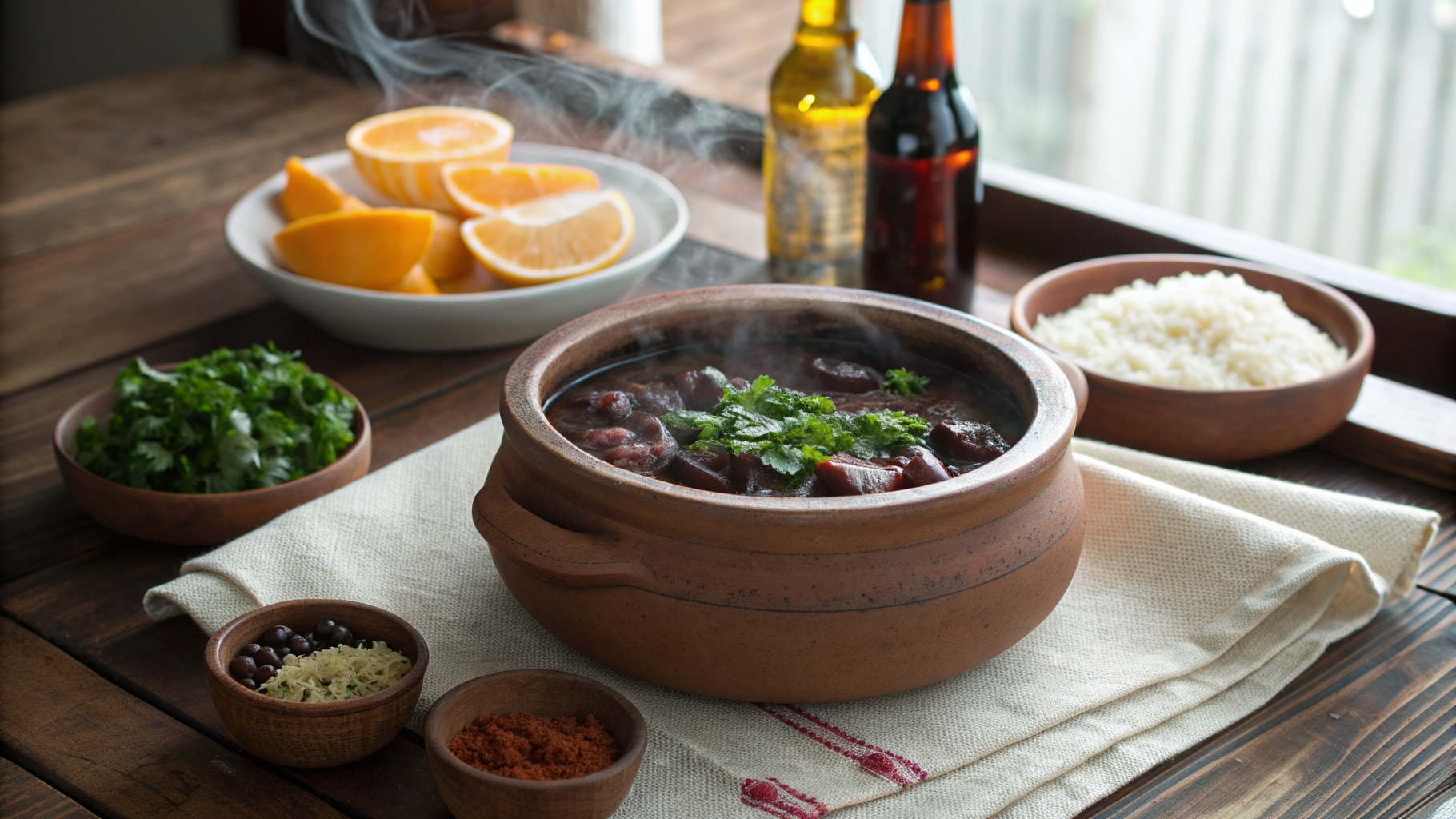
Imagine a pot bubbling on the stove, filling your kitchen with the smoky, earthy aroma of black beans simmering with pork. That's feijoada, Brazil's soulful national dish, a celebration of patience and community. You start with dried black beans, soaking up the promise of a rich, velvety broth. Then come the meats—smoked pork ribs, salty dried beef, and tender sausages, each releasing its essence into the pot. As the hours pass, the beans soften into a creamy sauce that coats every morsel, while the meat becomes ridiculously tender, almost melting against your tongue. You'll serve it over fluffy white rice, with a sprinkle of crispy farofa (toasted cassava flour), a spoonful of tangy chopped collard greens, and a wedge of orange to cut through the richness. Every bite is a journey through Brazil's history, a dish made for sharing around a table with friends and cold beer. It's hearty, comforting, and utterly unforgettable. But beyond its soul-satisfying flavors, feijoada offers a profound lesson in sustainability—one that modern home cooks can embrace to reduce their environmental footprint while eating deliciously.
A Tradition Born of Resourcefulness
Feijoada's origins lie in the ingenuity of enslaved Africans and Indigenous peoples in colonial Brazil, who transformed discarded pork cuts—ears, tails, feet—into a nourishing stew with black beans. This nose-to-tail approach minimized waste and maximized flavor, embodying a sustainable ethos long before the term existed. Today, feijoada typically features higher-quality cuts like pork shoulder and smoked ribs, but its foundation remains rooted in using every part of the animal. By choosing dried beans over canned, you reduce packaging waste and energy used in canning. Beans are a nitrogen-fixing crop, enriching soil without synthetic fertilizers, making them an environmentally friendly protein source. In fact, swapping beef for beans in your weekly meals can cut your carbon footprint significantly—a single serving of beans has about 10 times less greenhouse gas impact than beef. Feijoada thus represents a delicious way to eat more plant-forward, while still honoring tradition.
The Art of Selecting Meats Mindfully
The key to a great feijoada lies in the quality and variety of its meats: smoked pork ribs, dried salted beef (carne seca), linguica sausage, pork shoulder, and bacon. For sustainability, source these from local butchers who raise animals humanely and on pasture. This supports regional economies and reduces transport emissions. Dried and smoked meats are traditional preservation methods that extend shelf life without refrigeration, cutting energy use. When buying, look for cuts that are less popular but full of flavor, such as pork hocks or ribs, which are often cheaper and more sustainable. Ask your butcher about the farm's practices—knowing your food's origin fosters a deeper connection. Additionally, using the whole pig honors the animal, reducing the demand for mass-produced, resource-intensive meat. By choosing quality over quantity, you not only enhance the stew's depth but also align your cooking with ecological values.
Rooted in History: From Senzalas to Sunday Tables
Feijoada's journey is a microcosm of Brazil's complex history. It evolved in the senzalas (slave quarters) of Portuguese colonizers, where enslaved cooks combined available ingredients to create sustenance. Over centuries, it transcended its humble beginnings to become a national symbol of unity and cultural fusion. On Wednesdays and Saturdays, Rio de Janeiro's restaurants serve feijoada as a working-class lunch, while families across the country gather for weekend feasts. This dish embodies the Brazilian ethos of 'aproveitamento'—making the most of what you have. It’s a lesson in mindful consumption that resonates today. By cooking feijoada, you participate in a tradition that respects history and resources. Each pot tells a story of resilience and adaptation, inviting you to slow down and savor the process. In an era of fast food and convenience, feijoada reminds us that the best meals are often the ones that take time and care.
Pro Tip: Maximize Flavor, Minimize Waste
One expert-level insight most home cooks overlook is to save the bean cooking liquid. After soaking beans overnight, discard the water—this reduces compounds that cause flatulence. However, the liquid from simmering the beans with meats is liquid gold; it’s packed with flavor and gelatin from the bones. Use it as a base for soups or to cook your rice, infusing every grain with smoky richness. This practice eliminates waste and elevates your side dishes. Another trick: brown the meats in batches to develop a deep fond (the browned bits on the pot bottom). Deglaze with a splash of water or broth, scraping up those caramelized particles—they add complexity and reduce sticking. For a leaner version, you can refrigerate the cooked stew overnight, then skim off the congealed fat. That fat can be reserved and used for sautéing vegetables, adding another layer of flavor while reducing waste.
Feijoada in the Modern Eco-Conscious Kitchen
As plant-based diets gain traction, feijoada offers a flexible template for sustainable eating. Traditionalists may balk, but you can create a 'feijoada vegetariana' using smoked tofu, mushrooms, and vegan sausages, cutting the dish's carbon footprint dramatically. Yet even the classic version can be part of a climate-smart diet if consumed in moderation. The Brazilian Institute of Geography and Statistics notes that feijoada is a weekly ritual for many, but its rich meats are often reserved for special occasions. This 'less but better' approach aligns with current nutrition guidance that emphasizes reducing meat intake. Pairing feijoada with orange slices and collard greens adds vitamins and aids digestion, while the beans provide fiber and plant protein. By embracing seasonal produce—collard greens thrive in winter—you support local agriculture and reduce energy costs associated with greenhouse farming. Feijoada thus becomes a model for balanced, sustainable feasting.
Frequently Asked Questions
Q: Can I make feijoada in a slow cooker or Instant Pot? A: Absolutely. For a slow cooker, soak beans overnight, brown meats, then cook on low for 8 hours. In an Instant Pot, use sauté function for browning, then cook on high pressure for 45 minutes with natural release. This saves energy and time while preserving flavor. Q: How do I reduce the saltiness from the dried salted beef? A: Desalt the carne seca by soaking it in cold water for at least 12 hours, changing the water several times. You can also blanch it in boiling water for 10 minutes before adding to the pot. Taste and adjust seasoning accordingly. Q: What's the best substitute for farofa? A: Farofa is toasted cassava flour, but you can make a quick alternative by toasting breadcrumbs in butter or oil until golden. It adds a similar crunch and absorbs the stew's juices. You can also use crushed cornflakes for a gluten-free option.
Key Takeaways
As you lift your spoonful of feijoada, remember that every ingredient has a story and a footprint. Choose dried beans over canned to cut waste and energy. Source meats from local farmers who practice regenerative agriculture, turning a meal into a political act of support for the planet. Embrace the nose-to-tail philosophy by selecting less conventional cuts—not only do they deepen flavor, but they honor the animal's sacrifice. Save every bit of cooking liquid and leftover meat for future meals, transforming scraps into new creations. Above all, savor the ritual of slow cooking, which connects you to generations of cooks who made the most of what they had. By cooking feijoada, you're not just feeding your family; you're nourishing a sustainable future, one delicious, smoky, bean-rich bowl at a time.
Try these recipes on DishIndex
Explore feijoada recipe recipes and more