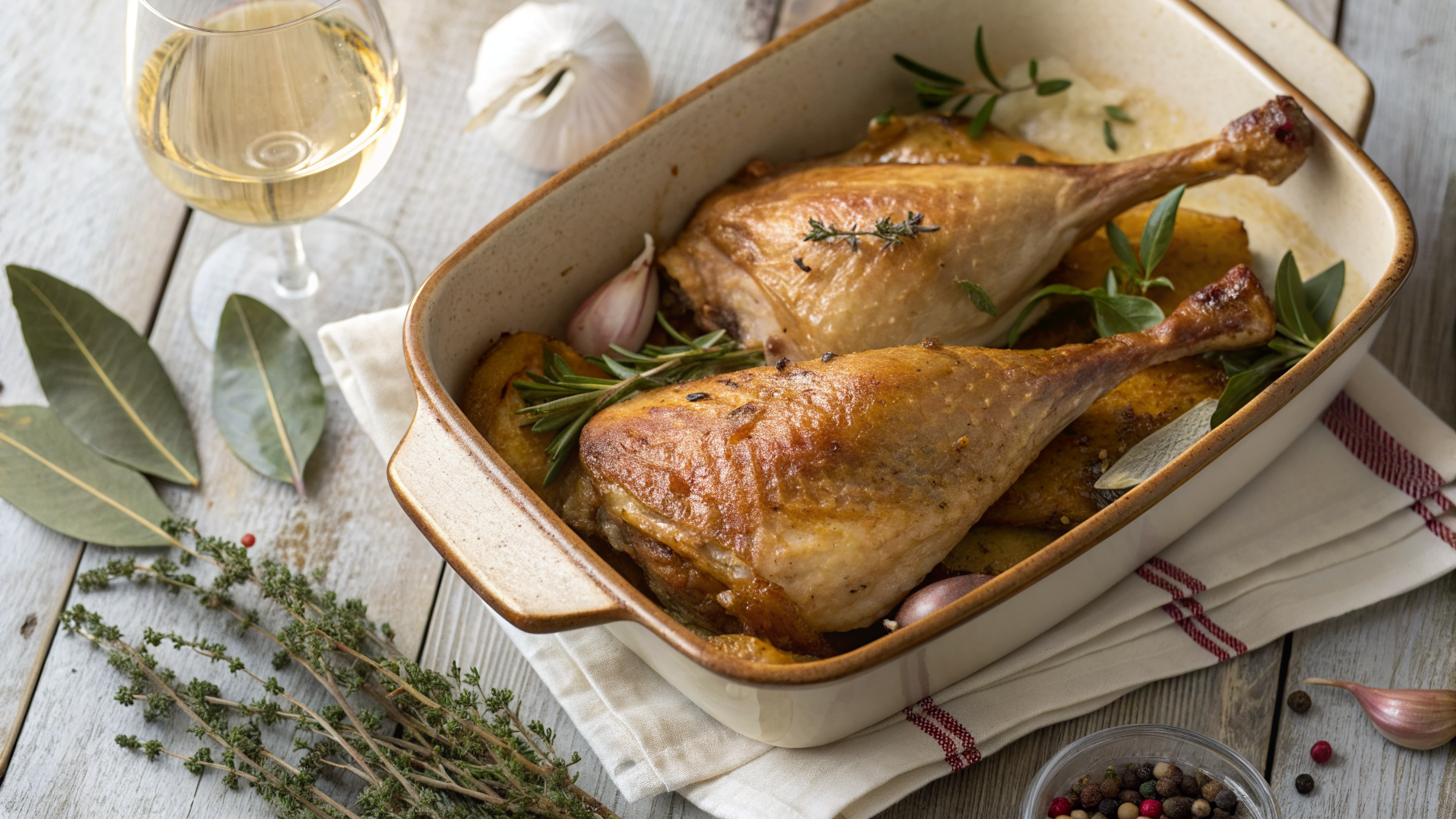
Imagine a kitchen where duck legs rest overnight under a blanket of coarse sea salt, garlic, and thyme, then slip into a warm bath of their own rendered fat for hours. That is duck confit, one of the oldest preservation techniques in French cooking and, surprisingly, one of the most misunderstood from a nutritional standpoint. Many people assume that anything confit must be a dietary sin, but the science tells a more nuanced story. Duck legs are a concentrated source of complete protein, iron, selenium, and B vitamins, and the slow poaching method changes the food's structure in ways that matter for both flavor and digestion. In this article, we will unpack the nutritional profile of duck confit and its key ingredients, from the salt-curing stage to the leftover fat, and examine what peer-reviewed research says about how these nutrients behave in the body. By the end, you will understand why this Gascon classic deserves a place in a thoughtful, balanced diet rather than the culinary penalty box. We will look at macros, micronutrients, and the science behind every step, so you can cook and eat with confidence.
What Duck Confit Actually Delivers Nutritionally
A 100-gram portion of cooked duck meat, skin included, provides roughly 337 calories, about 19 grams of protein, and 28 grams of fat, according to standard food composition databases. That fat profile is more interesting than it looks. Duck fat is roughly 50 percent monounsaturated fat, a ratio closer to olive oil than to butter, and it contains meaningful amounts of stearic acid, which studies suggest has a neutral effect on LDL cholesterol compared with other saturated fats. The protein is complete, supplying all nine essential amino acids, with particularly strong levels of lysine and leucine, both critical for muscle protein synthesis. Duck meat also stands out for its micronutrients: a 100-gram serving can deliver over 30 percent of the daily recommended intake of selenium, roughly 25 percent of iron, and a substantial dose of zinc and B12. Selenium functions as a cofactor for glutathione peroxidase, an antioxidant enzyme studied extensively for its role in cellular protection. Iron in duck is primarily heme iron, which has a bioavailability of 15 to 35 percent, far higher than the 2 to 20 percent typical of plant-based non-heme iron. These numbers reframe confit as a nutrient-dense food rather than an empty indulgence.
Salt, Herbs, and the Chemistry of Curing
The overnight cure is not just a flavor move; it is a chemical process. Sea salt draws moisture out of the duck legs through osmosis, lowering water activity and creating an environment where spoilage bacteria struggle to multiply. This is the same principle that allowed Gascon cooks to preserve meat without refrigeration for centuries. But salt does more than preserve. Research on salt curing shows that it partially denatures muscle proteins, improving water retention during cooking and yielding the tender, silky texture confit is famous for. The bay leaf and thyme contribute more than aroma. Thyme contains thymol and carvacrol, two phenolic compounds with documented antimicrobial and antioxidant activity, and studies have shown that rosemary and thyme extracts can reduce lipid oxidation in cooked meats, slowing the development of off-flavors and potentially limiting harmful oxidation products. Garlic adds allicin, a sulfur compound with anti-inflammatory properties that has been the subject of hundreds of clinical studies. The white wine introduces acidity and polyphenols; its ethanol helps solubilize fat-soluble flavor compounds, while its acid gently tenderizes the meat. Together, these ingredients form a preservation and flavor system that is remarkably sophisticated for something that takes five minutes to assemble.
A Gascon Tradition Born of Practicality
Duck confit originates in Gascony, the southwestern French region anchored by Toulouse and Auch, where the tradition of confire, meaning to preserve, dates back to at least the medieval period. Farmers raising moulard and muscovy ducks would salt the legs in autumn, then poach them slowly in rendered fat and store them submerged in crocks for the winter. The fat formed an airtight seal, excluding oxygen and microbes, and the legs could keep for months in a cool cellar. This was not luxury food; it was survival food, a way to stretch a single bird across a season. The word confit comes from the Latin conficere, to prepare or make, and the technique appears in French household manuals as early as the 16th century. Only in the 20th century, as refrigeration spread and preservation became unnecessary, did confit transform into a celebrated restaurant dish. Today it is one of the pillars of Gascon identity, served with potatoes cooked in the same fat, and its preparation is often treated as a family ritual passed down through generations. Understanding this history matters: confit was designed by people who needed every calorie and nutrient to count.
Pro Tip: Brush, Then Save Every Drop of Fat
Two expert details separate good confit from great confit. First, brush off the excess salt before cooking, as the recipe warns, but do it with a pastry brush rather than rinsing, because rinsing adds surface water that spatters in hot fat and dilutes the cure's flavor. A light brush leaves just enough salinity to season the meat through. Second, treat the rendered fat as a nutritional asset, not waste. Duck fat is a superb cooking medium with a high smoke point of roughly 190 degrees Celsius, and it carries fat-soluble vitamins, particularly vitamin E and small amounts of vitamin D, into whatever you cook with it. When you finish the confit, strain the fat through a fine sieve while still warm, then refrigerate it; it will keep for months and can roast potatoes, sear vegetables, or build the base of a gravy. Nutritionally, using a tablespoon of duck fat in place of butter adds monounsaturated fat and a distinctive flavor that lets you reduce added salt elsewhere in the dish. The leftover fat is where the dish's economy and its nutrition both concentrate, so plan for it before you begin cooking.
Where Confit Fits in Modern Nutrition Science
Duck confit sits at an interesting intersection of two current trends: the rehabilitation of traditional fats and the growing interest in minimally processed, nutrient-dense whole foods. Dietary guidelines in many countries have moved away from blanket fat restriction toward emphasizing fat quality, and the monounsaturated profile of duck fat aligns with that shift. Meanwhile, the slow-poaching method is a form of gentle, moist cooking that avoids the high-heat dry methods associated with the formation of heterocyclic amines and polycyclic aromatic hydrocarbons, compounds classified as probable carcinogens when meats are charred or smoked. Confit's cooking temperature, typically between 80 and 90 degrees Celsius, is well below the threshold where those compounds form. Research on the so-called French paradox has also renewed interest in regional French eating patterns, where rich dishes like confit are consumed in modest portions alongside vegetables and legumes. The takeaway from nutrition science is not that confit is a health food, but that portion size and context matter enormously. A 150-gram serving of duck leg provides a substantial protein hit and meaningful iron and selenium, and pairing it with lentils or a sharp green salad adds fiber and balances the meal.
Frequently Asked Questions
Q: Is duck confit high in cholesterol? A: Duck meat contains moderate cholesterol, roughly 90 milligrams per 100 grams, but dietary cholesterol has a smaller effect on blood cholesterol than once believed. Most people can include it in a balanced diet, though those with specific lipid disorders should consult a clinician. Q: Does the fat content make confit unhealthy? A: Not inherently. Roughly half the fat in duck is monounsaturated, and the dish is rich in protein and micronutrients. Portion control is the key variable, since a single leg can deliver 400 to 500 calories depending on size. Q: Can I reduce the salt in duck confit? A: Yes, though not below about 2 percent of the meat's weight without compromising preservation and texture. You can shorten the cure to eight hours, brush thoroughly, and rely on herbs and wine for flavor rather than additional salt.
Key Takeaways
Duck confit is a nutrient-dense dish, not an empty indulgence: expect roughly 19 grams of protein, 28 grams of fat, and strong doses of selenium, heme iron, zinc, and B12 per 100 grams. The overnight salt cure is functional chemistry, lowering water activity and tenderizing muscle fibers while thyme and garlic add antioxidant compounds. Duck fat is roughly half monounsaturated, closer to olive oil than butter, and its high smoke point makes the strained leftovers a valuable cooking medium rather than waste. The gentle poaching temperature avoids the high-heat cooking methods associated with harmful compound formation, so the technique itself is one of the healthier ways to prepare meat. Finally, context is everything: serve confit in modest portions with fiber-rich sides like lentils or greens, brush off excess salt before cooking, and let the dish's history remind you that traditional foods were designed around nutrition and preservation long before anyone counted macros. Cook it slowly, eat it thoughtfully, and enjoy a French classic that earns its place on your table.
Try these recipes on DishIndex
Explore duck confit recipes and more