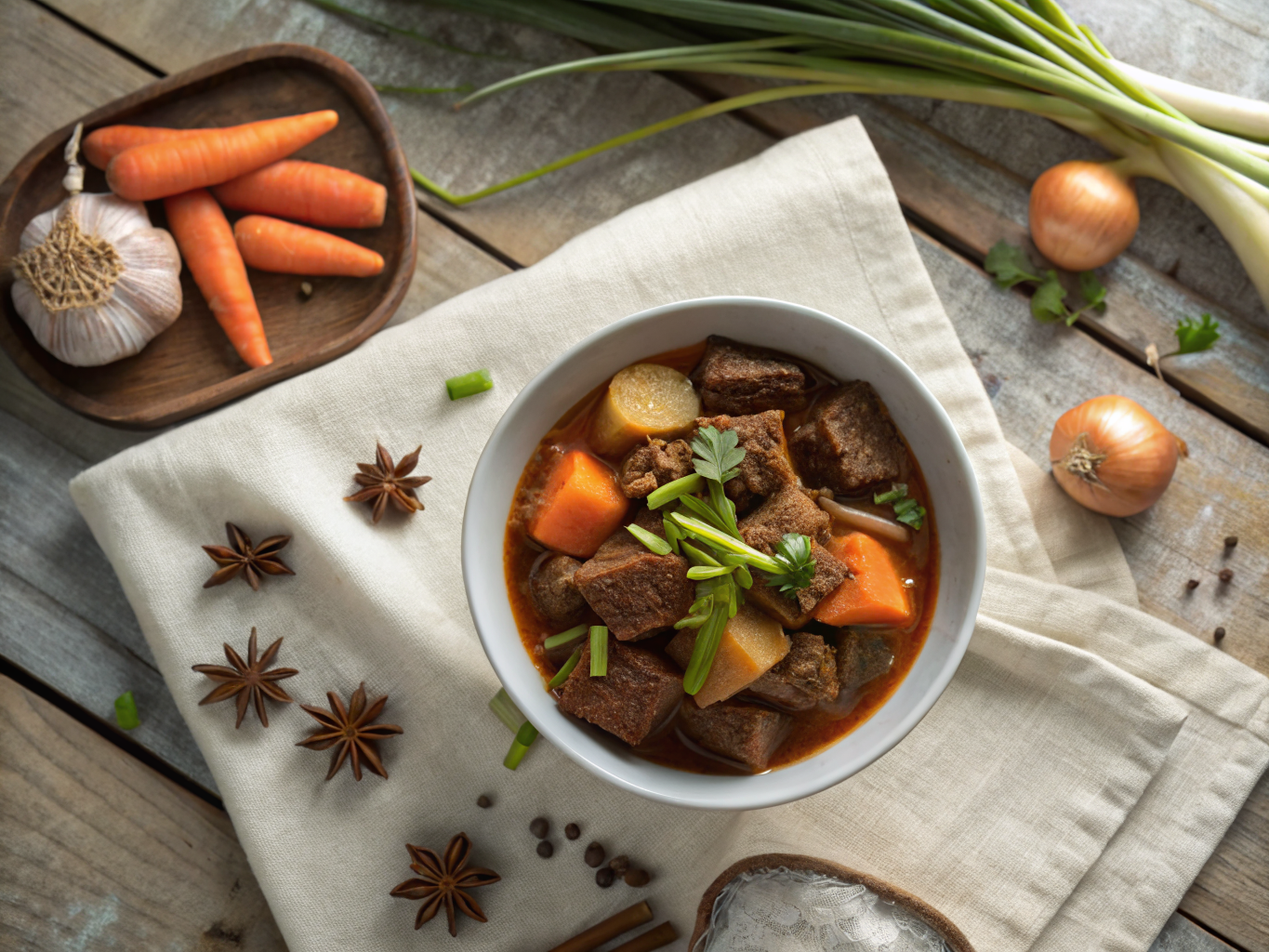
There are certain bowls that feel like a hug, and Bò Kho is exactly that. This deeply aromatic Vietnamese beef stew simmers low and slow until the meat is fall-apart tender and the broth is a shimmering, rich mahogany. You’ll be lured in by the fragrance of lemongrass, star anise, and ginger as they meld with caramelized beef and a whisper of five-spice. The broth has a subtle tomato tang and a gentle heat from chili, balanced with the sweetness of coconut water. Served over thick rice noodles or with a crusty baguette for dunking, every spoonful is comfort. But Bò Kho is more than comfort food—it’s a masterclass in layering flavors. The dish relies on a series of precise techniques: searing beef for fond, blooming spices in fat, caramelizing tomato paste, and using coconut water to tenderize and sweeten. In this article, we’ll explore the culinary science behind each step, share chef-level tips to elevate your stew, and flag the common mistakes that can turn a promising pot into a lackluster one. By the end, you’ll have the knowledge to make Bò Kho that rivals the best street stalls of Hanoi and Saigon. So tie on your apron and get ready to transform simple ingredients into a bowl of liquid gold.
The Maillard Reaction: Why Searing Beef Is Non-Negotiable
The first step to a memorable Bò Kho is proper searing. When you brown beef cubes, you’re triggering the Maillard reaction—a chemical process where amino acids and reducing sugars react under high heat to create hundreds of new flavor compounds. This is what gives the stew its deep, savory backbone. But home cooks often crowd the pan, causing the beef to steam rather than sear. The fix: work in batches and ensure your pot is hot but not smoking. Use a heavy-bottomed Dutch oven or clay pot, which retains heat evenly. Pat the beef dry before searing; moisture is the enemy of browning. And don’t rush it—each cube needs space and time to develop a crust. Once seared, remove the beef and set aside. The browned bits (fond) left in the pot are flavor gold. Deglaze with a splash of water or broth, scraping up those bits, and reserve them with the beef. This step alone can elevate your stew from good to extraordinary. Remember, the Maillard reaction also produces the rich color that makes Bò Kho so visually appealing. Skipping this step means missing out on complexity that no amount of spice can compensate for.
Blooming Spices: The Aromatic Foundation
Bò Kho’s signature aroma comes from whole spices—star anise, cinnamon, and sometimes cloves—bloomed in hot fat. This technique, common in Indian and Southeast Asian cooking, releases fat-soluble flavor compounds that water alone cannot extract. But timing is critical: spices burn easily, turning acrid. The key is to add them after the aromatics (lemongrass, ginger, garlic) have softened and the pot is at a gentle sizzle. Toast the star anise and cinnamon for just 30 to 60 seconds, until fragrant, then proceed with the recipe. Many home cooks skip blooming, adding ground spices directly to the liquid. That’s a mistake—ground spices can turn gritty and lose potency. Whole spices, on the other hand, infuse the broth gradually, creating a layered, perfumed result. For an extra dimension, lightly crush the star anise and cinnamon before blooming to increase surface area. And consider tying them in a cheesecloth sachet for easy removal later. This small step ensures you get the aromatics without any unpleasant texture in the final stew. The science is simple: heat unlocks volatile oils, and fat carries those flavors throughout the dish.
Caramelization and Coconut Water: The Sweet-Savory Balance
Vietnamese cooking often uses caramel sauce (nước màu) to add color and depth, but Bò Kho takes a different route: tomato paste. Sautéing tomato paste until it darkens and caramelizes builds a sweet-tart foundation that balances the richness of beef. This step, often rushed, should take a full 3 to 5 minutes over medium heat. You’ll see the paste turn from bright red to a deep brick color—that’s when you know it’s ready. Then comes the coconut water, a traditional addition that lends a subtle sweetness and helps tenderize the meat. Coconut water contains enzymes that can break down protein fibers, though the effect is mild; its main role is flavor. The natural sugars in coconut water also contribute to the final glaze on the beef. If you can’t find coconut water, substitute unsweetened coconut milk diluted with water, but avoid sweetened varieties. The combination of caramelized tomato and coconut water creates a broth that is both bright and rich, a hallmark of good Bò Kho. This balance is what distinguishes a great stew from a merely good one.
Pro Tip: Use Fish Sauce as a Finishing Touch, Not Just a Base
Most recipes add fish sauce early in the cooking process, but chef-level cooks know to reserve a splash for the end. Fish sauce is packed with glutamates, the compounds responsible for umami. While adding it early melds the flavor, a final drizzle just before serving brightens the entire pot. Why? Because prolonged heat can dull the volatile compounds that give fish sauce its complex aroma. By adding a tablespoon or two at the end, you reintroduce a fresh, savory punch that lifts the stew. But be careful: fish sauce is salty, so adjust your seasoning accordingly. Taste the broth first, then add fish sauce gradually. This technique is especially useful if you’ve used a less flavorful beef cut or if the broth tastes flat. Another pro move: use fish sauce in combination with a pinch of sugar to round out the flavors. The sugar doesn’t make the dish sweet; it enhances the perception of umami. This finishing touch is a secret weapon that will make your Bò Kho taste like it came from a professional kitchen.
Bò Kho’s Journey: From French Colonialism to Vietnamese Street Food
Bò Kho is a dish born of cultural exchange. Its name means “beef stew” in Vietnamese, but its roots trace back to French colonial rule in the 19th century, when beef was introduced to Vietnamese cuisine. The French brought their own stew traditions, like pot-au-feu, which influenced local cooks. Over time, Vietnamese cooks adapted the dish, adding lemongrass, star anise, and fish sauce—ingredients that reflect the country’s own pantry. The result is a uniquely Vietnamese creation that straddles two worlds. In the north, Bò Kho is often served with rice noodles, while in the south, it’s commonly paired with a crusty baguette, a legacy of French baking. Today, it’s a beloved street food, sold in bustling markets and cozy alleyways. Each region adds its own twist: some cooks add carrots and potatoes, others include tendon or tripe. The dish is also a staple at Tết, the Lunar New Year, symbolizing warmth and prosperity. Understanding this history adds a layer of appreciation to every bowl—it’s not just a stew, but a story of adaptation and resilience.
Frequently Asked Questions
Q: Can I use a slow cooker for Bò Kho? A: Yes, but sear the beef and bloom the spices on the stovetop first. Then transfer everything to the slow cooker and cook on low for 6 to 8 hours. This preserves the depth of flavor that a slow cooker alone can’t achieve. Q: What’s the best substitute for coconut water? A: Use unsweetened coconut milk mixed with water (1:1 ratio), or simply use beef broth with a pinch of sugar. Avoid sweetened coconut water, which can make the stew too sweet. Q: How do I fix a broth that tastes too salty? A: Add a peeled potato and simmer for 15 minutes, then discard it. The potato absorbs excess salt. Alternatively, dilute with unsalted beef broth and adjust with a squeeze of lime.
Key Takeaways
Mastering Bò Kho comes down to a few critical techniques. First, sear the beef in batches to develop a deep Maillard crust—never crowd the pot. Second, bloom whole spices in hot fat for just 30 to 60 seconds to release their aromatics without burning. Third, caramelize tomato paste thoroughly to build a sweet-tart base. Fourth, use coconut water for its subtle sweetness and tenderizing properties. Finally, finish with a splash of fish sauce to brighten the flavors. Avoid common mistakes like skipping the sear, adding ground spices directly to liquid, or oversalting early. With these tips, you’ll create a Bò Kho that’s rich, fragrant, and comforting—a dish worthy of both a weeknight dinner and a special occasion. Now go ahead, gather your ingredients, and let the aromas fill your kitchen. Your bowl of liquid gold awaits.
Try these recipes on DishIndex
Explore Bò Kho recipes and more