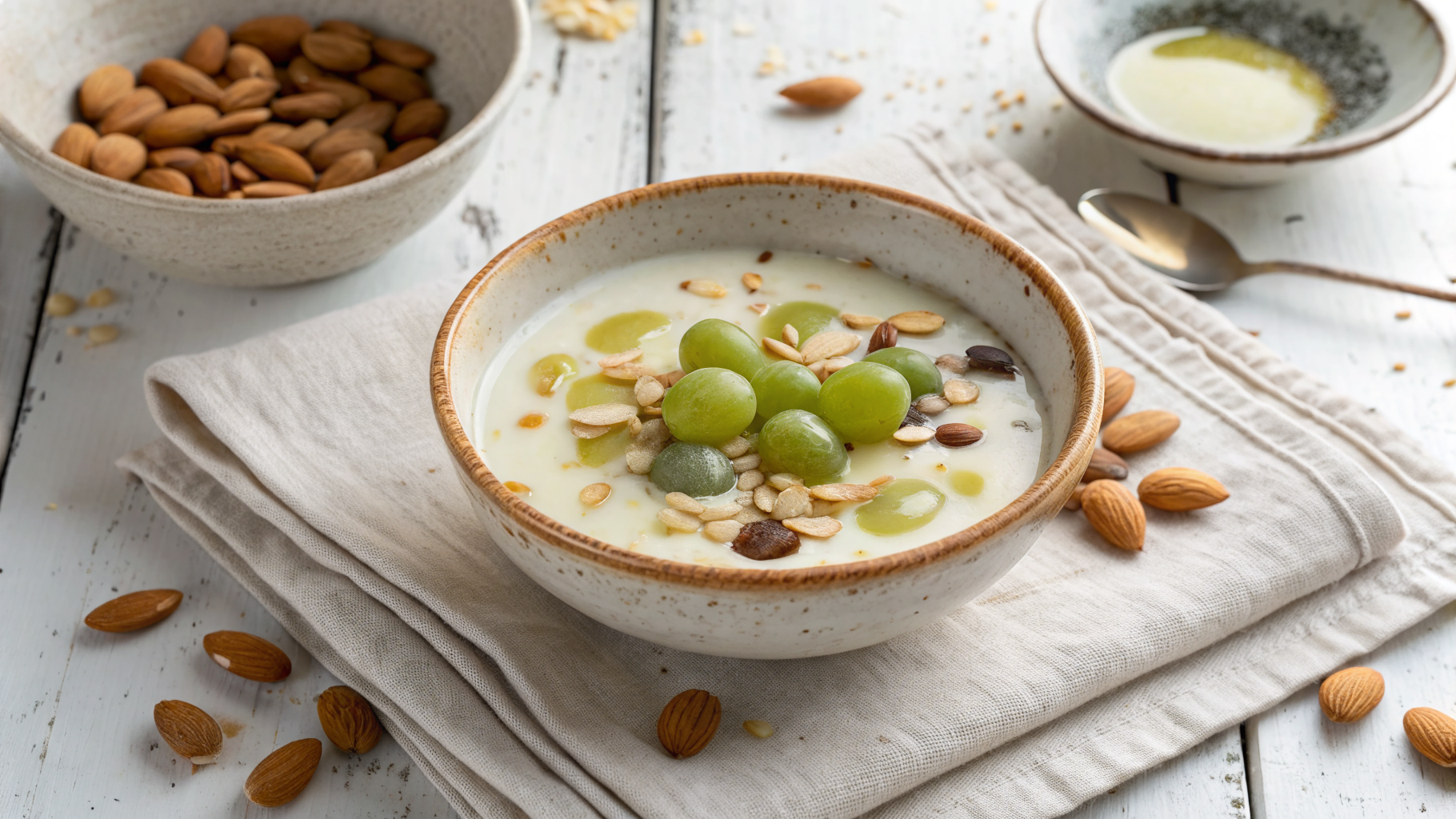
On a scorching August afternoon in Málaga, when the mercury climbs past 38 degrees Celsius and the air thickens with heat, Andalusians reach for something counterintuitive: a bowl of soup. But ajo blanco is no ordinary soup. It is served ice-cold, pale as marble, and silky enough to coat the back of a spoon. Long before cold soups became a wellness trend, this humble blend of stale bread, raw almonds, garlic, olive oil, and vinegar was feeding field workers across southern Spain, offering hydration, calories, and relief in a single bowl. What makes ajo blanco worth rediscovering today is not just its romance. It is the nutritional profile hiding beneath that elegant surface. Almonds deliver one of the most concentrated sources of vitamin E in the human diet. Extra virgin olive oil brings polyphenols and monounsaturated fat. Garlic contributes allicin, and the bread supplies resistant starch that feeds gut bacteria. In this article, we will unpack the science behind each ingredient, trace the dish's Moorish roots, and share the technique that separates a silky ajo blanco from a grainy one. You will also learn how to tweak the recipe for protein, fiber, and blood-sugar goals without losing the flavor that made it a Spanish classic.
The Macros Behind the Velvet
A typical serving of ajo blanco, roughly 200 milliliters, contains about 280 to 320 calories, with the bulk of those coming from fat. That sounds indulgent until you look closer: approximately 70 percent of the fat in almonds and olive oil is monounsaturated, primarily oleic acid, the same fatty acid that underpins the cardiovascular reputation of the Mediterranean diet. A 2023 analysis in the journal Nutrients linked higher oleic acid intake to improved LDL cholesterol profiles and reduced inflammatory markers. Each bowl also delivers around 6 to 7 grams of protein and 2 to 3 grams of fiber, modest but meaningful. The carbohydrate load is lower than you might expect, because the bread is diluted across several servings and the fat slows gastric emptying, blunting the glycemic spike you would get from eating the bread alone. Ajo blanco is not a protein bomb, but it is a satiety powerhouse. The combination of fat, fiber, and cold temperature makes it genuinely filling, which is exactly why it works as a light lunch rather than a mere starter.
Vitamin E, the Almond Advantage
If ajo blanco has a headline nutrient, it is vitamin E. A single 30-gram handful of almonds provides roughly 7.3 milligrams of alpha-tocopherol, about half the daily recommended intake for adults. Because the almonds in ajo blanco are raw and blended rather than roasted at high heat, they retain more of this fat-soluble vitamin, which is sensitive to thermal degradation. Vitamin E functions as the body's primary lipid-soluble antioxidant, protecting cell membranes from oxidative damage. Research published in 2022 suggested that adequate vitamin E intake may support immune function and skin health, particularly in older adults. Almonds also supply magnesium, roughly 80 milligrams per 30-gram portion, a mineral involved in muscle contraction and blood pressure regulation. Many adults fall short of the 310 to 420 milligram daily magnesium target, so a chilled bowl of ajo blanco quietly chips away at that gap. The olive oil adds its own tocopherols and polyphenols, creating a fat-soluble antioxidant duo that survives the blending process far better than it would survive frying.
Garlic, Vinegar, and the Gut Connection
The garlic clove in ajo blanco is not just flavor. Crushing raw garlic triggers an enzymatic reaction that converts alliin into allicin, a sulfur compound with documented antimicrobial and anti-inflammatory properties. A 2021 review in Frontiers in Nutrition noted that garlic intake is associated with modest reductions in systolic blood pressure, likely through hydrogen sulfide pathways that relax blood vessels. The red wine vinegar plays a dual role. Its acetic acid lowers the soup's pH, which helps preserve the emulsion and keeps the raw garlic's bite in check. More intriguingly, acetic acid has been shown in controlled trials to slow gastric emptying and reduce post-meal glucose responses by 20 to 30 percent when consumed with carbohydrate-rich foods. That matters here because ajo blanco contains bread. The vinegar effectively softens the glycemic impact of the starch while adding zero calories. Together, garlic and vinegar make this soup a functional food in the truest sense, delivering compounds that do measurable physiological work rather than just tasting good.
From Moorish Kitchens to Modern Tables
Ajo blanco is often called the oldest gazpacho, and the claim is not pure folklore. Food historians trace its lineage to the Moorish period in Al-Andalus, roughly the eighth through fifteenth centuries, when almonds, garlic, and bread were staples of the southern Iberian kitchen. The original version predates the arrival of tomatoes and peppers from the Americas, which is why ajo blanco looks nothing like the red gazpacho most of us know. It was peasant food, designed to stretch stale bread and use the almond harvest that flourished along the Mediterranean coast. In villages around Málaga and Granada, families still serve it in the summer with frozen grapes or melon cubes, a garnish that keeps the soup cold without diluting it. In some Andalusian households, it appears alongside fried fish or as a late-night supper after the heat breaks. The dish carries a quiet cultural message: that resourcefulness and restraint can produce something more elegant than abundance ever could.
Pro Tip: The Ice-Water Emulsion Trick
Most home cooks blend ajo blanco with cold water and call it done, but the texture never quite matches what you get in Andalusia. The secret is temperature and order. Start by soaking the stale bread in cold water for at least 20 minutes, then squeeze it nearly dry before blending. Blanch the almonds for 60 seconds and slip off the skins, which removes astringent tannins and yields a whiter, smoother soup. Blend almonds, bread, and garlic with a small amount of ice water first, until the mixture is a thick paste, then stream in the olive oil slowly while the blender runs. This mimics the technique for making mayonnaise, forcing the oil into a stable emulsion. Finish with ice water, not room-temperature water, and blend for a full two minutes. The result is a soup with a glossy, almost custard-like body. Chill it for at least four hours before serving, and taste for salt right before it hits the table, since cold temperatures mute seasoning.
Why Ajo Blanco Fits the Moment
Ajo blanco sits at an unusual intersection of trends. On one side, it is a traditional Mediterranean dish that predates modern wellness culture by centuries. On the other, it aligns almost perfectly with what contemporary nutrition research keeps emphasizing: whole-food fats, polyphenol-rich olive oil, fiber from nuts and grains, and minimal added sugar. The Mediterranean diet consistently ranks among the most evidence-backed eating patterns for cardiovascular health, and ajo blanco is a faithful expression of its principles. It also fits the growing interest in plant-forward eating without demanding total abstinence from animal products, since the traditional recipe is naturally dairy-free and can be made vegan with no compromise. For cooks watching sodium, the soup is easy to control because salt goes in at the end. For those managing blood sugar, the fat and vinegar combination works in their favor. Few dishes manage to be this historically rooted and this nutritionally current at the same time. Ajo blanco is not a trend. It is a 600-year-old answer to a question we are only now learning to ask.
Frequently Asked Questions
Q: Can I make ajo blanco ahead of time? A: Yes, and you should. The soup improves after four to twelve hours in the refrigerator as the flavors meld and the garlic mellows. Store it in a sealed container and stir well before serving, since natural separation occurs. It keeps for up to three days. Q: Is ajo blanco safe for people with nut allergies? A: No, almonds are the defining ingredient, so it is not suitable for anyone with tree nut allergies. Substituting seeds changes the flavor and texture substantially, though sunflower or blanched pumpkin seeds can work as an emergency alternative with adjusted seasoning. Q: How do I fix a grainy or split ajo blanco? A: Graininess usually means under-blending or insufficient soaking of the bread. Blend longer and use ice water. If the emulsion splits, add a tablespoon of cold water and blend again; the soup will re-emulsify within seconds.
Key Takeaways
Ajo blanco rewards both the health-conscious cook and the traditionalist. Remember that the fat in this soup is predominantly monounsaturated, the kind linked to better cholesterol profiles and lower inflammation. The almonds deliver roughly half your daily vitamin E in a single serving, so treat this soup as a genuine nutrient source rather than a decadent indulgence. Soak your bread thoroughly, blanch and skin the almonds, and blend with ice water to build a stable emulsion. Add the vinegar deliberately, because its acetic acid lowers the glycemic response to the bread and sharpens the flavor. Finally, chill the soup for several hours before serving and season at the last moment. With those steps, you get a bowl that is creamy without cream, rich without heaviness, and quietly nourishing in a way that few summer dishes manage. Make it once, and it earns a permanent place in your warm-weather rotation.
Try these recipes on DishIndex
Explore ajo blanco recipes and more