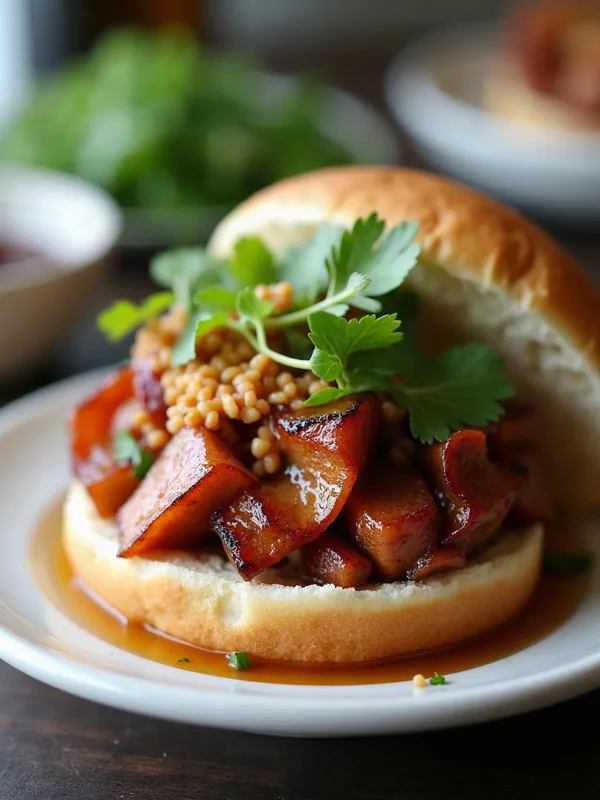
The smell hits you before the plate does: lemongrass hitting hot oil, garlic blooming, pork belly rendering until its edges turn the color of dark caramel. On a Saigon corner at dusk, that aroma drifts from a dozen banh mi carts at once, mingling with exhaust fumes and rain-wet pavement. Recreating it at home usually means a crusty baguette, but a bowl of jasmine rice does something better. It catches every drop of the sweet-salty glaze, and it lets you pile on the pickled carrots, daikon, cucumber, and herbs that make a banh mi sing. The bowl is also an opportunity. Pork belly and imported fish sauce carry a real environmental cost, and the dish generates scraps that most kitchens throw away. This article walks through the flavors you love and then shows how to source, cook, and plate them with a lighter footprint. You will learn which ingredients to buy seasonally, how to turn vegetable peels into a week of pickles, and why a whole-animal approach to pork changes the economics of a weeknight dinner. The result is a bowl that tastes indulgent and wastes almost nothing.
Why a Bowl Beats a Baguette for the Planet
A traditional banh mi depends on a baguette, a legacy of French colonial rule in Vietnam that took hold in the 1950s when Vietnamese bakers adapted the loaf with rice flour and a lighter crumb. That history is worth honoring, but the bread is also the dish's most wasteful component in a home kitchen. Baguettes stale within a day, and most households buy more than they finish. Rice sidesteps the problem entirely. A pound of jasmine rice yields roughly five cups cooked and keeps for days, so portions scale to appetite rather than to loaf size. Domestic rice also travels shorter distances than imported baguette flour for most North American cooks. The bowl format adds a second benefit: it invites improvisation with whatever vegetables are in season. In summer, that means cucumbers and herbs from a backyard plot. In winter, roasted carrots and quick-pickled cabbage fill the same role. The environmental math is not dramatic, but it is real, and it compounds across a week of dinners.
Sourcing Pork Belly Without the Guilt
Pork belly is a fatty cut from the underside of the pig, and that fat is precisely why it caramelizes so beautifully. It is also why sourcing matters. Conventional pork production accounts for a meaningful share of global agricultural emissions, largely from feed production and manure management. Pasture-raised and forested pork systems, common in parts of Spain and increasingly in small American farms, can sequester carbon in soil while producing richer meat. The practical move for a home cook is to buy belly from a farm that sells whole animals or nose-to-tail cuts, then use the rest of the animal across other meals. Ask your butcher where the belly came from and whether the farm sells offal and bones. Bones become stock, which replaces water in the rice for a deeper flavor and one less packaged ingredient. A single whole-animal purchase can supply a month of cooking and shrink the packaging and transport footprint of each meal.
The Zero-Waste Pickle That Stretches Your Grocery Budget
Do chua, the tangy carrot and daikon pickle that crowns every banh mi, is traditionally made with equal parts rice vinegar, water, and sugar. It is also a masterclass in using parts of vegetables that most cooks discard. Carrot peels, daikon tops, and the fibrous cores of either root vegetable pickle beautifully. Scrub the vegetables well instead of peeling them, then slice the whole thing into matchsticks and pack it into a jar with a brine of one cup rice vinegar, one cup water, and two tablespoons sugar. Add a pinch of salt and let it sit at room temperature for two hours before refrigerating. The pickle keeps for three weeks and improves after the first day. Daikon, a winter radish, grows well in cool climates, so it is a low-input crop compared with out-of-season greenhouse vegetables. If daikon is unavailable, watermelon radish or even kohlrabi works. The brine can be reused once for a second batch before it weakens.
Pro Tip: Caramelize in Stages, Not All at Once
Most home cooks dump the pork into a cold pan and crank the heat, which steams the meat and leaves it gray. The better technique is a two-stage sear. Pat the sliced belly completely dry, then lay it in a single layer in a cold cast-iron skillet and bring the heat up slowly to medium. As the fat renders, the meat gently fries in its own fat, turning deeply golden on the first side. Flip once, then remove the pork and pour off all but a tablespoon of the rendered fat. Save that fat in a jar; it is extraordinary for roasting potatoes. Return the pan to the heat, add the lemongrass, garlic, and shallot, and cook for thirty seconds before adding the fish sauce and brown sugar. The sugar will bubble and darken within a minute. Toss the pork back in to coat and finish with a squeeze of lime off the heat. This order keeps the aromatics from burning and gives the glaze a glossy, lacquered finish.
Fish Sauce, Fermentation, and the Future of Flavor
Fish sauce is the backbone of Vietnamese cooking, produced by layering anchovies and salt in wooden barrels and fermenting them for twelve to eighteen months. The process is ancient, low-energy, and nearly waste-free: the leftover solids become fertilizer or animal feed. But the anchovy fishery is under pressure from overharvesting, and industrial fish sauce supply chains are opaque. Look for bottles from small producers that disclose the species and harvest region, or use a domestically fermented fish sauce where available. The flavor is worth the diligence. Fermentation creates glutamates and nucleotides that deliver umami, the savory taste that makes the pork taste richer than it is. A single tablespoon of fish sauce can replace salt, stock, and MSG in a dish. Chefs increasingly treat fermented condiments as a sustainability tool, because small amounts deliver outsized flavor and reduce the need for resource-intensive ingredients.
Frequently Asked Questions
Q: Can I make this bowl with a cheaper cut than pork belly? A: Yes. Shoulder or butt works well if you slice it thin and add a teaspoon of neutral oil to the pan, since it has less fat to render. Cook it the same way and expect a slightly firmer texture. Q: How long do the pickled carrots and daikon last? A: The pickle keeps refrigerated for about three weeks in a sealed jar, and the flavor peaks after two days. Keep the vegetables submerged in brine and use a clean fork each time to prevent spoilage. Q: Is fish sauce essential, or can I substitute it? A: Soy sauce or tamari can stand in for a vegetarian version, though the flavor will be less complex. Use two tablespoons of soy sauce in place of one tablespoon of fish sauce and add a pinch of sugar.
Key Takeaways
Buy pork belly from a farm that sells whole animals, and use the bones to make stock for the rice. Scrub rather than peel your carrots and daikon, then pickle the whole vegetable to cut kitchen waste. Sear the pork cold-to-hot in a cast-iron pan and save the rendered fat for roasting. Choose a fish sauce from a producer that names the species and harvest region. Build the bowl around whatever herbs and crunchy vegetables are in season near you, and let the rice catch every drop of glaze. None of these steps is difficult, and together they turn a dish that could be a guilty pleasure into one you can serve with a clear conscience. Cook it this week, and let the smell of lemongrass and caramel do the rest.
Try these recipes on DishIndex
Explore banh mi bowl recipes and more