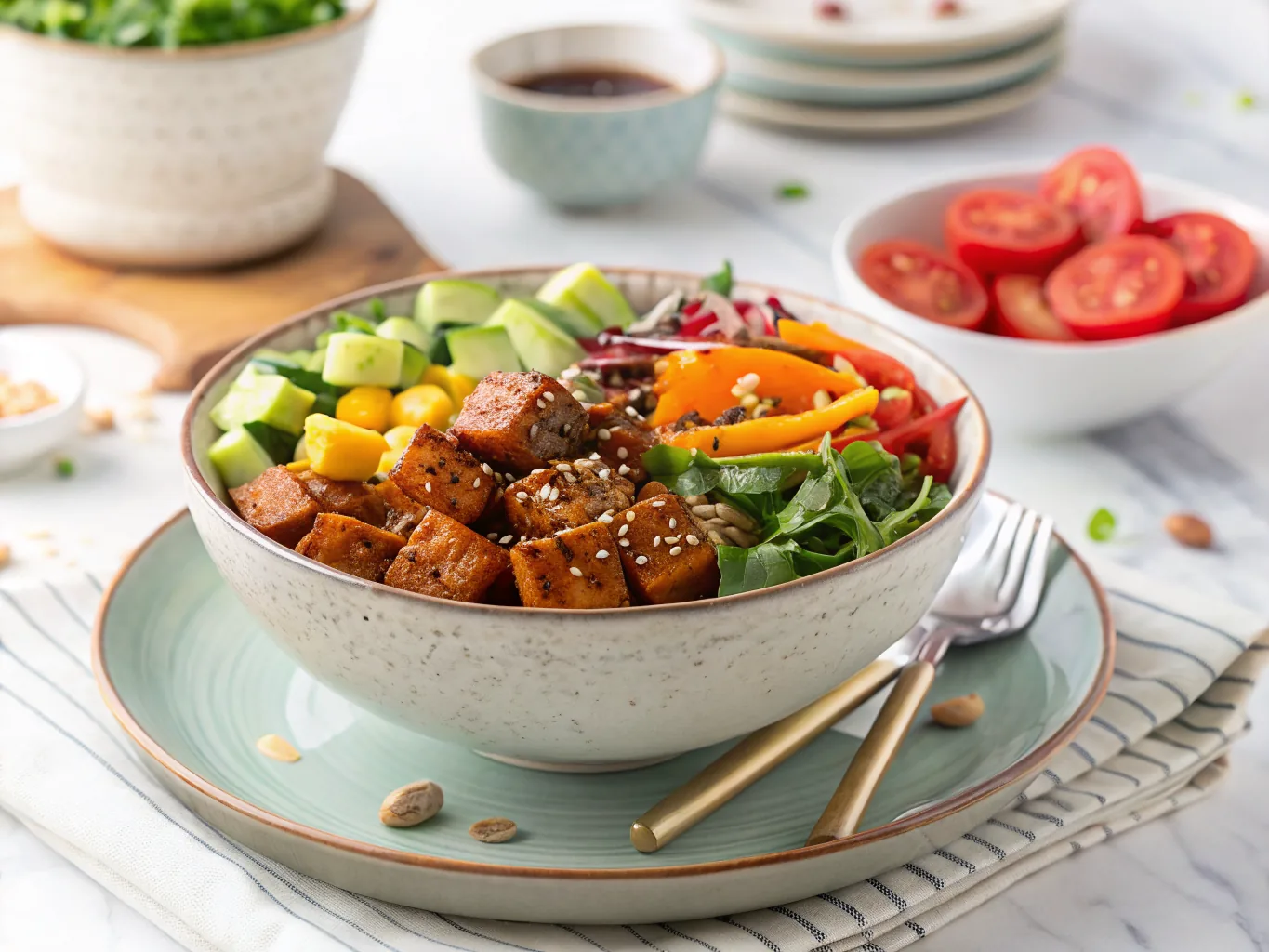
Imagine a bowl so vibrant it looks like a sunset: golden-brown tempeh cubes glazed in a sticky, sweet teriyaki sauce, bright green broccoli florets, and julienned carrots, all nestled over nutty brown rice. This vegan teriyaki tempeh bowl is not just a feast for the eyes; it's a powerful statement about how delicious sustainable eating can be. Tempeh, a fermented soy product originating from Indonesia, has been a staple for centuries, prized for its nutty flavor and dense texture. When paired with a homemade teriyaki sauce made from soy sauce, maple syrup, rice vinegar, garlic, and ginger, it transforms into a crave-worthy centerpiece. But beyond its culinary appeal, this dish offers a chance to rethink our food choices. Every ingredient can be sourced responsibly, from local produce to eco-friendly packaging. In this article, we'll explore the environmental footprint of each component, share tips for reducing waste, and show you how to make this bowl a regular in your kitchen. By the end, you'll not only have a new favorite recipe but also a deeper understanding of how small choices in the kitchen can add up to a big impact. Let's dive into a bowl that's as kind to the planet as it is to your taste buds.
The Environmental Case for Tempeh
Tempeh's environmental credentials are impressive. Producing one kilogram of tempeh requires significantly less water and land than the same amount of beef. According to a 2018 study in the Journal of Cleaner Production, tempeh has a carbon footprint of about 1.5 kg CO2e per kg, compared to beef's 60 kg CO2e per kg. This stark difference is largely because soybeans, the primary ingredient, are nitrogen-fixing plants that improve soil health and require minimal fertilization. Moreover, tempeh fermentation uses beneficial molds like Rhizopus oligosporus, which bind the beans into a compact cake, reducing the need for additional processing. The result is a protein-rich food with a fraction of the environmental impact. When you choose tempeh over meat, you're not just making a healthier choice; you're supporting a food system that can feed more people with fewer resources. And by making your own teriyaki sauce at home, you avoid the packaging and preservatives of store-bought versions, further shrinking your ecological footprint.
Seasonal Vegetables: The Backbone of a Sustainable Bowl
The vegetables in this bowl are not just supporting actors; they're key to sustainability. Broccoli and carrots are cool-season crops that can be grown in many regions without excessive irrigation or pesticides. Choosing seasonal produce reduces the energy required for greenhouse heating and long-distance transport. For example, broccoli grown in season and sold locally can have a carbon footprint up to 10 times lower than out-of-season broccoli flown in from afar. To make this bowl truly seasonal, consider swapping in whatever is abundant: in spring, try asparagus and peas; in summer, bell peppers and zucchini; in autumn, sweet potatoes and kale. The teriyaki sauce's bold flavors complement a wide range of vegetables, so don't be afraid to experiment. Additionally, buying imperfect or 'ugly' produce helps reduce food waste, as these items often go unsold despite being perfectly nutritious. By basing your bowl on what's fresh and local, you're supporting farmers, cutting emissions, and enjoying peak flavor.
From Indonesia to Your Kitchen: A Brief History of Tempeh
Tempeh's origins trace back to the island of Java, Indonesia, where it has been made for centuries, possibly as early as the 12th century. The fermentation process was likely discovered accidentally when cooked soybeans were left to sit and became covered in a white mold. Over time, Javanese cooks perfected the technique, using banana leaves to wrap the beans and encourage the growth of Rhizopus molds. Tempeh became a dietary staple, valued for its affordability and high protein content. In the 20th century, tempeh spread to other parts of Asia and eventually to the West, where it gained popularity among vegetarians and health enthusiasts. Today, artisanal tempeh makers in the United States and Europe are experimenting with different beans and grains, but the traditional soy-based version remains the most common. Understanding tempeh's cultural roots adds depth to your bowl; it's a food that has nourished communities for generations. By cooking with it, you're participating in a long culinary tradition that honors both flavor and sustainability.
Pro Tip: Maximize Flavor and Minimize Waste with Your Teriyaki Sauce
The secret to a perfect teriyaki sauce lies in balancing sweet, salty, and tangy. But did you know you can make it even more sustainable? Instead of discarding the ginger and garlic peels, save them in a freezer bag to make vegetable stock later. When whisking your sauce, use a small jar to shake everything together—this eliminates the need for a whisk and saves water. For an extra depth of flavor, add a splash of leftover pickle juice or a spoonful of fruit jam that's past its prime. These small additions not only reduce waste but also create a unique sauce each time. Another pro tip: double the sauce recipe and store half in a reusable glass jar in the fridge for up to two weeks. It's perfect for drizzling over grains, roasted veggies, or even as a marinade. By thinking creatively about ingredients that might otherwise be thrown away, you're making your kitchen more eco-friendly and your meals more interesting.
The Rise of Plant-Based Bowls: A Trend with Staying Power
Plant-based bowls like this one are more than a passing fad; they reflect a broader shift toward sustainable eating. According to a 2022 report by the Good Food Institute, global plant-based food sales reached $42 billion in 2021, with bowls being a popular format. This trend is driven by consumers seeking healthier, environmentally friendly options that don't compromise on taste. The vegan teriyaki tempeh bowl exemplifies this movement: it's nutrient-dense, colorful, and endlessly customizable. Nutritionally, it provides complete protein from tempeh, complex carbohydrates from brown rice, and a wealth of vitamins and minerals from the vegetables. The healthy fats from sesame seeds and the antioxidants from ginger and garlic round out the profile. Moreover, this bowl aligns with the Mediterranean and Blue Zone diets, which emphasize plant-centric meals for longevity. As more people recognize the link between diet and planetary health, dishes like this will continue to evolve, incorporating new ingredients and techniques. But at its core, it's about celebrating whole foods and the joy of cooking.
Frequently Asked Questions
Q: Can I use a different sweetener instead of maple syrup? A: Yes, you can substitute with agave nectar, brown rice syrup, or even date paste. Each will slightly alter the flavor, but all work well. Adjust to taste for sweetness. Q: Is tempeh gluten-free? A: Tempeh is typically made from soybeans, which are gluten-free, but some brands add grains like barley or wheat. Always check the label to ensure it's certified gluten-free if needed. Q: How can I reduce the bitterness of tempeh? A: Steaming tempeh for 10 minutes before cooking can mellow its bitterness. Alternatively, simmer it in vegetable broth or marinate it in the teriyaki sauce for at least 30 minutes before baking or pan-frying.
Key Takeaways
Embrace tempeh as a sustainable protein: its low carbon and water footprint make it a smart choice for eco-conscious cooks. Buy seasonal and local produce to cut emissions and support your community. Reduce food waste by using every part of your ingredients, from peels to stems, and get creative with leftovers. Make your own teriyaki sauce to avoid packaging and preservatives, and double the batch for future meals. Finally, remember that small changes in your kitchen can add up to a big impact. This vegan teriyaki tempeh bowl is not just a recipe; it's a step toward a more delicious, resilient, and nourishing food system. So grab your apron, gather your ingredients, and savor a meal that's good for you and the planet.
Try these recipes on DishIndex
Explore teriyaki tempeh bowl recipes and more