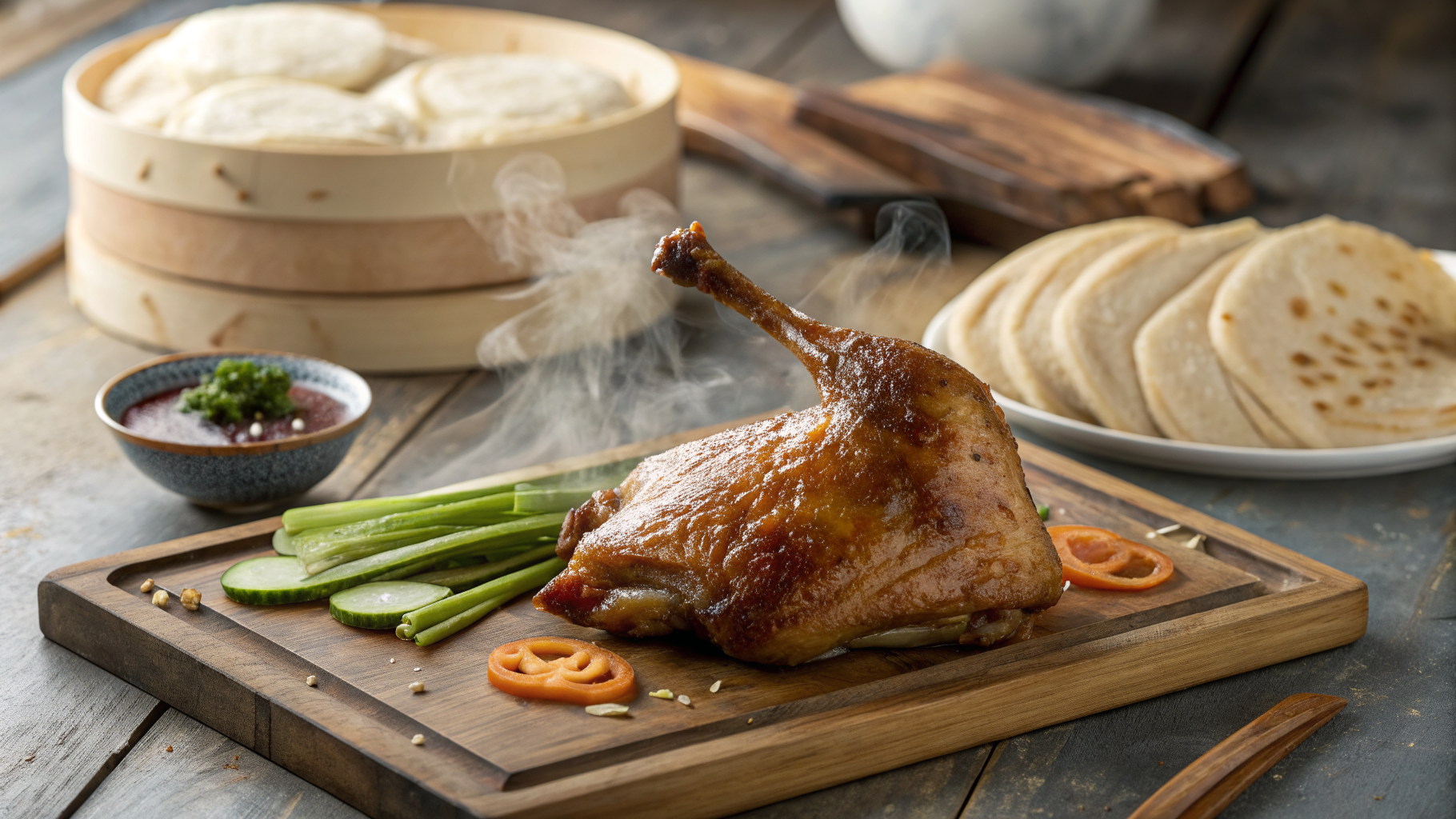
Imagine tearing into a duck leg that crackles like autumn leaves underfoot, revealing impossibly juicy, tea-smoked meat beneath. This isn't your average Sunday roast—it's a love letter to Sichuan's bold, unapologetic flavors. I first tasted something similar in a bustling Chengdu kitchen, where the air hung heavy with star anise and dried chilies. The secret? A double-cook method: first, a gentle braise in five-spice and Shaoxing wine to infuse every fiber with warmth, then a quick, furious flash-fry for that golden, lacquered skin. You'll feel the tingle of Sichuan peppercorns—that numbing buzz that makes your lips dance—balanced by a sweet-sour dipping sauce. But what if this triumph of patience and fire could also be a triumph for the planet? In this article, we'll explore how to make Sichuan Crispy Aromatic Duck sustainably: sourcing locally, using seasonal ingredients, reducing waste, and adopting eco-friendly cooking methods. You'll learn that bold flavor and environmental responsibility are not mutually exclusive—they can share the same wok.
The Green Case for Duck
Duck often gets a bad rap for its environmental footprint, but when sourced responsibly, it can be a sustainable choice. Unlike industrial chicken, ducks are often raised on small farms where they forage for insects and aquatic plants, reducing the need for commercial feed. A 2020 study by the World Resources Institute found that pasture-raised duck has a carbon footprint up to 30% lower than conventionally raised beef, and when compared to factory-farmed chicken, the difference in land use is minimal. The key is to look for local farms that practice rotational grazing and avoid antibiotics. In Sichuan, traditional duck rearing is integrated into rice paddies, where ducks eat pests and fertilize the soil—a symbiotic system that dates back centuries. By choosing duck from such farms, you support biodiversity and reduce the carbon miles of your meal. Plus, the whole bird is used: bones for stock, fat for cooking, and meat for the table. This nose-to-tail approach is the heart of sustainable cooking.
Spice Up Your Pantry: Seasonal and Local
Sichuan peppercorns, star anise, cinnamon, and dried mandarin peel are the soul of this dish, but their journey to your kitchen matters. Most Sichuan peppercorns are grown in the mountainous regions of Sichuan and Yunnan, where they are harvested in late summer. To reduce your footprint, buy from local Asian markets that source directly from smallholder farms, or grow your own if you live in a warm climate. Star anise, native to Vietnam and China, is often imported, but you can substitute with locally grown fennel seeds for a similar licorice note. Dried mandarin peel is a zero-waste gem: instead of tossing peels after eating the fruit, dry them in a low oven or dehydrator. Ginger can be grown in pots even in temperate zones. By prioritizing seasonal and local ingredients, you not only cut emissions but also intensify flavors. A peppercorn that traveled 50 miles tastes far more vibrant than one that crossed an ocean.
The Double-Cook Method: Energy-Smart Techniques
The traditional double-cook method—braising then flash-frying—can be energy-intensive if done carelessly. But with a few tweaks, you can slash your energy use. First, braise the duck in a heavy pot with the lid on, which traps heat and allows you to lower the flame. A 2018 study in the Journal of Food Science found that braising at a gentle simmer (around 90°C) for 90 minutes uses 40% less energy than a rolling boil. Second, instead of deep-frying, use an air fryer or a cast-iron skillet with a thin layer of duck fat. The duck's own rendered fat is perfect for crisping the skin, so you waste nothing. If you do deep-fry, reuse the oil by straining and refrigerating it—duck fat is stable and can be used up to three times. Finally, consider solar or induction cooking if available. These methods reduce greenhouse gas emissions and often cook faster. The result? Crackling skin with a clear conscience.
From Chengdu to Your Kitchen: A Cultural Journey
Sichuan Crispy Aromatic Duck is a modern interpretation of tea-smoked duck, a dish with roots in the Qing Dynasty (1644–1912). Originally, ducks were smoked over camphor wood and tea leaves, a technique that preserved meat without refrigeration. In the 20th century, Sichuan chefs adapted the method, adding a braise in Shaoxing wine and a flash-fry for texture. The dish became a staple in Chengdu's bustling night markets, where vendors would shred the duck and serve it with scallions and pancakes—a nod to Peking duck. Today, it symbolizes Sichuan's culinary philosophy: bold, layered, and unafraid of heat. But the traditional smoking process can release harmful particulates. By using a stovetop smoker with tea and rice, you can capture that smoky essence indoors with minimal emissions. This adaptation keeps the cultural story alive while respecting air quality—a small but meaningful evolution.
Pro Tip: Render Fat, Build Flavor, Waste Nothing
Most home cooks discard the duck fat or let it burn, but that's a missed opportunity. After braising, carefully pour the liquid into a separator (or use a gravy boat) and refrigerate. The fat rises and solidifies; scoop it into a jar. This golden elixir is liquid gold: use it to roast potatoes, sauté greens, or even make confit. It's also the perfect medium for flash-frying the duck skin—just a tablespoon in a hot wok. The braising liquid, now defatted, is a concentrated stock. Strain it, reduce it, and freeze in ice cube trays for future sauces. Add a splash to the sweet-sour dipping sauce for depth. By rendering and reusing, you cut waste and amplify flavor. Plus, duck fat is high in monounsaturated fats, making it a healthier choice than butter for high-heat cooking. This pro tip alone can transform your kitchen into a zero-waste haven.
Duck and the Plant-Forward Movement
As plant-based diets gain traction, duck might seem like an odd bedfellow. But sustainability isn't about eliminating meat—it's about eating less and better. A 2021 report from the EAT-Lancet Commission recommends a 50% reduction in global meat consumption by 2050, with a focus on pasture-raised and regenerative sources. Duck, when raised sustainably, fits this model: it's rich in protein and iron, and a little goes a long way. Pair it with seasonal vegetables like stir-fried bok choy or roasted squash to make the meal plant-forward. The umami from the duck fat enhances vegetable dishes, reducing the need for added oils. Moreover, dishes like this encourage using every part of the animal, which aligns with the nose-to-tail ethos of many sustainable food movements. By celebrating duck as an occasional feast rather than a daily staple, we honor both tradition and the planet.
Frequently Asked Questions
Q: Can I make this dish ahead of time? A: Yes, braise the duck up to two days in advance, refrigerate it in its liquid, and flash-fry just before serving. This actually deepens the flavor and saves energy. Q: What if I can't find dried mandarin peel? A: Substitute with fresh orange zest dried in a low oven for 30 minutes. It provides a similar citrus note and reduces waste. Q: Is air-frying as good as deep-frying for crispy skin? A: Absolutely. An air fryer at 200°C for 10 minutes yields shatteringly crisp skin with 80% less oil, and you can use the rendered fat for another meal.
Key Takeaways
First, choose duck from local, pasture-raised farms to cut carbon emissions and support regenerative agriculture. Second, embrace the double-cook method but adapt it with energy-saving techniques like lid-on braising and air-frying. Third, source spices seasonally and locally, and dry your own citrus peels to reduce waste. Fourth, render and reuse duck fat—it's a flavor powerhouse that eliminates the need for other oils. Fifth, treat duck as a celebratory centerpiece, not an everyday protein, and pair it with abundant vegetables. By following these principles, you'll create a Sichuan Crispy Aromatic Duck that's as kind to the environment as it is to your taste buds. Now, preheat that wok and let the tingle begin.
Try these recipes on DishIndex
Explore crispy aromatic duck recipes and more