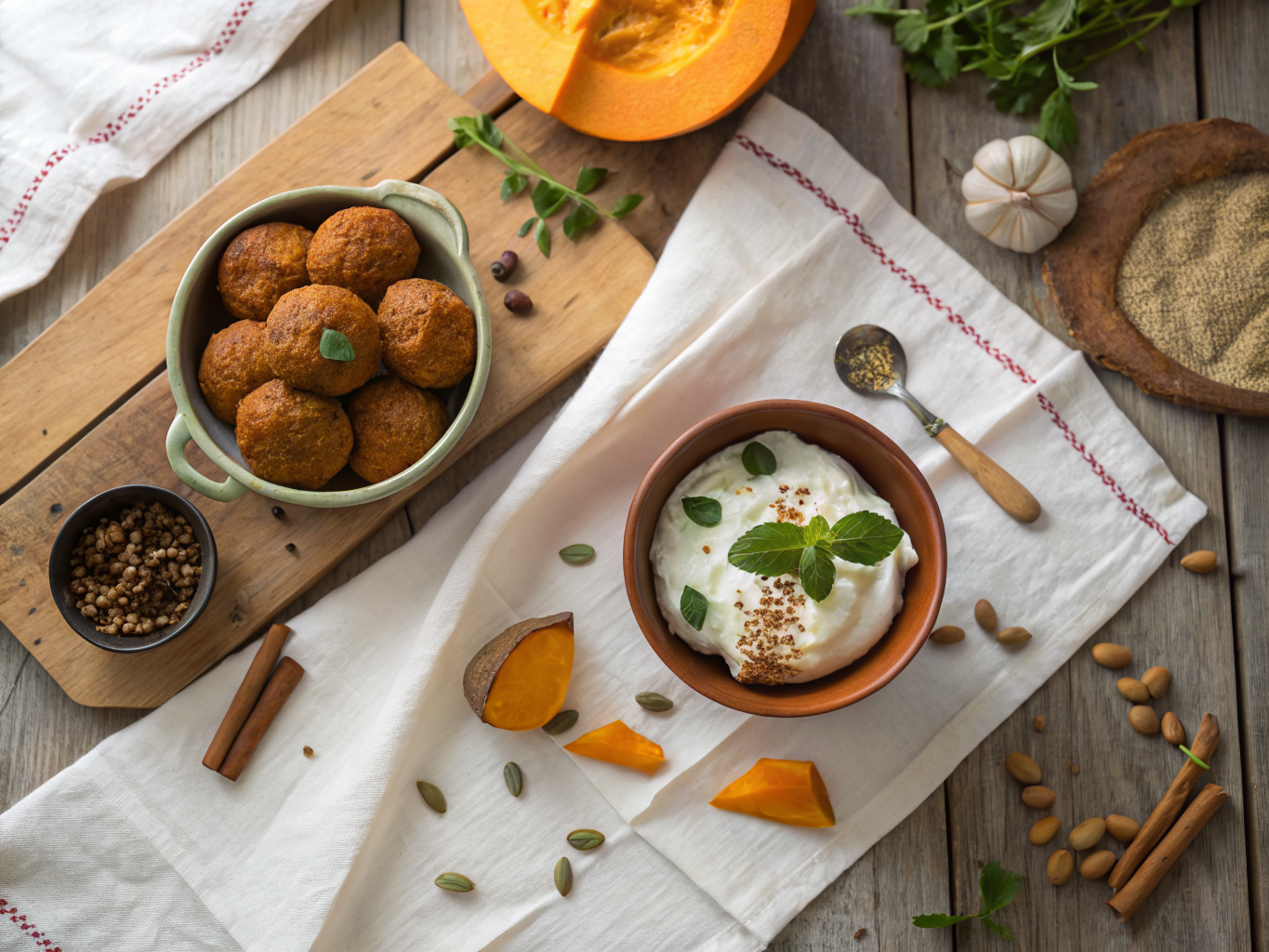
Imagine sinking your teeth into a golden, crisp shell that shatters to reveal a soft, spiced pumpkin and bulgur heart. This is kibbeh, Lebanon's national treasure, but not as you might know it. Traditional kibbeh is made with minced lamb and bulgur, but here pumpkin takes center stage, offering a vegetarian twist that's deeply rooted in Lebanese home cooking. The pumpkin brings a subtle sweetness that dances with warm cinnamon, allspice, and a whisper of nutmeg, while fresh mint in the yogurt cools and lifts every bite. As you shape each oval, you feel the tradition in your hands, the same way generations have done across Lebanese kitchens. Whether served as a mezze star or a main alongside a bright tomato-cucumber salad, these little patties are pure comfort. But making them perfectly requires more than just a recipe—it demands an understanding of the science behind the crisp shell and the spiced filling. In this article, I'll share chef-level techniques, common pitfalls, and the cultural story behind this dish, so you can create unforgettable pumpkin kibbeh at home.
The Science of a Shatteringly Crisp Shell
The hallmark of excellent kibbeh is its shell: thin, crisp, and resilient enough to hold the filling without cracking during frying. Achieving this with pumpkin requires balancing moisture and starch. Pumpkin is about 90% water, which can make the dough sticky and lead to soggy patties. The solution lies in the bulgur wheat. Fine bulgur (#1 grade) is key because its small particle size hydrates quickly and binds tightly with the pumpkin. As you knead, the bulgur releases starch, creating a cohesive dough. But the real magic happens during frying: the outer layer dehydrates rapidly, forming a rigid crust, while steam inside puffs the shell slightly. To ensure a shatteringly crisp exterior, the dough must be neither too wet nor too dry—aim for a consistency similar to soft cookie dough. A common mistake is adding too much flour, which makes the shell tough. Instead, if the dough feels sticky, incorporate a tablespoon of fine bulgur and rest for 10 minutes. The frying temperature is equally critical: 350°F (175°C) is ideal. Too low, and the kibbeh absorbs oil; too high, and it browns before cooking through. Use a thermometer for precision, and fry in batches to maintain the temperature.
Choosing the Right Pumpkin for Authentic Flavor
Not all pumpkins are created equal. In Lebanon, cooks often use a variety called 'kibbeh pumpkin,' a small, sweet winter squash with dense, dry flesh. If unavailable, butternut squash or sugar pumpkin are excellent substitutes. Avoid the large, watery pumpkins used for carving—they lack flavor and contain too much water. The best pumpkins for kibbeh have deep orange flesh and a naturally sweet, nutty profile. Roasting the pumpkin before mashing concentrates its sugars and evaporates excess moisture, intensifying flavor. Cut the pumpkin into chunks, toss with a little olive oil, and roast at 400°F (200°C) until caramelized and tender. Then mash or puree until smooth. This step is non-negotiable: boiling or steaming introduces water, which will ruin the dough. Roasting also develops Maillard reaction compounds, adding a subtle caramel note that complements the spices. When selecting a pumpkin, look for one that feels heavy for its size and has a dry, intact stem. After roasting, let the puree cool completely and drain any excess liquid in a fine-mesh sieve. This attention to detail separates a good kibbeh from a great one.
Kibbeh: A Culinary Journey Through Lebanon
Kibbeh is more than a dish; it's a cultural icon that spans the Levant, with each region claiming its own version. In Lebanon, kibbeh is a staple of mezze, celebrations, and family gatherings. The word 'kibbeh' comes from the Arabic 'kubbah,' meaning ball or lump, referring to its shape. Historically, kibbeh was a way to stretch meat during times of scarcity, but vegetarian versions like this pumpkin kibbeh are equally cherished, especially during Lent and for those observing meatless diets. In the northern city of Tripoli, known for its culinary prowess, pumpkin kibbeh is a specialty, often flavored with cinnamon and allspice. The dish also has variations across Syria, Palestine, and Iraq, where different spices and fillings are used. In Lebanon, it's common to serve pumpkin kibbeh with a minted yogurt sauce, a cooling contrast to the warm spices. This recipe honors that tradition, connecting you to centuries of cooking wisdom. As you shape each patty, you're not just making dinner—you're participating in a ritual that has nourished communities for generations.
Pro Tip: The Two-Stage Frying Method
Most home cooks fry kibbeh once and wonder why the crust softens quickly. The secret to keeping that shatteringly crisp texture is double frying. First, fry the kibbeh at a lower temperature, around 325°F (160°C), for 2-3 minutes until just pale golden and cooked through. This initial fry sets the shape and cooks the interior gently. Then, increase the oil to 375°F (190°C) and fry again for 1-2 minutes until deep golden brown and ultra-crisp. This two-stage method mimics the technique used for perfect French fries: the first fry cooks the inside, the second creates a blistered, glass-like crust. The reason it works is that the second fry drives off any remaining surface moisture, preventing sogginess. After frying, drain on a wire rack, not paper towels, to allow steam to escape and keep the bottom crisp. If you're short on time, you can par-fry the kibbeh ahead and finish them in a hot oven at 400°F (200°C) for 10 minutes. This method also makes them ideal for entertaining: fry once, refrigerate, then re-crisp in the oven just before serving.
Pumpkin Kibbeh in Modern Nutrition and Trends
In an era where plant-based eating is booming, pumpkin kibbeh fits perfectly into the trend of 'vegetable-forward' Middle Eastern cuisine. Nutritionally, it's a powerhouse: pumpkin is rich in beta-carotene, fiber, and vitamins A and C, while bulgur provides complex carbohydrates and satiating fiber. The olive oil adds heart-healthy monounsaturated fats. Unlike deep-fried meat kibbeh, this version is lighter yet still satisfying. Chefs are now reimagining kibbeh in creative ways: baking instead of frying for a healthier twist, or adding ingredients like quinoa or lentils. But the classic pumpkin kibbeh remains a favorite for its balance of sweet and savory. It also aligns with the growing interest in global cuisines and heritage recipes. As more people seek meatless options that don't compromise on flavor, pumpkin kibbeh delivers. It's a testament to how traditional dishes can adapt and thrive in modern kitchens. Whether you're a longtime fan or new to Lebanese food, this dish offers a delicious way to embrace plant-based eating without sacrificing authenticity.
Frequently Asked Questions
Q: Can I bake pumpkin kibbeh instead of frying? A: Yes, brush with olive oil and bake at 400°F (200°C) for 20-25 minutes, flipping halfway. They'll be crisp but slightly less shatteringly so. Q: How do I prevent the kibbeh from cracking during frying? A: Ensure the dough is moist but not sticky; if cracks appear, wet your hands and smooth them. Also, don't overfill the patties. Q: What's the best way to reheat leftover kibbeh? A: Reheat in a 375°F (190°C) oven for 8-10 minutes to restore crispness. Avoid microwaving, which makes them soggy.
Key Takeaways
Mastering pumpkin kibbeh is about understanding the interplay of ingredients and techniques. First, always roast the pumpkin to concentrate flavor and remove excess moisture. Second, use fine bulgur and knead the dough until it holds together without being sticky. Third, fry at the right temperature—350°F (175°C) for a single fry or use the two-stage method for ultimate crispness. Fourth, don't skip the minted yogurt; its cool acidity balances the warm spices. Finally, remember that kibbeh is forgiving: if the first patty cracks, adjust the dough with a little more bulgur. With these tips, you'll create golden, flavorful kibbeh that honors Lebanese tradition and delights your table. Serve them as a mezze with fresh vegetables, or as a main with a salad. Either way, you're not just cooking—you're connecting with a rich culinary heritage.
Try these recipes on DishIndex
Explore pumpkin kibbeh recipes and more