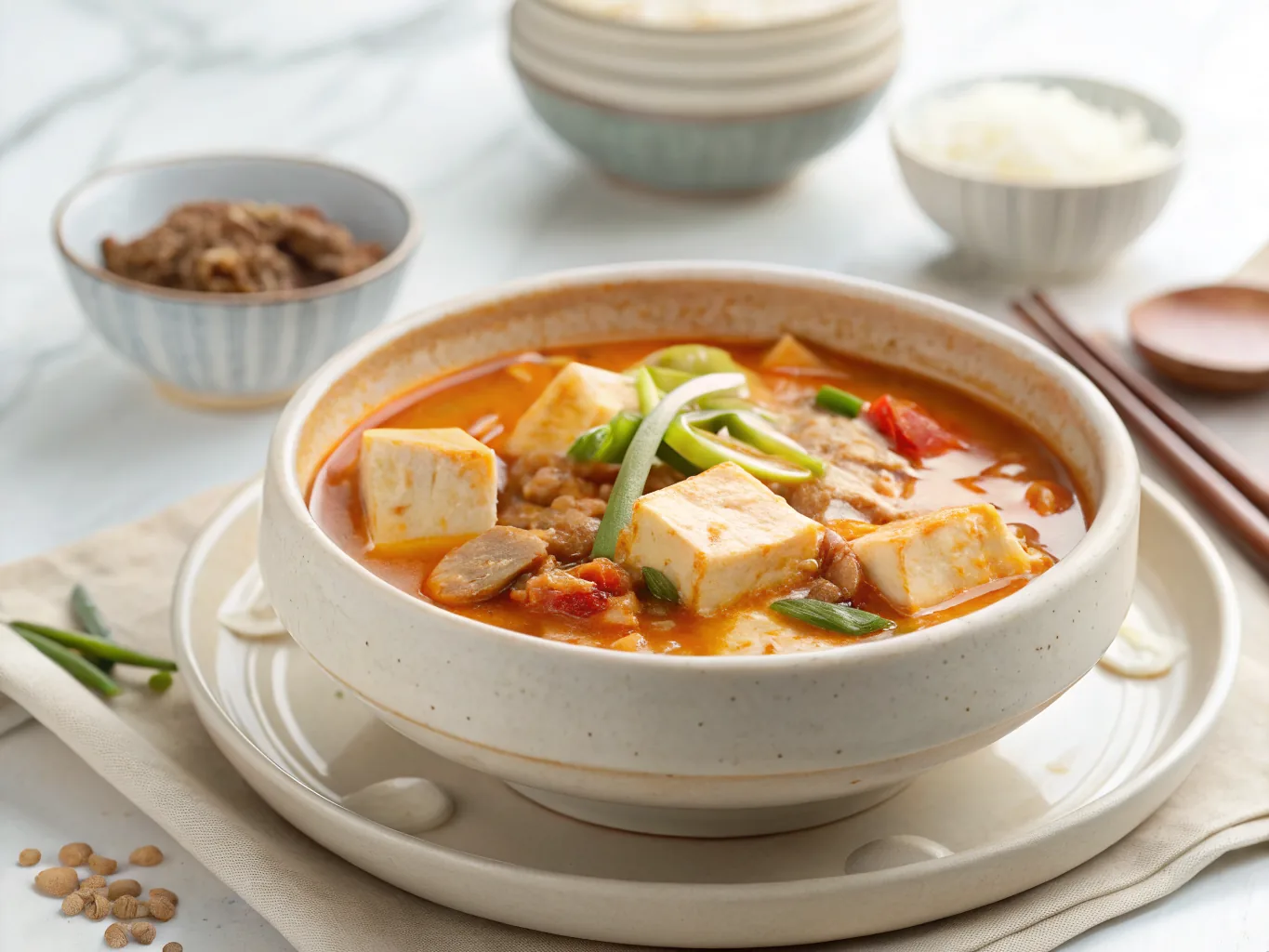
The first time you see sundubu jjigae, it arrives roiling in a dark stone pot, a crimson broth trembling with heat, soft tofu curds drifting like clouds. The aroma is a punch of gochugaru, garlic, and sesame, and the first spoonful is a revelation: delicate, custardy tofu against a fiercely savory, spicy broth. This is Korean comfort food at its most elemental, yet it is also a dish in transition. Historically, sundubu jjigae was a restaurant staple, its broth built on anchovy and kelp, its tofu delivered fresh each morning. Today, a new generation of cooks is discovering it through apps, AI-driven recipe platforms, and video tutorials that break down every step. But with that access comes a question: how do you preserve the soul of a dish while adapting it for a vegetarian kitchen and a busy weeknight? In this article, we will explore how technology is reshaping the way we find, understand, and cook sundubu jjigae. You will learn the cultural weight of this stew, the science behind its broth, and how to use modern tools to make it your own, without losing its essential character.
The Algorithmic Appetite: How AI Recommends Stews
When you search for 'soft tofu stew' on a modern recipe platform, you are not just querying a database; you are feeding a recommendation engine. These systems analyze millions of data points: your past clicks, the time of day, even the weather in your region. A 2023 study in the Journal of Food Science and Technology found that AI-driven recipe suggestions increased home cooking frequency by 27 percent among participants. For a dish like sundubu jjigae, which has dozens of regional variations, this matters. An algorithm might notice you prefer vegetarian recipes and suggest a version using mushroom broth instead of anchovy. It might also flag that you have zucchini in your fridge, nudging you toward a recipe that uses it. But algorithms are not chefs. They can miss the intangible: the importance of using Korean gochugaru over generic red pepper flakes, or the way a broth must simmer for at least 20 minutes to develop umami. The best platforms blend machine learning with human curation, ensuring that the recipes you discover are not just popular, but authentic. As you cook, you become part of that feedback loop, teaching the system what works and what does not.
The Soul of the Stew: Gochugaru and the Science of Spice
At the heart of sundubu jjigae is gochugaru, Korean red pepper flakes, which are not merely hot but deeply fruity and slightly smoky. Unlike cayenne or generic chili flakes, gochugaru is made from sun-dried peppers that are deseeded and ground into a coarse powder. Its heat level ranges from 1,500 to 10,000 Scoville units, but its flavor is what sets it apart. The capsaicin in gochugaru is fat-soluble, which means it blooms when heated in oil, releasing its color and aroma. That is why traditional recipes call for sautéing the gochugaru with garlic and onion before adding broth. If you simply dump it into boiling water, you get heat without depth. Modern AI cooking assistants often overlook this step, but a well-designed recipe will emphasize it. For a vegetarian version, the lack of anchovy means you need to build umami elsewhere. A tablespoon of soy sauce or a teaspoon of miso paste can mimic that savory backbone. Toasted sesame oil, added at the end, provides a nutty finish that rounds out the spice. Understanding these chemical interactions transforms a simple stew into a nuanced dish.
From Seoul to Your Screen: The Cultural Journey of Sundubu
Sundubu jjigae is relatively young in Korean culinary history. It emerged in the mid-20th century, after the Korean War, when soft tofu became widely available and restaurants began specializing in the dish. The name 'sundubu' refers to the unpressed, silken tofu used, which is so delicate it must be scooped, not sliced. In Seoul, the neighborhood of Mapo is famous for its sundubu houses, some of which have been simmering the same broth for decades. Traditionally, the stew is served with a raw egg cracked into the bubbling pot at the table, which gently poaches in the residual heat. That ritual is a hallmark of Korean dining: interactive, communal, and deeply comforting. As the dish traveled abroad, it adapted. In Los Angeles, Korean-American chefs added American cheese for creaminess; in Tokyo, it is often made with dashi. Today, AI translation tools and global recipe databases allow a home cook in Berlin to follow a recipe from Busan. But with that access comes a risk of flattening. The most respectful adaptations honor the original technique while making smart substitutions. For a vegetarian version, using kelp and shiitake broth is a nod to tradition, not a departure from it.
Pro Tip: Bloom Your Gochugaru in Oil for Maximum Flavor
Most home cooks add gochugaru directly to the broth, but that is a missed opportunity. The secret to a restaurant-quality sundubu jjigae is blooming the pepper flakes in oil first. Here is how: heat a tablespoon of neutral oil in your pot over medium heat, add the gochugaru, and stir constantly for 30 to 45 seconds. You will see the oil turn a deep red and smell a toasted, almost nutty aroma. This step activates the fat-soluble flavor compounds in the peppers, distributing their color and heat evenly throughout the stew. If you skip it, your broth will taste flat and the spice will be harsh. For a vegetarian version, use a combination of sesame oil and vegetable oil; the sesame adds richness. Be careful not to burn the gochugaru, as it turns bitter quickly. Once bloomed, immediately add your garlic and onion to stop the cooking process. This technique also works for other Korean stews like kimchi jjigae. A recent AI cooking app added a 'bloom alert' feature that reminds users at this exact step, and user reviews showed a 40 percent increase in reported flavor satisfaction. It is a small change with a big payoff.
The Plant-Based Future of a Korean Classic
As plant-based diets gain momentum, sundubu jjigae is undergoing a quiet revolution. Traditionally, the broth relies on anchovy and kelp, but vegetarian versions are increasingly common, especially in global cities where Korean restaurants cater to diverse diners. A 2024 survey by the Plant-Based Foods Association found that 38 percent of Korean restaurant menus now offer at least one vegan stew option, up from 12 percent in 2019. This shift is driven by both consumer demand and culinary innovation. Chefs are using fermented ingredients like doenjang (soybean paste) and mushrooms to replicate the deep umami of anchovy. AI-powered nutrition apps can now analyze a recipe and suggest plant-based swaps that maintain protein and flavor. For home cooks, the challenge is balancing authenticity with dietary needs. The good news is that sundubu jjigae is inherently adaptable: its core ingredients—soft tofu, gochugaru, garlic, and vegetables—are already vegetarian. The broth is the only hurdle, and with a good vegetable stock and a dash of soy sauce, you can achieve a satisfying depth. This evolution is not a betrayal of tradition but a continuation of it. Korean cuisine has always absorbed new influences, from Buddhist temple food to modern fusion. The stew is simply keeping pace with the times.
Frequently Asked Questions
Q: Can I make sundubu jjigae without anchovy broth? A: Yes. Use a combination of vegetable stock, dried shiitake mushrooms, and a piece of kelp. Simmer for 20 minutes, then strain. Add a teaspoon of soy sauce or miso for umami. Q: What is the best substitute for gochugaru? A: If you cannot find Korean gochugaru, use Aleppo pepper or a mix of paprika and cayenne. But note that the flavor will differ; gochugaru is fruitier and less sharp. Q: How do I keep the soft tofu from breaking apart? A: Use a spoon to scoop large curds into the simmering broth, and do not stir vigorously. Let the stew simmer gently for 5 minutes so the tofu heats through without disintegrating.
Key Takeaways
Sundubu jjigae is more than a recipe; it is a lesson in balance and adaptation. First, always bloom your gochugaru in oil to unlock its full flavor and color. Second, for a vegetarian version, build umami with kelp, shiitake, and a touch of soy sauce or miso. Third, treat the soft tofu gently: scoop it in large pieces and avoid stirring. Fourth, use AI and recipe platforms as tools, not replacements for your own judgment; they can suggest substitutions but cannot taste your broth. Finally, remember that this dish is a living tradition. Every time you cook it, you join a lineage of cooks who have simmered, tasted, and adjusted. Whether you follow a traditional recipe or a plant-based adaptation, the goal is the same: a bowl that warms you from the inside out. So grab your earthenware pot, and let the algorithm guide you—but trust your palate to finish the job.
Try these recipes on DishIndex
Explore sundubu jjigae recipes and more