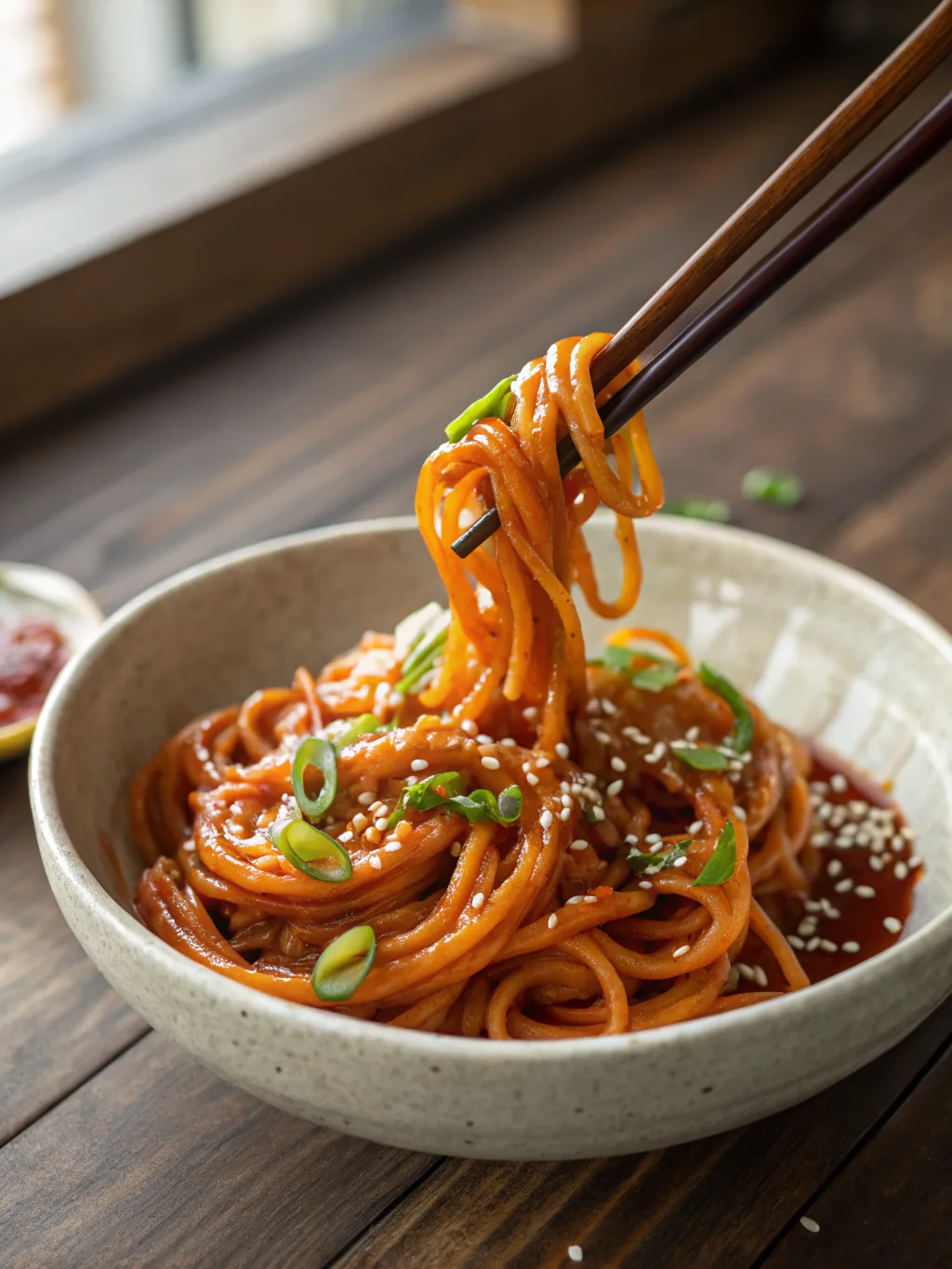
If you’ve scrolled through food TikTok lately, you’ve likely seen the mesmerizing swirl of gochujang butter noodles — glossy, golden, and utterly craveable. This 10-minute Korean-fusion pasta has taken over feeds for good reason: it transforms five pantry staples into a dish that tastes like hours of effort. But beyond the viral hype, these noodles are a meal-prep game-changer. Imagine having a container of spicy, buttery noodles ready to reheat for lunch or a speedy dinner, no cooking required. In this article, we’ll explore how to batch-cook gochujang butter noodles for the week, the best storage practices, and how to balance them with protein and veggies. You’ll also learn the cultural story behind gochujang and why this fusion dish resonates so deeply. By the end, you’ll be armed with practical strategies to make this viral sensation a staple in your weekly rotation — without sacrificing flavor or nutrition.
The Science of Gochujang: Why It’s More Than Just Spice
Gochujang, a fermented Korean chili paste, is the soul of this dish. Unlike hot sauce, which delivers pure heat, gochujang offers a complex umami bomb thanks to months of fermentation with glutinous rice, soybeans, and chili powder. The fermentation process creates glutamates, the same compounds responsible for the savory depth in Parmesan and soy sauce. When melted into butter, the paste’s sugars caramelize slightly, while its capsaicin dissolves into the fat, mellowing the burn and amplifying richness. A 2018 study in the Journal of Food Science found that gochujang’s antioxidants remain stable even after cooking, so you’re getting more than just flavor. This explains why a single tablespoon can transform a simple buttered pasta into something that tastes layered and slow-cooked. For meal prep, this means your noodles will actually improve in flavor after a day in the fridge as the gochujang melds with the butter and soy sauce.
Batch Cooking 101: Scaling the Recipe Without Losing Magic
Scaling up gochujang butter noodles for meal prep is straightforward, but the sauce ratio needs attention. For a single serving, the classic formula is 1 tablespoon gochujang, 1 tablespoon butter, 1 teaspoon soy sauce, and 1 teaspoon honey. When multiplying by four, don’t just quadruple the gochujang — its heat and salt can overwhelm. Instead, use 3 tablespoons gochujang, 4 tablespoons butter, 1 tablespoon soy sauce, and 1 tablespoon honey. The extra butter keeps the sauce silky when reheated. Cook your noodles just shy of al dente; they’ll finish cooking when you toss them with the hot sauce. For batch cooking, prepare the sauce in a large skillet, then add all the cooked noodles and toss until evenly coated. Divide into containers while still warm — this helps the sauce adhere. A common mistake is under-salting the pasta water; use at least 1 tablespoon salt per gallon to season the noodles from within.
From Korea to Your Kitchen: The Cultural Journey of Gochujang
Gochujang’s roots trace back to 16th-century Korea, after chili peppers arrived from the Americas via Japanese trade routes. Korean cooks began fermenting chili powder with rice and soybeans, creating a paste that became central to dishes like bibimbap and tteokbokki. Traditionally, families made gochujang in large earthenware jars called onggi, letting it ferment outdoors for months. The paste’s deep red color and sweet-spicy profile became a hallmark of Korean cuisine. In the 21st century, gochujang went global, appearing in everything from tacos to pasta. This noodle dish is a perfect example of Korean-fusion cooking: it respects the paste’s heritage while embracing Western pasta culture. For Korean Americans, it’s a nostalgic flavor in a new form; for others, it’s an accessible entry point to Korean flavors. When you batch-cook these noodles, you’re not just meal-prepping — you’re participating in a culinary exchange that spans centuries.
Pro Tip: The Emulsion Trick for Silky, Clingy Sauce
Most home cooks dump the sauce ingredients into a pan and hope for the best. The secret to that glossy, restaurant-quality coating is emulsion. Here’s how: melt the butter over low heat until just foaming, then whisk in the gochujang, soy sauce, and honey. The mixture will look separated at first. Add 2 tablespoons of the starchy pasta cooking water and whisk vigorously. The starch acts as an emulsifier, binding the fat and water into a creamy, uniform sauce. This step takes 30 seconds but makes all the difference. For meal prep, this emulsion also prevents the sauce from breaking when reheated. Another pro move: reserve extra pasta water. If your noodles dry out in the fridge, a splash of water plus a quick stir over heat will bring them back to life. Never add oil to the cooking water — it makes the noodles slippery and prevents the sauce from clinging.
Balancing Your Plate: Nutrition and Realistic Eating
Gochujang butter noodles are indulgent, but they can fit into a balanced diet with smart additions. Each serving (using 2 ounces dried pasta) delivers about 400 calories, 12 grams of fat, and 10 grams of protein — not a complete meal on its own. To boost protein, add a soft-boiled egg, shredded rotisserie chicken, or pan-fried tofu. For fiber, toss in a handful of spinach or sliced bell peppers during the last minute of cooking. The good news: gochujang contains capsaicin, which may slightly boost metabolism, and its fermentation provides probiotics (though cooking reduces their count). The butter offers satiety, helping you feel full longer. For meal prep, portion into containers with equal amounts of noodles and veggies, then top with protein. This turns a viral indulgence into a realistic weekday lunch. Remember, balance isn’t about perfection — it’s about adding nutrients where you can.
Frequently Asked Questions
Q: Can I use a different type of noodle? A: Absolutely. Udon, ramen, or rice noodles work well. For meal prep, udon holds up best because it stays chewy after reheating. Q: How long do the noodles last in the fridge? A: Store in an airtight container for up to 4 days. Reheat with a splash of water in a skillet or microwave, stirring to revive the sauce. Q: Is gochujang gluten-free? A: Traditional gochujang often contains wheat, so check labels. Many brands offer gluten-free versions made with rice. For a soy-free option, use coconut aminos instead of soy sauce.
Key Takeaways
Batch-cook gochujang butter noodles by scaling the sauce carefully: use less gochujang and more butter when multiplying. Emulsify the sauce with starchy pasta water for a silky texture that survives reheating. Store noodles with veggies and protein for balanced meals that last four days. Reheat gently with a splash of water to restore gloss. Embrace gochujang’s fermented complexity — it deepens overnight. With these strategies, the viral sensation becomes a practical, delicious part of your weekly routine. So next time you see that glossy swirl on your feed, you’ll know exactly how to make it work for you.
Try these recipes on DishIndex
Explore gochujang noodles recipes and more