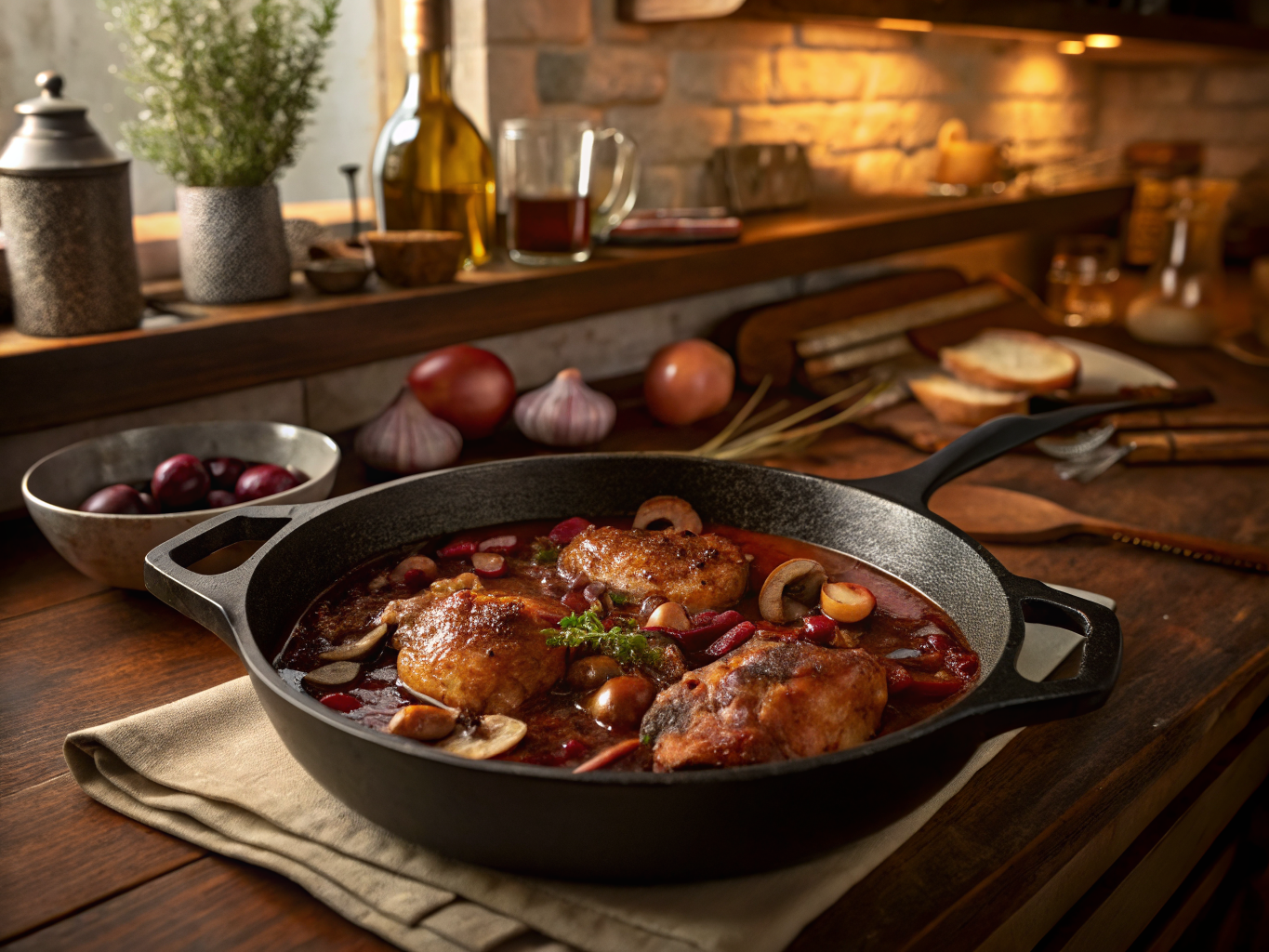
There's something about a cold autumn evening that calls for a dish born in the French countryside—and Coq au Vin Rouge answers that call with tender, soulful grace. Imagine chicken legs slowly braised until they surrender to the fork, wrapped in a deep, silky sauce of red wine, smoky lardons, and earthy mushrooms. You'll catch whispers of thyme and bay as the whole kitchen fills with that unmistakable aroma of rustic French comfort. It's not a fast meal; it's a patient one—a loving conversation between ingredients that asks you to slow down and savor. But beyond the romance, this dish is a nutritional marvel. The combination of chicken, red wine, mushrooms, and aromatics delivers a spectrum of vitamins, minerals, and antioxidants that support heart health, immunity, and muscle repair. In this article, we'll uncover the science-backed benefits of each component, from the lean protein in chicken legs to the resveratrol in red wine. You'll learn how this indulgent-tasting stew can fit into a balanced diet, and why it's more than just a guilty pleasure. Get ready to see Coq au Vin Rouge in a whole new light—one that nourishes both body and soul.
The Macronutrient Profile: Protein, Fat, and Carbohydrates
A typical serving of Coq au Vin Rouge (one chicken leg with sauce and vegetables) provides approximately 350-400 calories, with a macronutrient split that's surprisingly balanced. The chicken leg—both thigh and drumstick—is a rich source of complete protein, offering about 25-30 grams per serving. This protein is essential for muscle maintenance, immune function, and satiety. The fat content comes primarily from the chicken skin and lardons, totaling around 20-25 grams, with a mix of saturated and monounsaturated fats. While some may worry about saturated fat, research from the American Journal of Clinical Nutrition suggests that when consumed as part of a whole-foods diet, it doesn't necessarily increase cardiovascular risk. The carbohydrates are minimal, around 10-15 grams, mostly from the pearl onions and any flour used to thicken the sauce. This low-carb profile makes the dish suitable for those managing blood sugar. Additionally, the long braising process breaks down collagen in the chicken, yielding gelatin, which supports joint health and gut lining. So while it tastes indulgent, the macros are remarkably aligned with a healthy, high-protein diet.
Vitamins and Minerals: A Micronutrient Goldmine
Coq au Vin Rouge is packed with essential vitamins and minerals. Chicken legs are particularly rich in B vitamins—niacin (B3), pyridoxine (B6), and cobalamin (B12)—which are crucial for energy metabolism and red blood cell formation. A single serving can provide over 50% of the daily recommended intake of B12, a nutrient often lacking in plant-based diets. The mushrooms contribute a notable amount of vitamin D when exposed to UV light, as well as selenium and copper, which support antioxidant defenses. Pearl onions offer vitamin C and quercetin, a flavonoid with anti-inflammatory properties. The red wine, after cooking, leaves behind some minerals like iron and potassium, though alcohol evaporates. Lardons add zinc and iron, while thyme and bay leaves provide small but meaningful amounts of vitamin K and manganese. This synergy of micronutrients supports everything from nerve function to bone health. For example, the vitamin K in thyme works with the calcium in the chicken to promote bone density. It's a testament to how traditional dishes often deliver a broad spectrum of nutrients without fortification.
The Antioxidant Power of Red Wine
Red wine is more than a flavor agent in Coq au Vin Rouge; it's a source of polyphenols, notably resveratrol and proanthocyanidins. These compounds have been studied extensively for their cardiovascular benefits. A 2019 study in Nutrients found that moderate red wine consumption is associated with improved endothelial function and reduced oxidative stress. While alcohol is largely cooked off during braising, some polyphenols remain in the sauce, especially if you use a full-bodied wine like Burgundy or Côtes du Rhône, which are high in tannins. Resveratrol, in particular, has been shown to activate sirtuins, proteins linked to longevity and cellular repair. However, it's important to note that the amount in a single serving is modest—you'd need to drink the wine to get higher doses, but that comes with alcohol risks. The beauty of Coq au Vin is that you get the flavor and some antioxidants without the alcohol. Additionally, the wine's acidity helps break down chicken fibers, making the meat more tender and easier to digest. So the next time you pour that Burgundy into the pot, know you're adding more than just depth—you're infusing the dish with health-promoting compounds.
Pro Tip: Maximize Nutrition by Choosing the Right Wine and Cooking Method
Most recipes call for any red wine, but for maximum nutritional benefit, choose a dry, tannin-rich wine like Cabernet Sauvignon or Syrah. These grapes have higher concentrations of resveratrol and other polyphenols. Avoid sweet wines, which add unnecessary sugar. Also, don't discard the mushrooms' stems—they contain ergothioneine, a unique antioxidant that survives cooking. When braising, keep the lid on to retain moisture and prevent nutrient loss. And here's a secret: add the mushrooms in the last 20 minutes of cooking. Overcooking them can degrade their vitamin C and heat-sensitive B vitamins. Finally, skim off excess fat before serving to reduce saturated fat without losing flavor. This simple step can cut up to 100 calories per serving. By paying attention to these details, you elevate a classic into a truly nourishing meal.
Cultural Roots and Modern Health Appeal
Coq au Vin originated in rural France, where tough old roosters were slow-cooked to tenderness. The dish dates back to at least the early 20th century, with legend attributing it to Julius Caesar or Napoleon, though the first written recipe appeared in 1913. Traditionally, it was a peasant dish, using inexpensive cuts and local wine. Today, it's a staple of French bistro cuisine and has found new life among health-conscious cooks. The modern interest in the Mediterranean diet and the French Paradox—the observation that French people have lower rates of heart disease despite diets rich in saturated fat—has spotlighted dishes like Coq au Vin. Researchers attribute part of this paradox to the polyphenols in red wine and the anti-inflammatory effects of slow-cooked, whole-food meals. As we seek comfort foods that also support well-being, Coq au Vin Rouge fits perfectly. It's a dish that honors tradition while aligning with contemporary nutritional science, proving that indulgence and health can coexist.
Frequently Asked Questions
Q: Is Coq au Vin Rouge healthy? A: Yes, when enjoyed in moderation. It provides lean protein, B vitamins, and antioxidants from red wine and vegetables. However, watch portion sizes due to fat from lardons and skin. Q: Can I make it lower in fat? A: Absolutely. Remove the skin before cooking, use turkey bacon instead of lardons, and skim the sauce. This reduces saturated fat while keeping flavor. Q: Does the alcohol in red wine survive cooking? A: Most alcohol evaporates during braising. After 2 hours of simmering, only about 5-10% remains, so the dish is safe for most, but those avoiding alcohol should use stock.
Key Takeaways
Coq au Vin Rouge is a nutritional powerhouse disguised as comfort food. It delivers high-quality protein for muscle repair, B vitamins for energy, and antioxidants from red wine and mushrooms for heart health. The slow braising method enhances digestibility and nutrient availability. To maximize benefits, choose a tannin-rich wine, add mushrooms late, and skim excess fat. This dish proves that traditional French cuisine can be part of a balanced, healthful diet. So next time you crave something soulful, remember: you're not just feeding your soul, you're nourishing your body with every bite.
Try these recipes on DishIndex
Explore coq au vin recipes and more