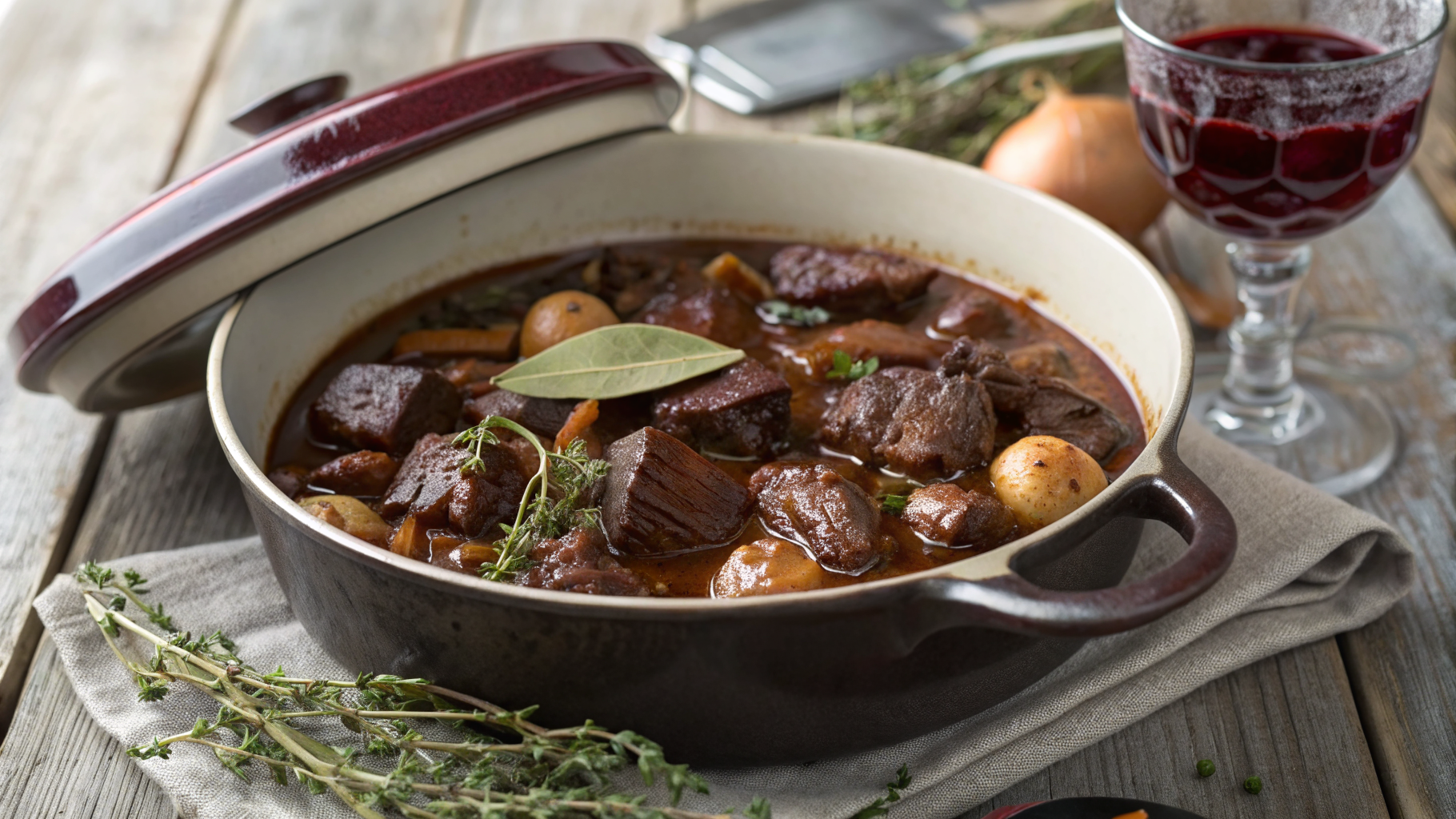
There is a particular kind of quiet satisfaction in opening the fridge on a Tuesday night, pulling out a container of something that tastes like it took all day, and knowing dinner is already solved. Beef Bourguignon was practically engineered for this moment. The dish comes from Burgundy, where cooks have braised beef in red wine since at least the seventeenth century, and its defining characteristic is that it improves with rest. The wine's tannins soften, the gelatin from beef shin melts into the sauce, and the flavors knit together into something deeper than the sum of its parts. That makes it one of the most rewarding batch-cooking projects a home cook can take on. In this article, you'll learn how to build a week of meals around a single pot, how to store and reheat it without losing that velvety texture, and why a dish this rich can still fit comfortably into a balanced, realistic diet. No austerity required, just good planning.
Why Beef Bourguignon Is Built for Batch Cooking
Most stews reheat well, but Beef Bourguignon is unusually forgiving. The traditional cut, beef shin, is loaded with collagen that breaks down during a long, low braise into gelatin, which is what gives the sauce its lip-coating body. Crucially, that gelatin sets when cold, meaning a refrigerated portion holds its texture rather than turning watery, and it re-liquefies beautifully on reheating. The recipe also scales without fuss: browning beef and bacon in batches takes marginally longer for a double quantity, but the braising time stays the same. A classic ratio is roughly 1 kilogram of beef to 750 milliliters of red wine, so a doubled batch fits comfortably in a large Dutch oven. Because the dish relies on slow, moist heat rather than precision, there is little risk in making it ahead. French home cooks have long treated daubes and braises as Sunday projects that feed the household through the week, and Bourguignon sits squarely in that tradition.
The Ingredient Details That Survive Storage
Not every component of Beef Bourguignon holds up equally well in the fridge, and knowing which is which transforms your leftovers. Beef shin, bacon, and shallots actually improve, deepening in flavor over two to three days. Mushrooms are the delicate element: chestnut mushrooms cooked into the stew will soften further on reheating, so many cooks sear them separately and fold them in just before serving, keeping a batch of sautéed mushrooms in a separate container. The bouquet garni should always be removed before storage, since bay and thyme intensify and can turn bitter after a day or two. If you finish the stew with a splash of cognac, add it at the end of reheating rather than before storage, so the alcohol's aromatic lift isn't cooked away. Finally, be generous with the wine reduction: a sauce that looks slightly too loose when hot will thicken considerably once chilled, so resist the urge to over-reduce.
From Burgundy Farmhouse to Modern Kitchen
The dish we call Beef Bourguignon is a codification of something much older: Burgundian peasant cooking, where tough cuts of beef were simmered in the local red wine simply because water was scarce and wine was not. The region's vineyards, cultivated by monks since the Middle Ages, produced a surplus of rustic bottles ideal for braising. It was Auguste Escoffier who formalized the recipe in the early twentieth century, listing it as braised beef in the Burgundy style, and Julia Child's 1961 cookbook made it a fixture of American home kitchens, complete with her famously exacting instructions for browning and simmering. What has not changed is the logic behind it: inexpensive, hardworking cuts, a long slow braise, and the transformation of humble ingredients into something luxurious. That economy is precisely why it suits a meal-prep mindset today. The dish was never designed to be a showpiece cooked once; it was designed to feed a household generously from modest means.
Pro Tip: Chill Overnight, Then Lift the Fat
Here is the technique that separates a good batch-cooked Bourguignon from a great one: refrigerate the finished stew overnight before portioning it. As it chills, the gelatin sets and the sauce firms up, but more usefully, the rendered fat from the bacon and beef rises and solidifies into an easy-to-lift cap. Spooning that off removes a significant amount of saturated fat without touching the flavor, since the fat-soluble aromatics have already done their work during the braise. You are left with a cleaner, more intensely flavored sauce and a dish that sits lighter on the plate. This single step also makes the stew easier to portion accurately, because a set stew divides into neat, equal servings rather than a slosh of meat and liquid. If you plan to freeze portions, do this before freezing, not after. The result is a version that tastes richer yet eats lighter, which is exactly the balance a realistic weekly diet needs.
Where This Dish Fits in a Balanced Week
There is a persistent myth that classic French cooking and everyday healthy eating occupy separate worlds. Beef Bourguignon quietly disproves it. A typical serving delivers a substantial dose of protein from beef shin, plus iron, zinc, and B vitamins, alongside the antioxidant polyphenols contributed by red wine during braising. It is not a low-calorie dish, but it is a satisfying one, and satisfaction matters: research on satiety consistently shows that rich, flavorful meals reduce subsequent snacking more effectively than bland, low-fat ones. The practical move is portion awareness rather than avoidance. Serve a modest ladle over mashed celeriac, which is lower in starch than potato and adds fiber, and pair it with a sharp green salad or steamed greens to round out the plate. Spread across a week, one large batch yields four to six dinners that feel indulgent while fitting comfortably into a varied, plant-forward pattern of eating. That is meal prep at its most civilized.
Frequently Asked Questions
Q: How long does Beef Bourguignon keep in the fridge? A: Stored in an airtight container, it keeps safely for three to four days. Flavor actually peaks on day two or three as the sauce deepens. Reheat gently on the stovetop over low heat, stirring occasionally, until piping hot throughout. Q: Can I freeze Beef Bourguignon? A: Yes, it freezes excellently for up to three months. Cool it completely, remove the solidified fat cap, and portion into containers, leaving headroom for expansion. Thaw overnight in the fridge rather than at room temperature, then reheat slowly. Add fresh sautéed mushrooms and a splash of cognac after reheating. Q: Why did my sauce turn thin after reheating? A: Over-dilution or under-reduction is usually the cause. If the sauce looks loose when hot, simmer it uncovered for ten to fifteen minutes to concentrate it. Avoid boiling hard, which can shred the beef. A small knob of butter whisked in at the end restores gloss.
Key Takeaways
Treat Beef Bourguignon as a project worth doubling: brown the beef and bacon in batches, braise once, and let the pot feed you for days. Chill the finished stew overnight before portioning so you can lift off the solidified fat and divide clean, even servings. Store mushrooms separately if you want them to keep their texture, and always remove the bouquet garni before refrigerating. Freeze in single portions for up to three months, thawing in the fridge and reheating gently rather than boiling. Finally, serve modest ladles over mashed celeriac with something green alongside, and remember that a rich, deeply flavored dish eaten sensibly is not a compromise but an asset to a balanced week. Cook once, eat beautifully, and let the sauce do the work.
Try these recipes on DishIndex
Explore Beef Bourguignon recipes and more