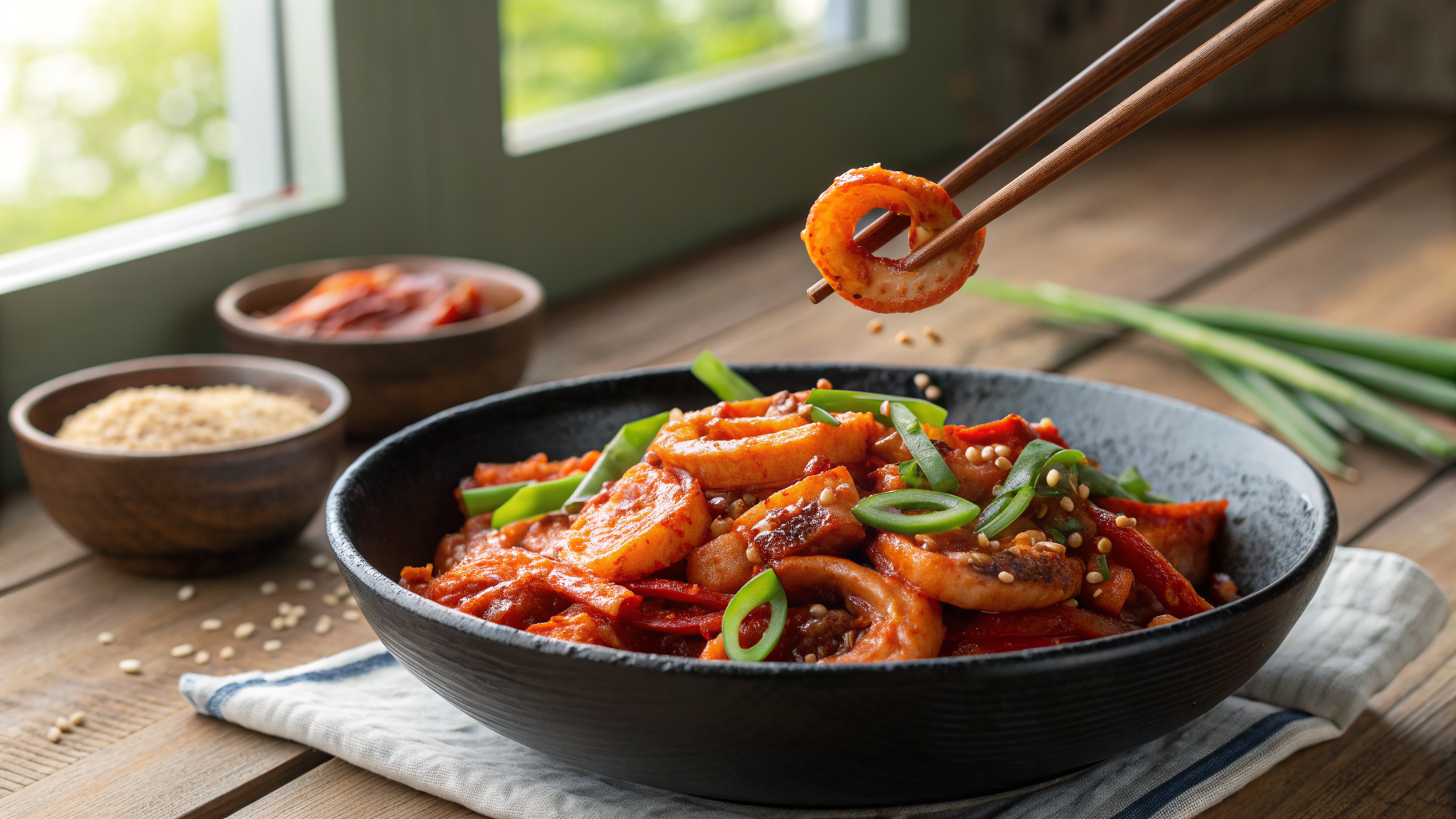
Imagine a sizzling pan, the aroma of garlic and gochujang filling your kitchen, as tender squid rings turn opaque and soak up a glossy, crimson sauce. This is Ojingeo Bokkeum, a beloved Korean stir-fry that delivers a punch of heat and a depth of umami that keeps you coming back for more. Beyond its addictive flavor, this dish is a nutritional powerhouse. Squid is a lean protein low in fat yet rich in vitamin B12 and selenium, while the array of colorful vegetables—onions, carrots, bell peppers—adds fiber, vitamin C, and antioxidants. The magic of gochujang brings not just heat but beneficial compounds from fermented soybeans and chili peppers. In this article, we'll dive into the science behind these ingredients, explore the dish's cultural heritage, and share expert tips to ensure your squid stays perfectly tender. Whether you're a seasoned cook or new to Korean cuisine, you'll discover why this spicy stir-fry deserves a place in your regular rotation.
The Nutritional Profile: What Makes This Dish a Healthy Choice
At first glance, a spicy stir-fry might seem indulgent, but Ojingeo Bokkeum is surprisingly aligned with balanced eating. Squid is a standout ingredient: a 3-ounce serving provides about 15 grams of protein with less than 2 grams of fat, making it a lean alternative to red meat. It's also an excellent source of vitamin B12, essential for nerve function and red blood cell production, and selenium, a powerful antioxidant that supports thyroid health and immune function. The vegetables bring a spectrum of nutrients: onions offer quercetin, a flavonoid with anti-inflammatory properties; carrots are rich in beta-carotene, which converts to vitamin A for eye health; bell peppers, especially the red ones, are loaded with vitamin C—one medium pepper provides over 150% of the daily value. When you combine these with the fiber, you get a dish that supports digestion and satiety. The gochujang, though used in moderation, adds capsaicin, which has been shown to boost metabolism slightly and may help with pain relief. This stir-fry is a testament to how bold flavors and wholesome ingredients can coexist.
Gochujang: The Heart of Korean Heat
The soul of Ojingeo Bokkeum is gochujang, a fermented red chili paste that has been a cornerstone of Korean cuisine for centuries. Unlike simple chili sauces, gochujang is made from red chili powder, glutinous rice, fermented soybean powder, and salt, undergoing a fermentation process that can last months or even years. This aging develops complex flavors—sweet, savory, and spicy—along with beneficial probiotics and enzymes. Research on fermented foods suggests that incorporating them into your diet can improve gut health and nutrient absorption. In this dish, gochujang provides not only heat but also a deep, earthy umami that is balanced by the sweetness of honey and the acidity of a touch of vinegar. When you cook gochujang, you might think the heat diminishes, but it actually melds with the other ingredients, creating a sauce that clings to the squid and vegetables. If you're new to gochujang, start with a small amount and adjust to your tolerance. But remember, authentic Ojingeo Bokkeum should have a noticeable kick—that's part of its charm.
A Cultural Icon: Ojingeo Bokkeum's Place in Korean Dining
Ojingeo Bokkeum translates literally to 'stir-fried squid,' a dish that has evolved from home kitchens to become a beloved banchan (side dish) and main course across Korea. Its roots lie in Korea's coastal regions, where squid has been a dietary staple for centuries, often dried and rehydrated for preservation. The dish gained popularity in the mid-twentieth century as refrigeration made fresh squid more accessible inland. Today, it's a staple in Korean homes and restaurants, often served alongside rice and other banchan. The preparation is quick, making it perfect for busy weeknights, and the spicy-sweet profile appeals to all ages. In Korean culture, sharing a communal plate of Ojingeo Bokkeum is a sign of togetherness, often enjoyed with soju or beer. It also reflects the Korean principle of 'yakshikdongwon'—food and medicine share the same origin—as the dish's ingredients are chosen not just for flavor but for their health-promoting properties. This philosophy is evident in the generous use of garlic, ginger, and vegetables, which are believed to boost immunity and circulation.
Pro Tip: Scoring Squid for Perfect Texture
One of the pitfalls of cooking squid is its tendency to turn rubbery if overcooked. The secret to tender squid in Ojingeo Bokkeum lies in two steps: scoring and quick searing. First, score the squid bodies in a crosshatch pattern—shallow diagonal cuts about a quarter-inch apart. This not only helps the squid cook evenly and quickly, but it also creates beautiful curled pieces that capture the sauce. Second, cook the squid over high heat for no more than two to three minutes. Squid is like a rubber band: it toughens if cooked too long at a low temperature. The high heat sears the outside rapidly, locking in moisture while the inside stays tender. If you're cooking a large batch, do it in batches to avoid overcrowding the pan, which lowers the temperature and steams the squid instead of searing it. Also, pat the squid dry before cooking to ensure a good sear. Follow these tips, and your squid will be succulent, not chewy.
Current Trends: Why This Dish Fits Modern Healthy Eating
In today's culinary landscape, there's a growing interest in dishes that are both flavorful and nutritious, and Ojingeo Bokkeum aligns perfectly with this trend. As more people adopt Mediterranean or pescatarian diets, squid offers a sustainable seafood choice—it's abundant, fast-growing, and low on the food chain, which means lower levels of heavy metals compared to larger fish. The dish is naturally gluten-free if you use tamari or coconut aminos instead of soy sauce, making it accessible to those with gluten sensitivities. Its high protein content and moderate calories make it popular among fitness enthusiasts, while the vibrant colors and bold flavors appeal to Instagram foodies. Additionally, the use of fermented gochujang taps into the gut-health wave, as consumers seek out probiotic-rich foods. By stirring in a rainbow of vegetables, you're not just adding crunch and sweetness; you're boosting the dish's antioxidant profile, which is linked to reduced inflammation and chronic disease prevention. This stir-fry is a testament to how traditional recipes can meet modern demands for health, flavor, and sustainability.
Frequently Asked Questions
Q: Can I use a different type of seafood instead of squid? A: Yes, you can substitute shrimp or even firm white fish like cod, but adjust cooking times: shrimp may take just 2-3 minutes, while fish may need a bit less depending on thickness. The sauce works beautifully with any seafood. Q: How can I make the dish less spicy for kids? A: Reduce the gochujang and add a bit more honey or a splash of apple juice to balance the heat. You can also serve with extra rice to dilute the spiciness. Q: How long does Ojingeo Bokkeum last in the fridge? A: Store leftovers in an airtight container for up to 3 days. Reheat in a skillet over medium heat, adding a splash of water to loosen the sauce. The squid may become a bit firmer but still delicious.
Key Takeaways
As you embark on making Ojingeo Bokkeum, remember that this dish is more than a quick meal—it's a celebration of Korean culinary wisdom. We've uncovered how squid offers lean protein and essential nutrients, while vegetables contribute a spectrum of vitamins and fiber. We've learned that gochujang is not just a condiment but a fermented food with gut-friendly properties. We've explored the cultural significance of the dish, from its coastal origins to its role in communal dining. And we've armed you with technical secrets: score the squid, use high heat, and don't overcook. Finally, we've seen how this stir-fry resonates with modern health trends, from sustainability to gluten-free customization. Armed with this knowledge, you're ready to create a dish that's both nourishing and exciting. So heat your pan, master the sauce, and enjoy the bold, satisfying flavors of Korea, all in a bowl that's good for you and your loved ones.
Try these recipes on DishIndex
Explore spicy squid stir fry recipes and more