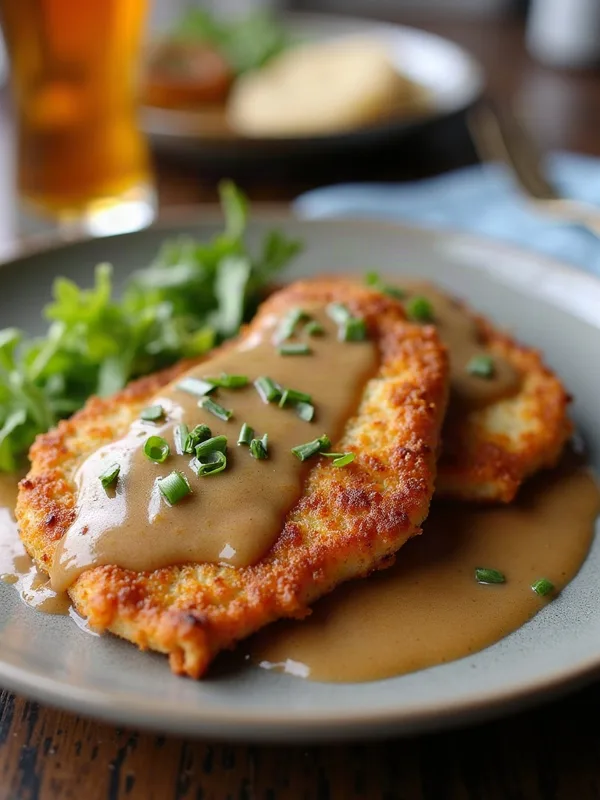
Imagine biting into a schnitzel so crispy it shatters, revealing juicy pork inside, all wrapped in a malty, salty pretzel crust. This is not your average breaded cutlet—it's a Swabian masterpiece that brings the beer hall experience home. In Stuttgart, where beer flows freely and comfort food reigns, this dish is a staple. But what makes it special? The pretzel crust, made from crushed pretzels, adds a depth of flavor that regular breadcrumbs can't match. The beer-onion gravy, rich with caramelized onions and dark German beer, is the perfect companion. In this article, we'll dive into the techniques and science behind achieving that perfect crust and silky gravy. You'll learn why pounding the pork thin is crucial, how to avoid a soggy coating, and the secret to a lump-free gravy. Whether you're a seasoned cook or a curious beginner, these chef-level tips will elevate your schnitzel game. Get ready to impress your family with a dish that feels like a trip to a Bavarian biergarten—without leaving your kitchen.
The Science of the Perfect Pretzel Crust
Achieving that craggy, golden crust is part art, part science. Pretzels, with their unique lye treatment, have a lower moisture content than fresh bread, which means they absorb less oil and stay crisp longer. When crushed, they create a coating with varied particle sizes—from fine crumbs to larger shards—that promotes better adhesion and a more textured bite. The key is to crush them coarsely; too fine and you lose the crunch, too large and they won't adhere. The three-step breading process—flour, egg wash, and pretzel crumbs—is standard, but the egg wash ratio matters: a mix of eggs and milk (about 1 tablespoon milk per egg) helps the crumbs stick without becoming soggy. Also, chilling the breaded schnitzel for 15 minutes before frying sets the coating, reducing the risk of it sliding off. Finally, frying temperature is critical: 350°F (175°C) is ideal. Too low, and the crust absorbs oil; too high, and it burns before the pork cooks through. Use a thermometer for precision.
Pounding Pork: The Key to Juicy Cutlets
Pork loin cutlets can be tough if not treated right. Pounding them thin—about 1/4 inch—not only ensures quick, even cooking but also breaks down muscle fibers, making the meat more tender. However, many home cooks make the mistake of pounding too aggressively, tearing the meat. Instead, place the cutlet between two sheets of plastic wrap and use a meat mallet or a heavy skillet to gently pound from the center outward. Aim for uniform thickness so the schnitzel cooks evenly. Another common error is skipping the seasoning step before breading. Season the pork generously with salt and pepper on both sides before dredging; this is your only chance to season the meat itself. Also, consider brining the cutlets for 30 minutes in a mild saltwater solution (1 tablespoon salt per cup of water) to enhance juiciness. After pounding, pat dry with paper towels to remove excess moisture, which helps the coating adhere.
The Swabian Schnitzel Tradition
While Wiener Schnitzel is Austria's pride, Swabian schnitzel has its own identity. In the Swabia region of Germany, which includes Stuttgart, schnitzel is often made with pork rather than veal, reflecting the region's love for hearty, affordable fare. The pretzel crust is a relatively modern twist, born from the area's abundance of pretzels—a staple in Swabian bakeries. Traditionally, schnitzel is served with a wedge of lemon, but the beer-onion gravy is a nod to the beer culture of Stuttgart, home to the Cannstatter Volksfest, one of the world's largest beer festivals. The gravy, known as 'Bier-Zwiebel-Soße,' is a classic in Swabian home cooking, often made with dark beer like a Dunkel or Schwarzbier. This dish embodies the region's ethos: simple, robust, and deeply satisfying. It's a testament to how local ingredients—pretzels and beer—can transform a humble cutlet into something extraordinary.
Pro Tip: Double-Fry for Ultimate Crispness
For an exceptionally crispy crust that holds up to the gravy, try the double-fry method. After breading, fry the schnitzel once at 325°F (160°C) for about 2 minutes per side to set the coating and cook the pork partially. Remove and drain on a wire rack. Then, increase the oil to 375°F (190°C) and fry again for 1 minute per side until deep golden and ultra-crisp. This technique, used in professional kitchens, drives out moisture and creates a barrier that prevents sogginess. Another secret: add a tablespoon of cornstarch to the egg wash; it promotes browning and crispness. Also, when making the gravy, deglaze the pan with beer after caramelizing onions, and scrape up the fond—those browned bits are flavor gold. Simmer the gravy for at least 10 minutes to meld the flavors, and finish with a cold butter cube off the heat for a glossy sheen. These small tweaks make a big difference.
Pairing and Presentation: Beyond the Plate
Swabian schnitzel with pretzel crust and beer-onion gravy is a rich dish that benefits from balanced sides. A tangy German potato salad with vinegar and mustard cuts through the richness, while a fresh green salad with a light vinaigrette offers contrast. For beer pairing, a malty Dunkel or a crisp Pilsner complements the pretzel crust and gravy. In terms of nutrition, pork loin is a lean source of protein, and baking instead of frying (though less traditional) can reduce fat. However, this dish is meant to be indulgent. Culturally, it represents the German concept of 'Gemütlichkeit'—coziness and warmth—often enjoyed during family gatherings or at beer gardens. In recent years, chefs have reinvented schnitzel with various crusts, but the pretzel version stands out for its umami depth. Serve it on a wooden board with a sprinkle of fresh parsley and a lemon wedge for a rustic, inviting presentation that encourages sharing.
Frequently Asked Questions
Q: Can I use regular breadcrumbs instead of pretzels? A: Yes, but you'll lose the malty, salty flavor. If substituting, add a pinch of salt and a teaspoon of malt powder to approximate the taste. Q: How do I prevent the crust from falling off? A: Pat the pork dry, use the flour-egg-pretzel sequence, and chill the breaded schnitzel for 15 minutes before frying. Also, don't flip too early. Q: Can I make the gravy ahead of time? A: Absolutely. The gravy can be made up to 3 days ahead and reheated gently. In fact, its flavor improves overnight as the onions and beer meld.
Key Takeaways
To master Swabian pork schnitzel with pretzel crust, remember these lessons: pound the pork to an even 1/4 inch for tender, quick-cooking cutlets; crush pretzels coarsely for maximum crunch; chill breaded schnitzels before frying to set the coating; maintain oil at 350°F for even cooking; and double-fry for extra crispness. For the gravy, caramelize onions slowly to develop sweetness, deglaze with dark beer, and finish with cold butter for silkiness. Avoid overcrowding the pan, which lowers oil temperature. Season the pork before breading, and let the finished schnitzel rest on a wire rack, not paper towels, to prevent sogginess. With these techniques, you'll create a dish that honors Swabian tradition and delights with every bite. Now, gather your ingredients and bring a taste of Stuttgart to your table.
Try these recipes on DishIndex
Explore pretzel schnitzel recipes and more