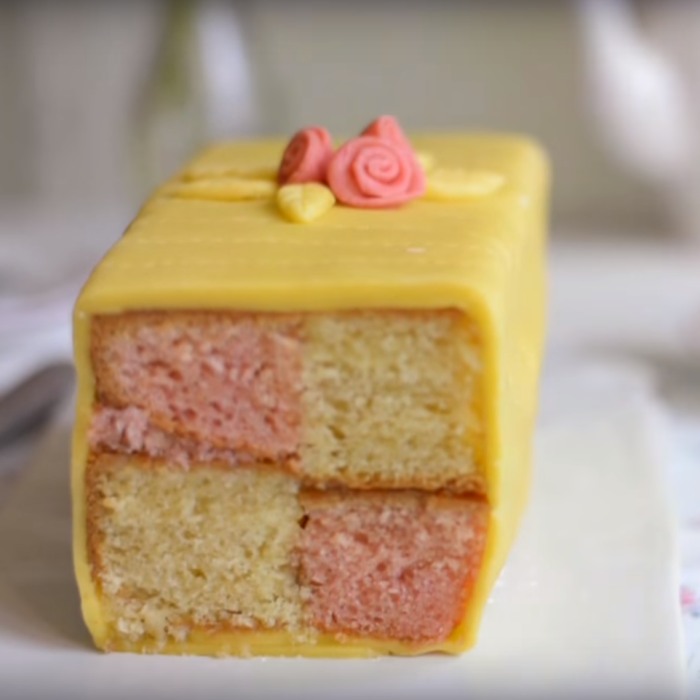
Picture a kitchen counter in 1970s Britain: a rolled-out sheet of marzipan, four neat sponge strips, and a cook holding a ruler to get the seams perfectly flush. The Battenberg Cake has always been a cake that rewards precision, and for generations it was the domain of patient bakers with steady hands. Fast forward to today, and that same cook is more likely to ask a voice assistant how to keep marzipan from cracking, or to pull up a short-form video that shows the checkerboard assembly in fifteen seconds. The tools have changed, but the ambition hasn't. This isn't just a story about a pretty cake. It's a story about how technology has quietly rewired the way we learn to cook, from ingredient substitutions to troubleshooting a split sponge at midnight. In the pages ahead, you'll discover the history behind those pink and yellow squares, the almond science that makes marzipan behave, and how modern platforms and AI helpers are making an intimidating classic feel genuinely achievable for the home baker.
The Checkerboard Cake That Rewards Precision
The Battenberg is deceptively simple on paper: four strips of sponge, two pink and two yellow, arranged in a checkerboard and wrapped in marzipan. In practice, it demands consistency. Each strip must be baked to the same thickness, trimmed to identical dimensions, and joined with a filling that holds without bulging. Traditional recipes rely on self-raising flour and baking powder for a reliable rise, caster sugar for a fine crumb, and ground almonds for moisture and that signature nutty note. The cake is named for the Battenberg family, and its origins are often tied to a marriage in the British royal household in the late nineteenth century, though the exact lineage is debated among food historians. What matters for the modern cook is that the cake is a test of geometry as much as baking. Digital tools have made that geometry easier to master, with visual guides and step-by-step timers replacing the terse instructions of old cookbooks. The result is a classic that feels less like a final exam and more like a satisfying project.
The Almond Science Behind a Supple Marzipan
Marzipan is where most home bakers stumble. Made from finely ground almonds and sugar, often bound with a little egg white or glucose, it can crack, tear, or turn greasy if handled poorly. The key is temperature and hydration. Cold marzipan is stiff and prone to splitting; warm marzipan is pliable but sticky. Many modern recipes suggest kneading it briefly between two sheets of parchment until it softens, then rolling it to an even thickness of about three to four millimeters. Almonds themselves bring more than flavor: their natural oils keep the sponge tender, and their protein content contributes to the structure. A common mistake is over-flouring the work surface, which dries the marzipan and causes cracks along the cake's edges. Instead, a light dusting of icing sugar or a sheet of parchment prevents sticking without compromising texture. Food science has clarified what experienced bakers knew instinctively: marzipan behaves best when it is neither too cold nor too warm, and when it is allowed to rest briefly before being draped over the assembled cake.
From Royal Tables to Online Tutorials
The Battenberg's history is tangled with British royal ceremony. It is widely associated with the marriage of Princess Victoria of Hesse to Prince Louis of Battenberg in 1884, and later with the family's anglicized name during the First World War. The cake became a staple of British teatime, sold in bakeries and included in ration-era cookbooks because its modest ingredients stretched well. By the mid-twentieth century, it was a fixture of children's parties and afternoon teas, its pink and yellow squares instantly recognizable. What has changed is how the recipe travels. Where a home baker once depended on a single dog-eared cookbook, today's cook can compare dozens of variations in seconds, from gluten-free adaptations to versions using natural food coloring instead of artificial dyes. This access has democratized a cake that was once a mark of a skilled hand. Regional variations persist, but the essential idea endures: a cake that looks celebratory and tastes of almonds and butter, shared across generations.
Pro Tip: Chill Before You Wrap
Here is the single technique most home cooks overlook: chill the assembled sponge before wrapping it in marzipan. Once the four strips are trimmed, filled, and pressed into a neat square, wrap the whole block tightly in plastic and refrigerate it for at least thirty minutes, ideally an hour. Cold sponge holds its shape, so the marzipan can be rolled around it without the cake shifting or the filling oozing out. This step also makes trimming the ends cleaner, giving you that crisp checkerboard reveal. A second secret is to brush the chilled cake lightly with warmed apricot jam before applying the marzipan; the jam acts as a glue and adds a subtle tartness that balances the sweetness. Finally, when rolling the marzipan, work quickly and use a ruler or a straight edge to score the final dimensions. Modern kitchen scales and digital thermometers have made these steps more reliable than ever, turning a fussy technique into a repeatable one.
Why a 140-Year-Old Cake Still Matters
In an era of viral desserts and hyper-photogenic bakes, the Battenberg endures because it satisfies something deeper than novelty. It is a cake of memory and craft, the kind of bake that rewards attention and produces a genuinely impressive result. Nutritionally, it is a treat, not a health food, but its reliance on whole ingredients like ground almonds and eggs gives it a richness that mass-produced cakes often lack. The modern revival of British baking, fueled by competition shows and social platforms, has reintroduced the Battenberg to a new generation, many of whom encounter it first as a video rather than a bakery slice. This shift matters: it shows how technology can preserve tradition rather than replace it, giving old recipes new audiences and new life. The cake's almond flavor and checkerboard structure remain unchanged, but the way we learn to make it has been transformed, making a piece of British culinary history accessible to anyone with an oven and a curiosity.
Frequently Asked Questions
Q: Can I make Battenberg Cake without marzipan? A: Yes, though the result is no longer a true Battenberg. Some bakers use fondant or a thin buttercream coating, but marzipan's almond flavor and slight chew are central to the cake's identity. If allergies are a concern, a almond-free marzipan substitute works reasonably well. Q: Why did my sponge strips turn out different sizes? A: Uneven strips usually mean uneven batter distribution or a hot spot in your oven. Weigh the batter into two equal portions, use the same tin size for both colors, and rotate the tin halfway through baking. A digital scale removes most of the guesswork. Q: How long does Battenberg Cake keep? A: Wrapped tightly and refrigerated, it stays fresh for about five days. Marzipan dries out over time, so bring slices to room temperature before serving. Freezing is possible, but the marzipan may weep slightly upon thawing, so fresh is best.
Key Takeaways
The Battenberg Cake is a reminder that precision and pleasure can coexist, and that technology has made both more attainable. Weigh your batter into equal halves and bake in identical tins, because consistent strips are the foundation of a clean checkerboard. Chill the assembled sponge for at least thirty minutes before wrapping, and brush it with warmed apricot jam to help the marzipan adhere. Treat marzipan gently: knead it only until pliable, roll it evenly, and avoid excess flour on your work surface. Finally, use modern tools, from digital scales to video tutorials, to reduce the guesswork without losing the craft. Whether you are baking from a century-old recipe or following a step-by-step guide on a screen, the reward is the same: a slice of pink and yellow geometry, wrapped in almonds, that tastes like British teatime itself.
Try these recipes on DishIndex
Explore Battenberg Cake recipes and more