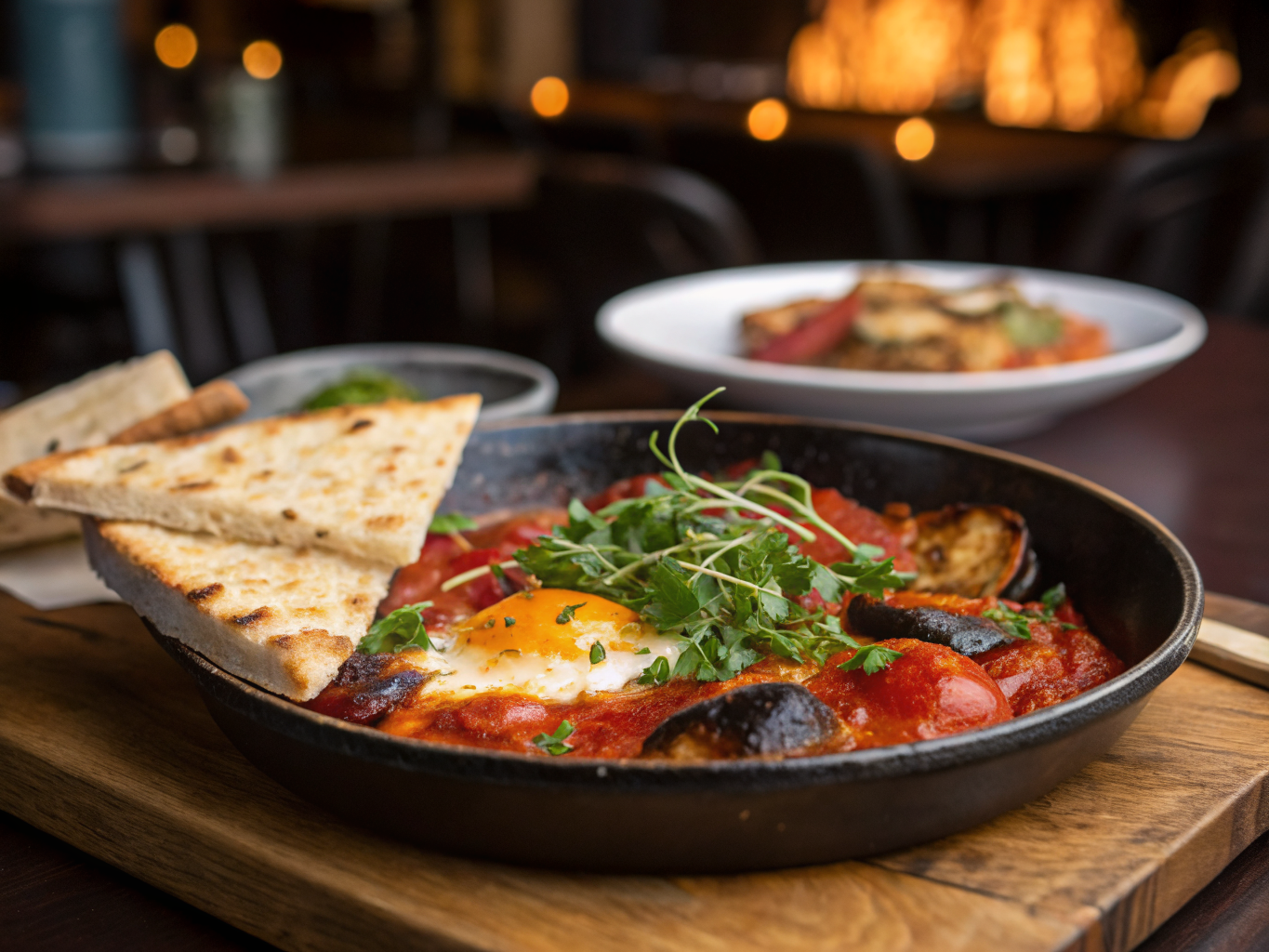
Imagine waking up to the scent of cumin and smoked paprika drifting through your kitchen, pulling you toward a bubbling skillet of rich, velvety tomato sauce studded with charred eggplant. This isn't just any shakshuka—it's a love letter to the Eastern Mediterranean, where eggplant meets fire and eggs poach to perfection in a spiced, garlicky embrace. You'll scoop up every last bit with a warm, chewy flatbread dusted in fragrant za'atar, its earthy, tangy notes cutting through the sweetness of the peppers. But beyond its irresistible flavor, this dish is a quiet act of sustainability. By choosing seasonal eggplant and tomatoes, you're supporting local farmers and reducing the carbon footprint of your meal. The recipe also champions whole-ingredient cooking: stems, seeds, and even slightly bruised produce find new life in the rich sauce. In a world where food waste accounts for 8-10% of global greenhouse gas emissions, this skillet is a small but delicious rebellion. Over the next few minutes, you'll discover how to make this shakshuka while treading lightly on the planet—and you'll never look at brunch the same way again.
Seasonal Sourcing: The Backbone of Sustainable Shakshuka
The environmental impact of a dish starts long before it hits your stove. Choosing seasonal, locally grown eggplant and tomatoes can slash the carbon emissions associated with out-of-season produce, which often travels thousands of miles by air. In the Eastern Mediterranean, eggplant and tomatoes peak in late summer and early autumn, when their flavors are richest and prices lowest. At a farmers' market, you'll find varieties like Sicilian eggplant or San Marzano tomatoes that are bred for taste, not shelf life. These varieties often require fewer pesticides and fertilizers because they're adapted to local conditions. Moreover, buying from local growers supports regenerative practices that improve soil health and sequester carbon. If you can't find fresh local tomatoes, canned crushed tomatoes from regional farms are a worthy substitute—they're harvested at peak ripeness and processed within hours, preserving both flavor and nutrients. Remember, every dollar you spend is a vote for the food system you want. By building your shakshuka around what's abundant now, you're not just cooking; you're cultivating a more resilient food future.
The Zero-Waste Kitchen: Using Every Bit of Your Produce
Sustainability in the kitchen isn't just about what you buy—it's about what you throw away. Globally, roughly one-third of all food produced is wasted, and households are a major culprit. This shakshuka recipe is designed to be a zero-waste hero. That slightly wrinkled bell pepper? Dice it and add it to the sauce. Wilting herbs? Stir them in at the end for a burst of freshness. Even eggplant stems and onion skins can be simmered into a quick vegetable broth, which you can use to deglaze the pan instead of opening a new can of tomatoes. The flatbread is another opportunity: stale bread can be revived as a base for a savory bread salad, or blitzed into breadcrumbs to top the shakshuka for crunch. And don't toss those tomato cores—they're packed with flavor and can be blended into the sauce. By adopting a root-to-stem approach, you reduce methane emissions from landfills and save money. Plus, you'll discover new layers of flavor in your cooking. The next time you reach for the compost bin, pause: could that scrap enrich your skillet instead?
From Tunisian Kitchens to Your Table: The Story of Shakshuka
Shakshuka, which means 'a mixture' in Tunisian Arabic, likely originated in the Maghreb—the region of North Africa that includes Tunisia, Algeria, and Morocco. Early versions were hearty stews of peppers, tomatoes, and onions, often with merguez sausage or lamb. Jewish communities in Tunisia embraced the dish, and after the 1948 Arab-Israeli War, Tunisian Jewish immigrants brought shakshuka to Israel, where it evolved into a beloved breakfast staple. Over time, the dish spread across the Eastern Mediterranean, with each region adding its own twist: Libyans add chickpeas, Egyptians use feta, and Israelis often top it with za'atar. The version with eggplant is a relatively modern innovation, reflecting the abundance of aubergines in the region. Today, shakshuka is a global phenomenon, celebrated for its versatility and comfort. But its roots remind us of something profound: food is a story of migration, adaptation, and resilience. When you cook this dish, you're participating in a culinary tradition that spans continents and centuries—and you're adding your own chapter.
Pro Tip: Char Your Eggplant for Smoky Depth Without a Grill
The signature flavor of this shakshuka comes from charred eggplant, but you don't need an outdoor grill to achieve it. Most home cooks roast or sauté eggplant, which can result in a greasy, bland mush. Instead, use the broiler method: slice the eggplant in half lengthwise, rub the cut sides with a little olive oil, and place them cut-side down on a foil-lined baking sheet. Broil on high for 8-10 minutes, until the skin is blackened and the flesh is collapsing. The intense, dry heat mimics a grill, creating smoky compounds called phenols that infuse the entire dish. Once cooled, scoop out the flesh and chop it roughly—don't purée it. You want texture. Another secret: after charring, let the eggplant rest for 10 minutes. This allows the sugars to caramelize further and the flesh to firm up, making it easier to handle. Finally, add a pinch of smoked paprika to the sauce to reinforce that smoky note. This technique not only elevates flavor but also uses less energy than running an oven for an hour, making it a win for both your palate and the planet.
The Nutritional and Environmental Case for Plant-Forward Brunch
Shakshuka is a shining example of how plant-forward eating can be both nourishing and eco-friendly. Eggs provide high-quality protein and essential nutrients like choline and vitamin D, while eggplant and tomatoes deliver fiber, potassium, and antioxidants like lycopene. Compared to a meat-heavy brunch, this dish has a fraction of the carbon footprint. According to the FAO, livestock accounts for about 14.5% of global greenhouse gas emissions, and beef production uses 20 times more land per gram of protein than plant foods. By centering your meal on vegetables and eggs, you reduce your impact significantly. Moreover, the Mediterranean diet—rich in olive oil, vegetables, and whole grains—has been linked to lower rates of chronic disease and longer life expectancy. The za'atar flatbread, made with whole wheat flour, adds fiber and complex carbohydrates, keeping you satisfied without the energy crash of refined grains. This shakshuka isn't just a meal; it's a template for a sustainable diet that's delicious, affordable, and adaptable. Whether you're a longtime vegetarian or a curious omnivore, this skillet proves that eating well and doing good can go hand in hand.
Frequently Asked Questions
Q: Can I make shakshuka ahead of time? A: Yes, prepare the sauce up to three days in advance and refrigerate. When ready to serve, reheat in a skillet, then crack in the eggs and poach. The flavors deepen overnight, making it even more delicious. Q: What if I don't have za'atar for the flatbread? A: Za'atar is a blend of sesame, thyme, and sumac. You can substitute with a mix of dried oregano, toasted sesame seeds, and a pinch of lemon zest. It won't be identical, but it will still be fragrant. Q: Is this dish vegan-friendly? A: The shakshuka itself contains eggs, but you can make a vegan version by skipping the eggs and adding cubed tofu or chickpeas. The sauce is already plant-based, and the flatbread can be made with olive oil instead of butter.
Key Takeaways
Embrace seasonal abundance by shopping at farmers' markets for eggplant and tomatoes at their peak. Reduce waste by using every part of your produce—stems, cores, and skins can become broth or compost. Choose local and organic when possible to support regenerative agriculture and cut carbon emissions. Cook with energy-efficient methods like broiling instead of long roasting. And remember, small choices add up: a plant-forward brunch like this shakshuka can lower your dietary footprint while delighting your senses. So next time you're planning a weekend meal, let this smoky, spiced skillet be your guide. It's proof that sustainable cooking is not about deprivation—it's about celebration. Gather your ingredients, fire up the broiler, and savor a dish that nourishes you and the planet. You'll be part of a growing movement that values flavor, tradition, and responsibility in equal measure.
Try these recipes on DishIndex
Explore shakshuka recipes and more