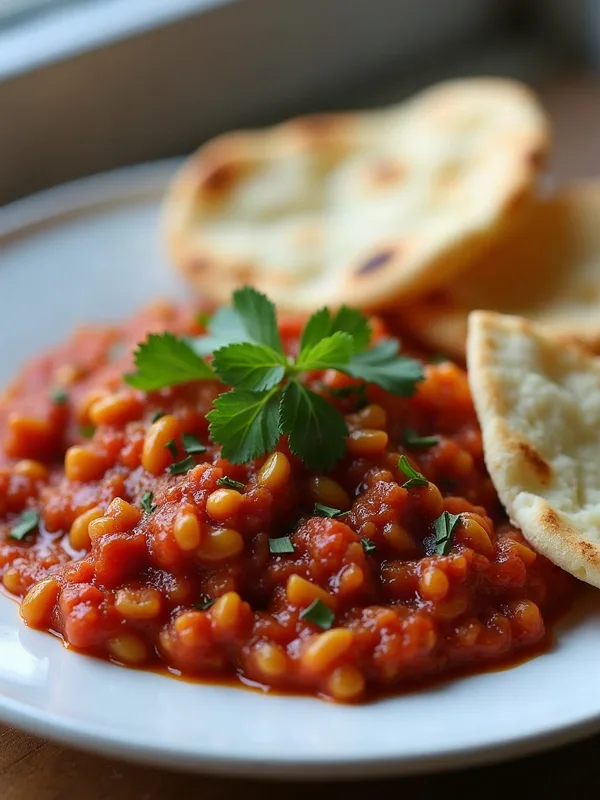
Picture a souk at dusk in Aleppo: copper trays piled with blistered peppers, sacks of shelled walnuts, and amber bottles of pomegranate molasses catching the last light. Somewhere in that chaos, a vendor is blending all three into muhammara, a dip the color of fired clay and the texture of crushed velvet. This is not a dish of extravagance. It is a dish of ingenuity, born from the idea that a handful of humble ingredients, treated with care, can taste like a feast. Today, as home cooks look for ways to cook with less waste and more intention, muhammara quietly offers a blueprint. Its core ingredients are shelf-stable, its scraps become snacks, and its method rewards patience over precision. In the pages ahead, you will learn where this dip comes from, why walnuts and pomegranate molasses matter, and how to make a version that is as gentle on the planet as it is on your palate. By the end, you will see muhammara not just as a recipe but as a small act of culinary sustainability.
A Dip Built on Pantry Resilience
Muhammara belongs to a family of Levantine dips that share a philosophy: stretch a little into a lot. Hummus does it with chickpeas, baba ghanoush with eggplant, and muhammara with roasted peppers and walnuts. The dish is traditionally associated with Aleppo, Syria, and appears on meze tables across Lebanon and the wider Levant. Its ingredients were historically chosen for longevity as much as flavor. Walnuts, harvested in autumn, keep for months in cool storage. Pomegranate molasses, made by reducing juice for hours, is a preserved fruit concentrate that predates refrigeration by centuries. Even the breadcrumbs that thicken muhammara are a way to use stale pita rather than throw it out. This is food designed by climate and necessity. The region's hot, dry summers and cold winters meant cooks learned to preserve what they had. Muhammara is a living record of that knowledge, and it is one reason the dish travels so well: its pantry logic makes it adaptable to any kitchen, in any season.
Walnuts, Peppers, and the Case for Local Sourcing
The environmental footprint of muhammara depends almost entirely on where its ingredients come from. Walnuts are among the most water-efficient tree nuts, but they are heavy to ship, so buying them from regional growers cuts transport emissions. Red peppers are the dish's seasonal heartbeat: a summer glut of sweet peppers can be roasted, peeled, and frozen in batches, giving you muhammara year-round without importing peppers in January. Pomegranate molasses is the ingredient most likely to travel far, so look for a brand that lists a single origin or make your own by simmering pomegranate juice with sugar and lemon until it coats a spoon. Breadcrumbs are the quiet hero of waste reduction. A stale pita, blitzed in a food processor and toasted until dry, becomes a thickener that would otherwise be a landfill contribution. None of this requires a special diet or a carbon calculator. It requires only the habit of asking, before you blend, where each ingredient began.
The Aleppo Origin Story
Muhammara's name comes from the Arabic word for reddened, a nod to the dish's brick-colored hue. Its heartland is Aleppo, one of the oldest continuously inhabited cities on earth and a historic crossroads of trade routes linking the Levant to Persia, Anatolia, and the Mediterranean. That geography explains the dish's ingredients: walnuts from the orchards of northern Syria, peppers from local farms, and pomegranate molasses from a fruit long prized across the region. Aleppo pepper, a mild, fruity chile flake, gives the dip its gentle warmth and a name that has become a culinary signature. For generations, muhammara was a home dish and a meze staple, scooped with torn bread at family tables and in restaurants. The Syrian diaspora has carried it to kitchens from Beirut to Berlin to Brooklyn, where cooks adapt it with local peppers and walnuts while keeping the balance of sweet, nutty, and tangy intact. To eat muhammara is to taste a city's history of trade, agriculture, and hospitality in a single bite.
Pro Tip: Char the Peppers and Toast the Walnuts Separately
The single biggest upgrade to homemade muhammara happens before anything goes into the food processor. Most recipes tell you to roast peppers and walnuts together, but they need different treatment. Char the peppers under a broiler or over a gas flame until the skins blister black, then steam them in a covered bowl for ten minutes. That steam loosens the skins, and peeling them removes the bitter, papery layer that dulls the dip. Toast the walnuts separately in a dry skillet over medium heat, stirring constantly, for about five minutes, until they smell nutty and a shade darker. This step drives off moisture and activates the oils, deepening the flavor. If you skip it, the walnuts taste flat and raw. Combine the two only after both have cooled. One more trick: reserve a tablespoon of the pepper roasting juices and add it back at the end. It carries smoky flavor that water cannot replicate, and it turns a good muhammara into a great one.
Why Muhammara Fits the Plant-Forward Moment
Muhammara is a naturally plant-based dish whose richness comes from walnuts rather than dairy, which makes it a useful bridge for cooks reducing animal products without sacrificing indulgence. Nutritionally, it delivers a meaningful dose of omega-3 fatty acids from walnuts, vitamin C and carotenoids from red peppers, and polyphenols from pomegranate molasses. It also fits the growing interest in traditional diets that are both healthy and low-impact. The Mediterranean and Levantine eating patterns, of which muhammara is a part, emphasize vegetables, legumes, nuts, and olive oil over processed foods, and research continues to link these patterns to cardiovascular benefits. Culturally, the dish has moved from a regional specialty to a global meze staple, appearing on menus from London to Los Angeles. That popularity carries a responsibility: the more we cook it, the more we can choose local peppers and regional walnuts, keeping a traditional dish sustainable as it travels.
Frequently Asked Questions
Q: Can I make muhammara with fresh peppers instead of jarred? A: Yes, and it is worth the effort. Char and peel about three large red bell peppers, then blend them with the walnuts and molasses. Fresh peppers add a brighter, more complex smokiness than jarred ones, though jarred peppers work fine for a quick version. Q: How long does muhammara keep in the fridge? A: Store it in an airtight container for up to five days. Press plastic wrap onto the surface or pour a thin layer of olive oil on top to slow oxidation. Bring it to room temperature before serving, since cold muhammara tastes muted. Q: What can I use instead of pomegranate molasses? A: A mix of balsamic vinegar and a little honey or maple syrup approximates the sweet-tart depth, though it will not be identical. If you have pomegranate juice, simmer it down with sugar and lemon until thick for the closest substitute.
Key Takeaways
Muhammara is a lesson in doing more with less, and you can apply that lesson the moment you step into your kitchen. Shop for peppers in season and roast a large batch to freeze, so summer flavor lasts through winter. Buy walnuts from regional growers when you can, and toast them before blending to unlock their full depth. Turn stale pita into breadcrumbs instead of discarding it, and consider making pomegranate molasses at home to control both quality and provenance. Char your peppers until the skins blister, steam them to peel easily, and add a spoonful of the roasting juices back to the dip. Serve it with torn pita, crisp vegetables, or a scatter of pomegranate seeds, and drizzle generously with olive oil. Each of these small choices adds flavor and reduces waste, proving that the most memorable food is often the most considered.
Try these recipes on DishIndex
Explore muhammara recipes and more